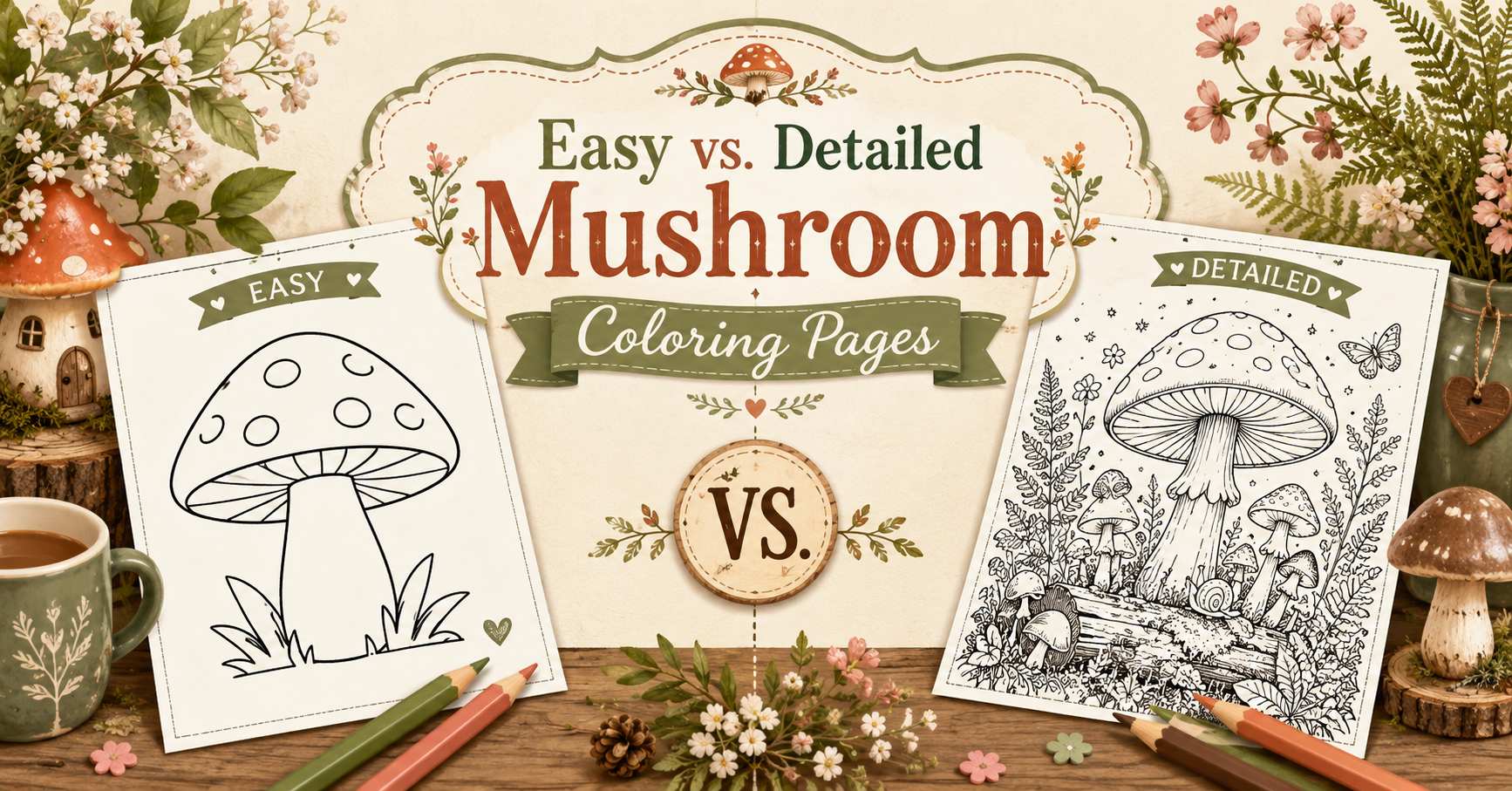
Not every coloring session needs the same kind of page.
Some evenings, you may want a clear mushroom cottage with broad spaces and an obvious place to begin. On a quiet weekend, you may prefer a detailed forest path filled with lanterns, flowers, vines, stones, butterflies, and tiny woodland creatures.
Some evenings, you may want a clear mushroom cottage with broad spaces and an obvious place to begin. On a quiet weekend, you may prefer a detailed forest path filled with lanterns, flowers, vines, stones, butterflies, and tiny woodland creatures.
Neither choice is better.
The right page is the one that suits your available time, energy, supplies, and mood.

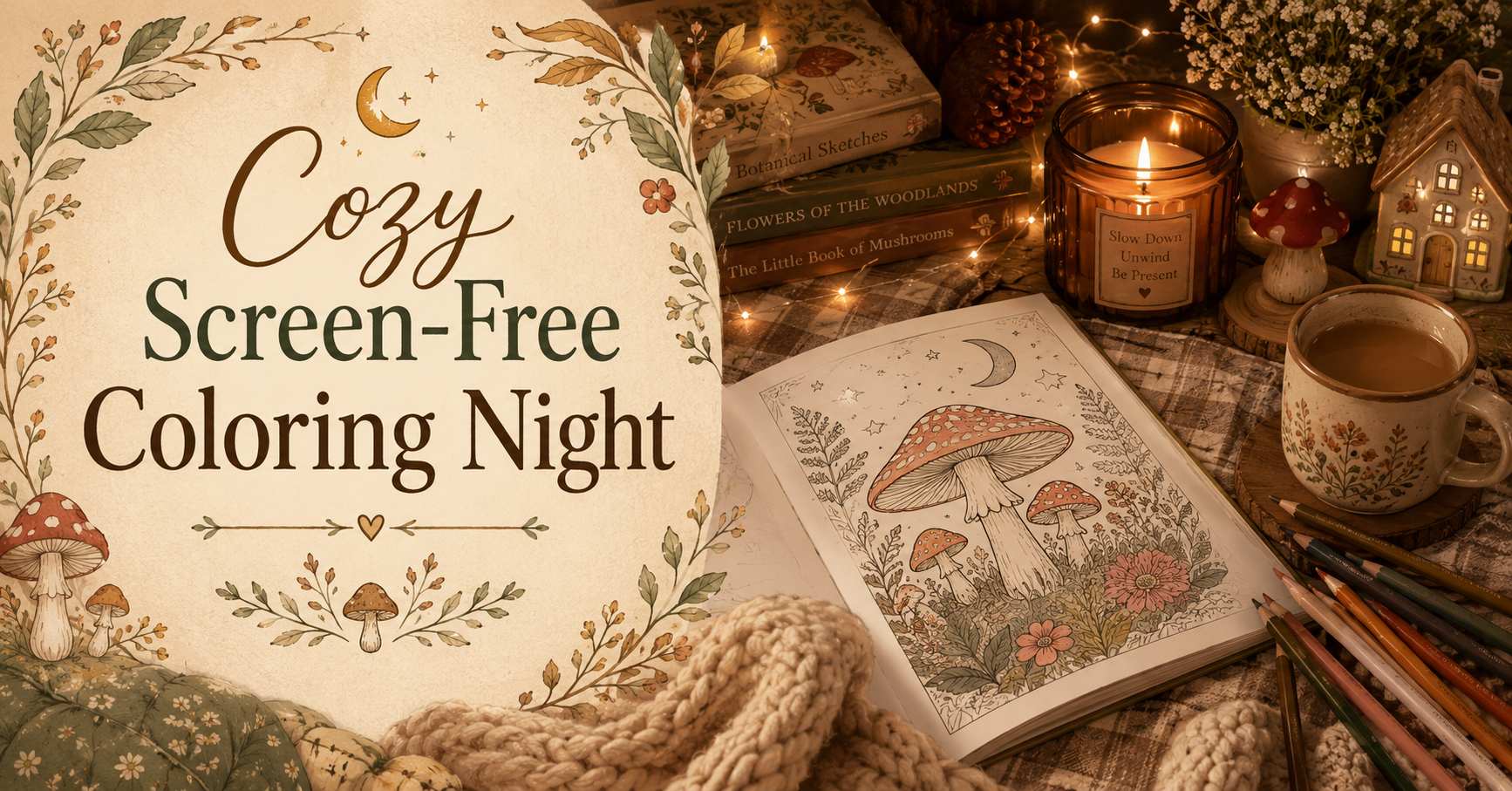
The coloring pages in this guide come from Among the Mushrooms, a mushroom forest cottagecore coloring book by Sally Morris. It contains 50 single-sided pages that range from bold, approachable subjects to more detailed woodland scenes.
Here is how to choose between easy, medium, and detailed mushroom coloring pages.
1. Choose a Clear Central Subject for a Quick Session
A page with one large central subject is usually easier to begin.
A mushroom cottage, sleeping animal, frog, snail, or large toadstool gives your attention somewhere to settle. You can color the main object first and decide later whether you want to finish the surrounding details.
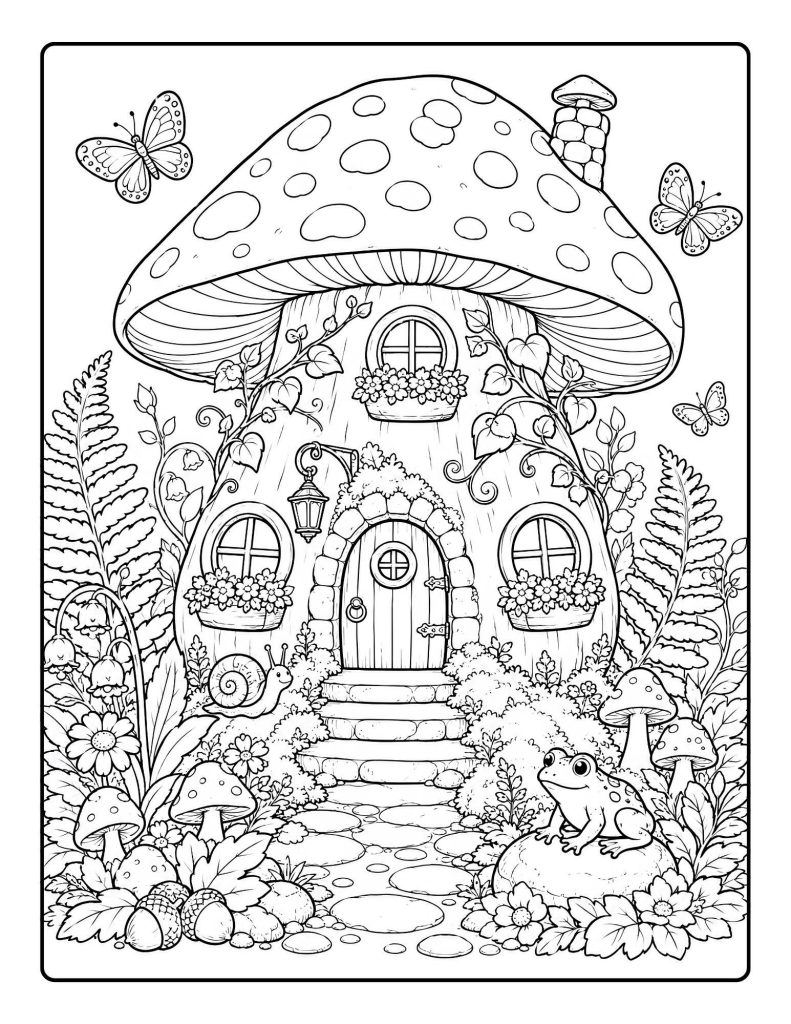
This mushroom cottage page includes:
- one large spotted roof
- a rounded door
- broad cottage walls
- clear windows
- a frog and snail
- ferns and flowers
- a few smaller mushrooms
Although the page contains several decorative elements, the cottage remains the obvious focus.
That makes it approachable for beginners and useful when you want to complete a recognizable part of the page in one sitting.
Begin with the roof, door, or cottage walls. Once those areas are colored, the picture already feels partly complete.
Like this mix of approachable and detailed pages? Among the Mushrooms includes 50 single-sided designs with mushroom cottages, woodland animals, ponds, lanterns, paths, and forest scenes.
2. Pick Open Shapes When You Want to Relax
Open shapes require less precision than tightly packed patterns.
A sleeping rabbit, curled fox, large mushroom cap, round cottage door, or broad pond gives you room to use pencils or markers without constantly changing colors.

The sleeping rabbit page has a detailed forest setting, but its central subject remains soft and open.
You could color:
- the rabbit during one session
- the tree roots during another
- the mushrooms and plants later
- the candle and small details at the end
You do not need to finish every part at once.
Pages with peaceful animals are especially helpful when you want a calm activity without making many creative decisions.
A soft palette of cream, beige, sage, pale pink, and warm brown can keep the scene gentle and restful.
3. Try a Medium-Detail Character Scene
A medium-detail page balances a strong central subject with a more interesting background.
The frog pond scene is a good example.
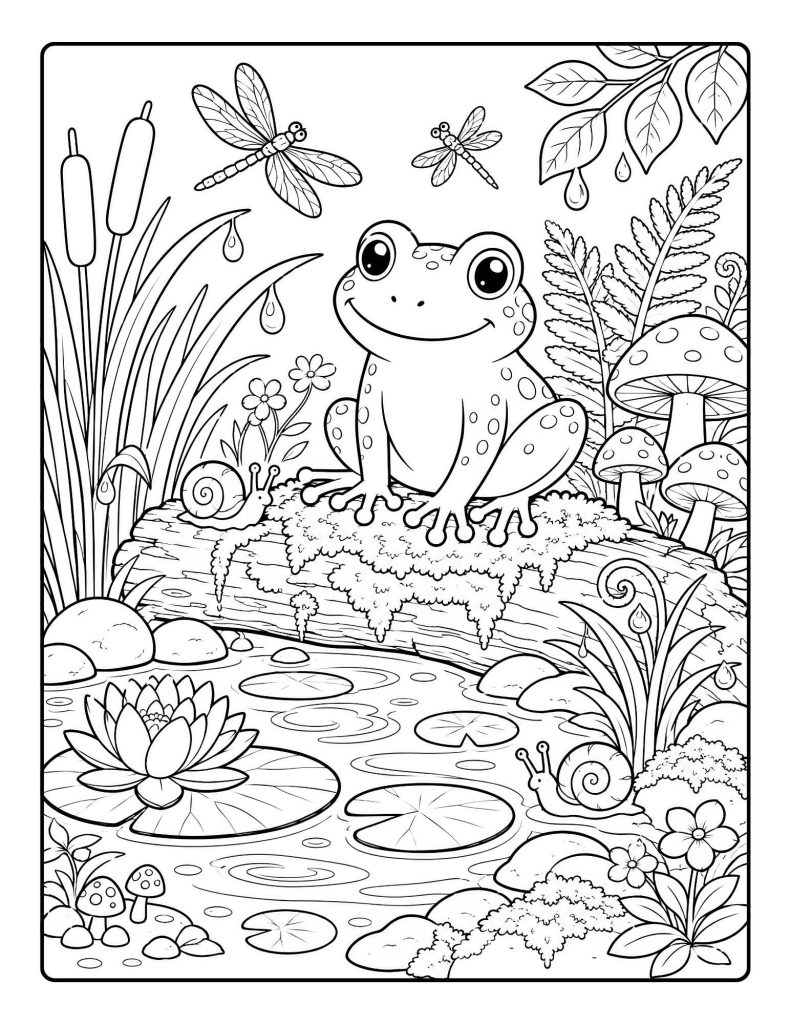
The frog is large and easy to locate, but the page also contains:
- mushrooms
- ferns
- flowers
- dragonflies
- snails
- water lilies
- pond ripples
- stones and moss
You can complete the main frog quickly and then decide how much time to spend on the surrounding nature.
Medium-detail pages are useful when you want more variety than a simple design but do not want to manage a very crowded illustration.
They are also a good place to practice forest coloring techniques because the natural details are separated into clear groups.
4. Choose Layered Scenery for a Longer Session
A page becomes more detailed when it contains several visual layers.

The mushroom pond cottage includes:
- the cottage in the background
- stepping stones through the center
- water and fish
- water lilies
- ferns and flowers
- lanterns
- mushrooms
- a waterfall
- plants along both sides
You can work through the picture from back to front or from the center outward.
A simple order might be:
- Color the cottage.
- Add the pond.
- Color the stepping stones.
- Complete the large plants.
- Add flowers and mushrooms.
- Finish with fish, lanterns, and smaller details.
A layered page does not have to be completed in one day. It can become a project you return to over several sessions.
You may also like: “How to Choose Between Simple and Detailed Coloring Pages for Seniors“
5. Save Intricate Forest Paths for Deep Focus
Intricate pages are useful when you want the coloring process to hold your attention for longer.
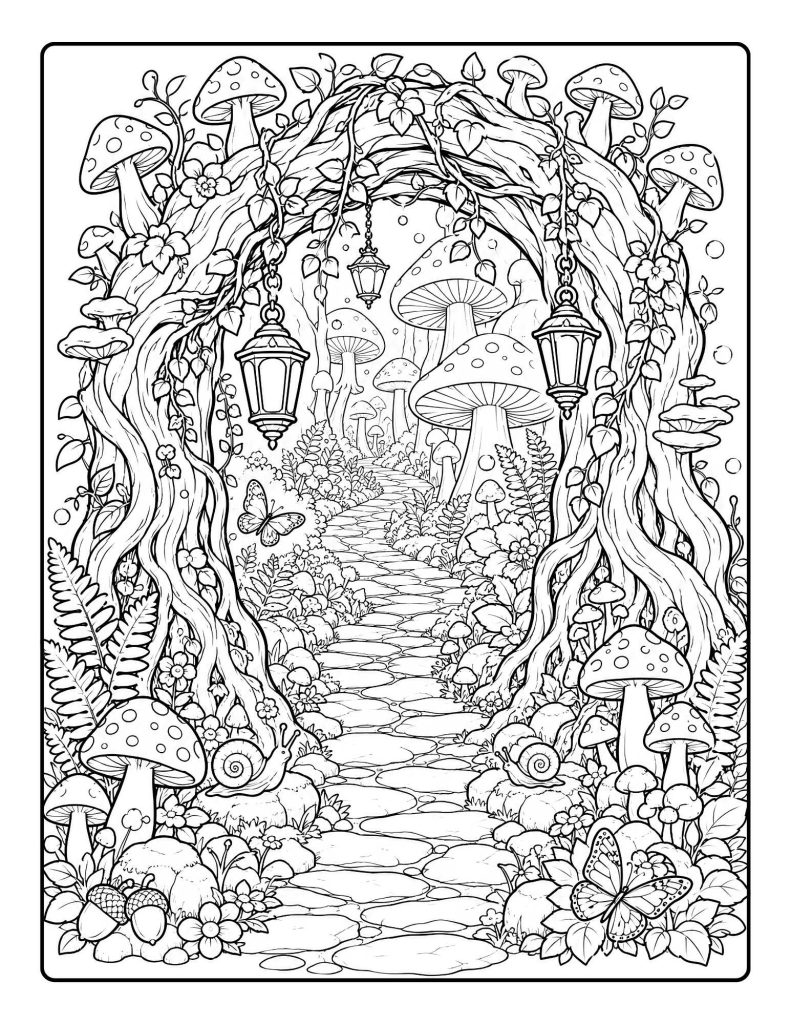
The lantern-lit forest path contains many overlapping elements:
- twisting tree roots
- hanging vines
- several lanterns
- mushrooms in different sizes
- flowers and ferns
- stones and acorns
- butterflies and snails
- a path moving into the distance
Instead of looking at the whole illustration at once, divide it into zones.
For example:
- the central path
- the left tree root
- the right tree root
- the hanging lanterns
- the foreground mushrooms
- the distant forest
Completing one zone at a time makes the page feel manageable.
Detailed pages can also be useful for practicing shading, depth, repeated colors, and light effects.
6. Pick Busy Story Scenes When You Want Variety
Some pages contain several characters and objects that suggest a story.
The woodland parade includes small characters carrying lanterns, flowers, berries, baskets, and an acorn beneath giant mushrooms.
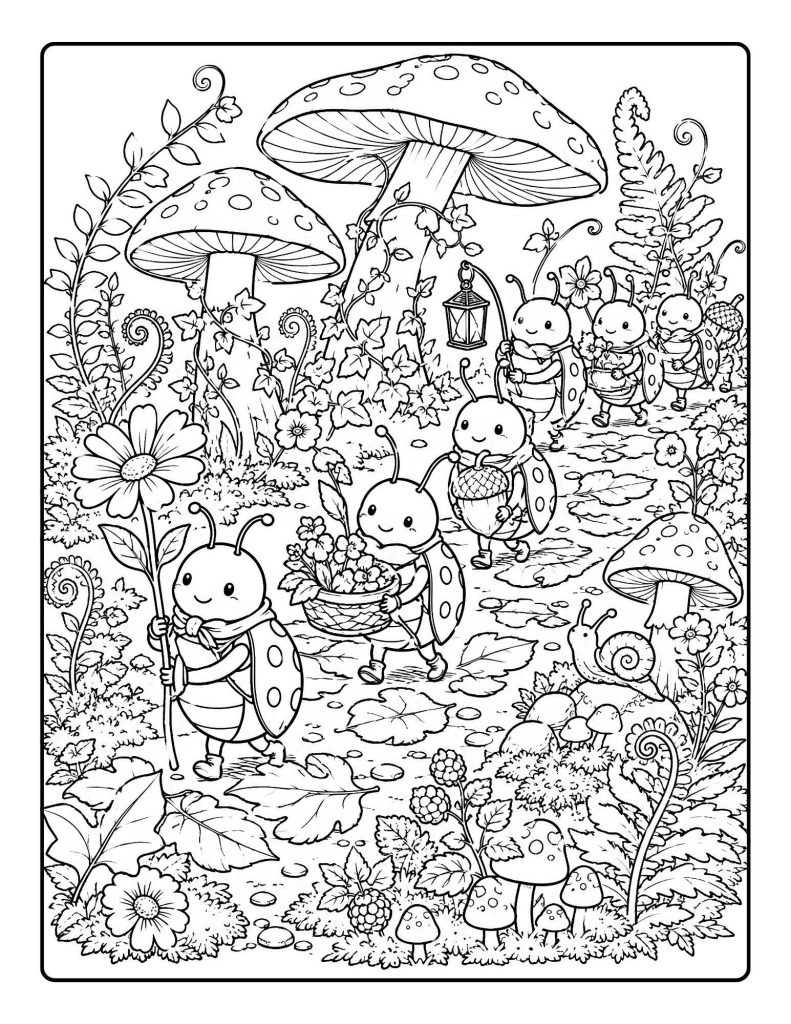
This kind of page is helpful when you enjoy changing colors frequently.
You can move between:
- characters
- clothing
- mushroom caps
- flowers
- leaves
- berries
- lanterns
- baskets
- forest-floor details
A busy scene may take longer, but it can remain interesting because no two areas are exactly alike.
Choose a limited palette before beginning so the many small objects still feel connected.
An autumn parade, for example, could use rust, burgundy, mustard yellow, olive green, cream, and chestnut brown.
Like having both easy and detailed options? Among the Mushrooms includes 50 single-sided pages ranging from bold mushroom cottages and gentle woodland animals to layered forest paths, ponds, villages, and magical nature scenes.
What Makes a Coloring Page Easy?
An easier page often has:
- one large main subject
- broad open spaces
- clear outlines
- fewer overlapping objects
- limited background detail
- repeated simple shapes
- obvious starting points
Easy does not mean boring.
A large mushroom cottage can still contain flower boxes, vines, a frog, a snail, and butterflies. The difference is that the composition remains easy to understand.
What Makes a Page More Detailed?
A detailed page may include:
- several layers of scenery
- many small plants and flowers
- overlapping vines and roots
- several characters
- detailed pathways
- repeated lanterns or mushrooms
- small decorative textures
- deep background elements
Detailed pages require more time and color decisions, but they can also feel especially immersive.
Choose According to the Time You Have
Five to Fifteen Minutes
Choose one small section of any page.
Color:
- one mushroom cap
- a cottage door
- a frog
- a lantern
- a cluster of flowers
- one butterfly
A coloring session does not need to produce a finished page.
Twenty to Forty Minutes
Choose a page with one clear central subject.
You may be able to complete a mushroom cottage, sleeping animal, or large frog while leaving the background for later.
One Hour or More
Choose a pond, village, forest path, parade, or tree-home scene.
Work slowly and complete one layer at a time.
Choose According to Your Energy
Your skill level is not the only factor.
A detailed colorist may still prefer a simple page after a busy day. A beginner may enjoy spending several evenings on an intricate path.
On low-energy days, choose:
- sleeping animals
- large cottages
- open mushroom shapes
- simple central characters
- limited color palettes
When you feel focused, choose:
- detailed forests
- villages
- ponds
- parades
- staircases
- layered cottage scenes
Coloring should adapt to your energy rather than becoming another task you must complete.
Choose According to Your Supplies
Markers are often convenient for broad, open areas such as:
- mushroom caps
- cottage walls
- ponds
- large leaves
- simple backgrounds
Colored pencils are useful for:
- fur
- ferns
- wood grain
- flowers
- small mushrooms
- detailed paths
- shading and texture
Gel pens can be saved for:
- lanterns
- stars
- butterfly details
- window frames
- shell patterns
- magical accents
Place a protective sheet behind the page when using markers because some inks may bleed through.
Pages for Beginners
Beginners may feel most comfortable with:
- one clear central character
- limited overlapping details
- broad outlines
- simple color palettes
- pages that can be divided into sections
Try choosing five to seven colors before beginning.
For example:
- red
- cream
- sage green
- dark green
- brown
- yellow
- lavender
A small palette reduces the number of decisions while still creating variety.
Pages for Experienced Colorists
Experienced colorists may enjoy:
- layered forest paths
- reflected lantern light
- detailed bark and moss
- patterned snail shells
- water reflections
- textured fur and feathers
- distant scenery
- custom backgrounds
You can also make a simpler page more advanced by adding your own shading, sky, glow, texture, or background color.
The printed level of detail does not limit how creative you can become.
Coloring Pages for Seniors
Many seniors may prefer pages with:
- bold, clear outlines
- recognizable subjects
- broad areas
- limited visual clutter
- comfortable central compositions
Mushroom cottages, sleeping animals, frogs, and large toadstools can be especially approachable.
Detailed pages can still be enjoyed one section at a time.
Good lighting, comfortable pencils, and frequent breaks can make longer coloring sessions more pleasant.
How to Simplify a Detailed Page
You do not need to shade every leaf or use a different color on every flower.
To simplify a busy design:
- use one green for most leaves
- repeat two flower colors
- leave some small areas white
- use one brown for wood
- color all lanterns alike
- skip complicated shading
- focus only on the main subject
A detailed page can still look beautiful with flat, simple color.
How to Add Detail to a Simple Page
A bold page can become more advanced by adding:
- shadows
- gradients
- patterned mushroom caps
- wood grain
- glowing windows
- a colored background
- grass texture
- fur strokes
- highlights
- extra stars or fireflies
This makes simple mushroom coloring pages useful for both beginners and experienced colorists.
Who May Enjoy This Mix of Pages?
A book containing different difficulty levels can suit:
- adults and teens
- beginners
- experienced colorists
- seniors
- cottagecore fans
- mushroom lovers
- nature enthusiasts
- gift buyers
- anyone whose available time changes from day to day
Some days you may want a quick cottage. Other days, you may want to disappear into an intricate forest for an entire evening.
Final Thoughts
The best coloring page is not always the simplest or the most detailed.
It is the page that matches what you need at that moment.
Choose a clear character when you want a quick and satisfying start. Pick a cottage or pond when you want moderate detail. Save intricate forest paths, parades, and villages for sessions when you feel ready to slow down.
You can also leave a page unfinished and return whenever you like.
Coloring is not a race toward completion. It is time spent creating something at your own pace.
Disclosure:
This post may feature HoneySketch books or products. If you purchase one of our books through a link on this page, HoneySketch may earn royalties or income from that sale at no extra cost to you.