A coloring page already contains part of a story.
A snail carries a letter, but the page does not explain who wrote it.
A mushroom bakery displays fresh pies, but no one says who ordered them.
An empty swing hangs beneath glowing lanterns, while a tiny door waits inside the tree.
The unanswered questions are what make the scene interesting.
Instead of treating each design as a collection of objects to color, you can imagine that every page belongs to the same hidden woodland world.
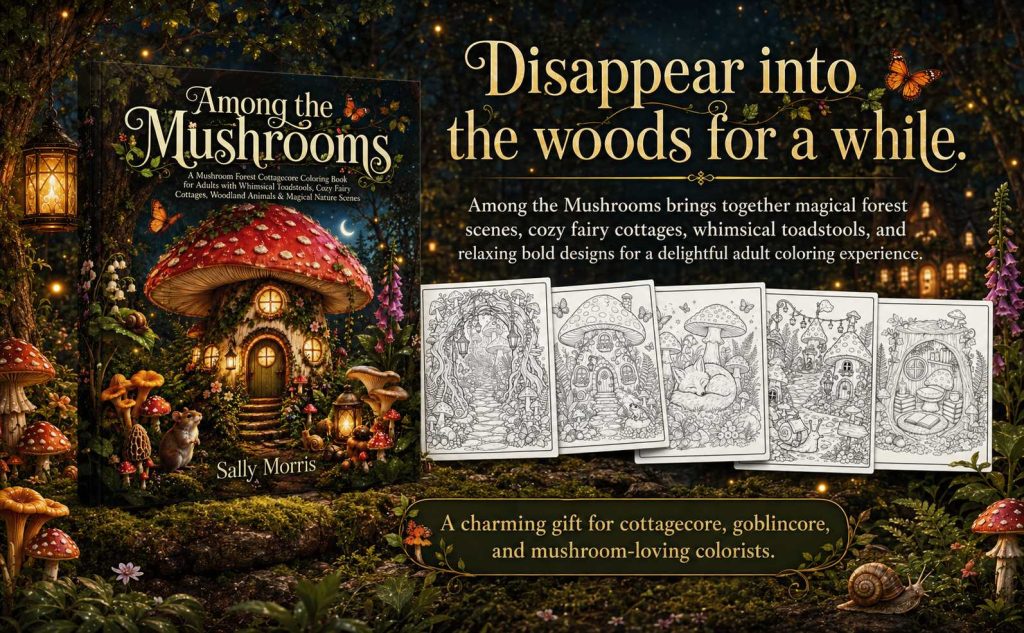
The scenes featured below come from Among the Mushrooms by Sally Morris, a cottagecore mushroom forest coloring book filled with fairy cottages, frogs, foxes, snails, lanterns, ponds, ferns, flowers, and small woodland details.
Here are simple ways to turn the pages into tiny stories while you color.
1. Begin With the Snail Carrying a Letter
A snail makes a natural story character because it is clearly going somewhere.

This particular snail carries:
- an envelope
- a small shoulder bag
- a patterned shell
- a sealed message
Mushroom houses appear behind it, and a wooden sign points toward different parts of the village.
Begin with a few questions:
- Who wrote the letter?
- Who is waiting for it?
- Why is the message important?
- Must it arrive before nightfall?
- What is inside the bag?
- Has the snail taken the wrong path?
- Does the bridge lead to another village?
Your color choices can answer some of these questions.
A red bag and golden seal may suggest an official delivery. A purple shell and silver envelope could make the message feel magical.
A green bag filled with flowers may suggest that the snail is visiting a friend rather than completing a formal delivery.
2. Invent the Story Behind the Mushroom Bakery
A bakery window filled with pies and cupcakes immediately suggests activity.
Someone has been gathering berries, preparing dough, decorating the window, and waiting for customers.

Decide what is happening that day.
Perhaps:
- the village is preparing for a harvest celebration
- a birthday cake has been ordered
- a traveler is expected before sunset
- the baker has created a mysterious new pie
- forest animals are gathering for tea
- a basket of rare berries has just arrived
- one pie must be delivered to the old tree house
Use color to show the mood.
Bright turquoise, yellow, and coral may create a cheerful festival bakery.
Burgundy, rust, olive, and gold could suggest an autumn harvest.
Navy, violet, and warm yellow may turn the bakery into a shop open late at night.
Like these tiny forest characters? The full Among the Mushrooms coloring book includes 50 pages filled with cottages, animals, lanterns, paths, ponds, villages, and storybook details.
3. Decide Who Uses the Empty Mushroom Swing
A scene without a visible character can create even more possibilities.
The mushroom swing hangs beneath an old tree. Lanterns surround it, butterflies move through the flowers, and a tiny door appears in the trunk.

Who placed the swing there?
Perhaps it belongs to:
- a young forest fairy
- the snail mail carrier
- a frog from the pond
- the rabbit from the mossy burrow
- the baker’s child
- a traveler who has not yet arrived
- a woodland animal who visits only at night
You can also decide why the swing is empty.
Maybe the owner is inside the tree house. Perhaps they have gone to the village parade. The swing may be waiting for someone who follows the lantern path.
An empty object can be the beginning of a mystery.
4. Send the Frog Across the Pond
The frog in the mushroom boat looks prepared for a journey.
It wears a pointed hat and cloak, carries a paddle, and has a lantern hanging from the boat.
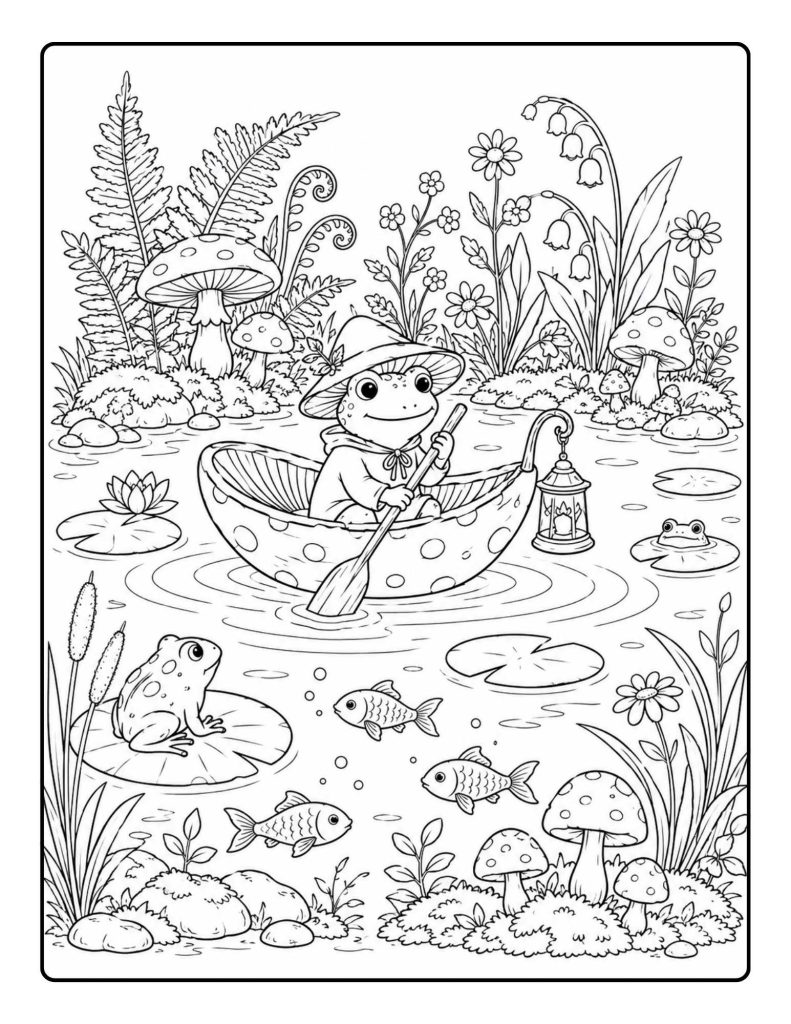
That raises several questions:
- Where is the frog going?
- Why does it need a lantern?
- What is on the other side of the pond?
- Are the fish helping or following?
- Is the frog delivering something?
- Is a storm approaching?
- Does the pointed hat show a particular job or role?
Perhaps the frog is a guide who helps travelers cross the pond.
Maybe it is bringing medicine, a map, berries, or an important message to another cottage.
The water color can help set the time.
Pale blue and green suggest daytime. Navy, violet, and golden lantern light create a nighttime journey.
5. Create a Reason for the Woodland Parade
The forest parade contains several small characters carrying different objects.
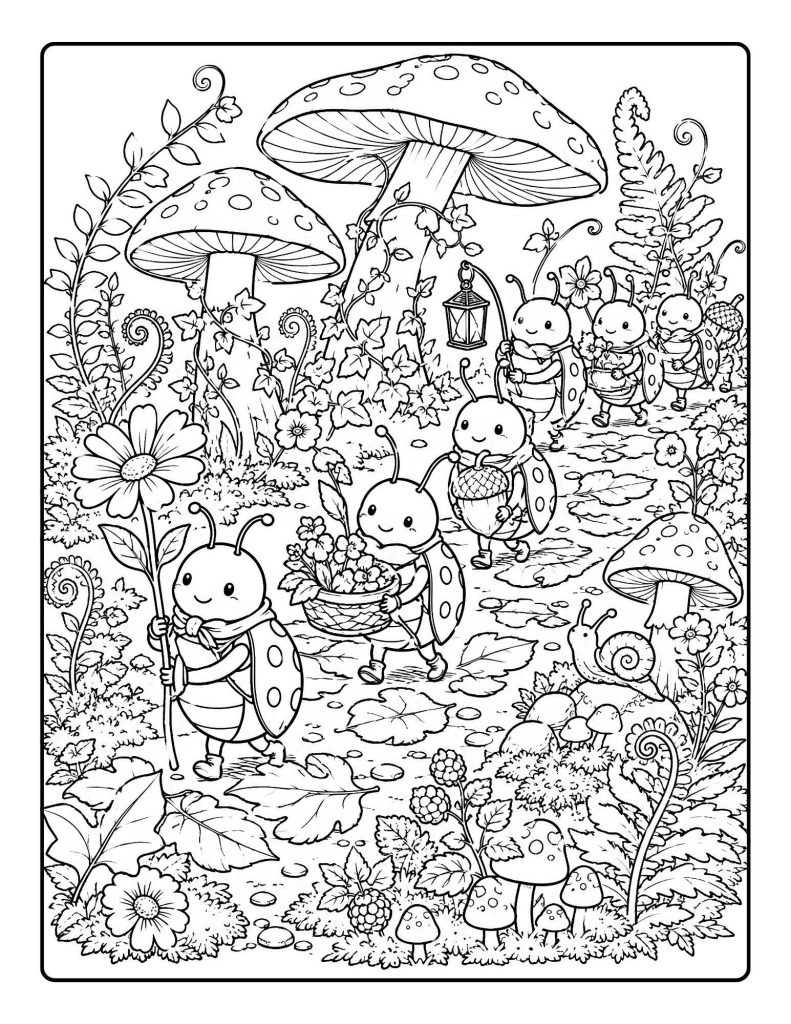
They bring:
- flowers
- berries
- an acorn
- baskets
- a lantern
- gathered woodland items
Why are they traveling together?
Possible stories include:
- a harvest festival
- a welcome celebration
- a wedding
- a birthday
- an autumn feast
- the return of a missing traveler
- a gift delivery to another village
- the annual lighting of the forest lanterns
Choose one idea before coloring.
For a harvest parade, use rust, gold, burgundy, olive, and chestnut.
For a spring celebration, try pink, lavender, fresh green, pale blue, and yellow.
For a moonlight parade, use navy, violet, silver, deep green, and warm gold.
6. Give Every Cottage a Resident
A mushroom cottage becomes more interesting when you decide who lives inside.
Consider:
- a baker
- a gardener
- a lantern maker
- a forest librarian
- a frog boat guide
- a butterfly keeper
- a healer who gathers herbs
- a snail postal worker
- a family of rabbits
- an elderly hedgehog
Small features can provide clues.
A cottage with many flower boxes may belong to a gardener.
A cottage beside a pond could belong to the frog boat guide.
A house with lanterns may belong to someone responsible for lighting the forest paths.
A home with baskets and berries may be connected to the bakery.
7. Connect the Stories Through a Hidden Reading Room
A hidden library can become one of the most important places in the forest.

Inside the tree-stump reading room, an open book rests on the floor. Candles burn beside shelves, and a mushroom chair waits nearby.
What is written in the book?
It may contain:
- an old map
- a family history
- a recipe
- a record of village events
- a magical spell
- directions to the lantern path
- a list of missing letters
- the story of how the mushroom village began
Perhaps the snail’s letter contains a clue related to the book.
Maybe the frog has been sent across the pond to find someone who can read it.
The forest parade could be traveling toward the library for an annual storytelling night.
8. Use Color to Show Character Personality
Colors can help each character feel different.
The Snail Mail Carrier
- forest green
- chestnut brown
- mustard yellow
- cream
- burgundy
The Frog Traveler
- teal
- deep blue
- golden yellow
- moss green
- rust
The Village Baker
- coral
- cream
- berry purple
- sage
- warm brown
The Forest Librarian
- burgundy
- navy
- walnut brown
- antique gold
- forest green
The Lantern Keeper
- charcoal
- deep green
- copper
- pale yellow
- rust
You do not need to draw the residents. Their colors can appear in doors, curtains, clothing, bags, lanterns, and other objects.
9. Use the Lantern Path as the Final Destination
A winding path beneath twisted roots naturally suggests a destination.
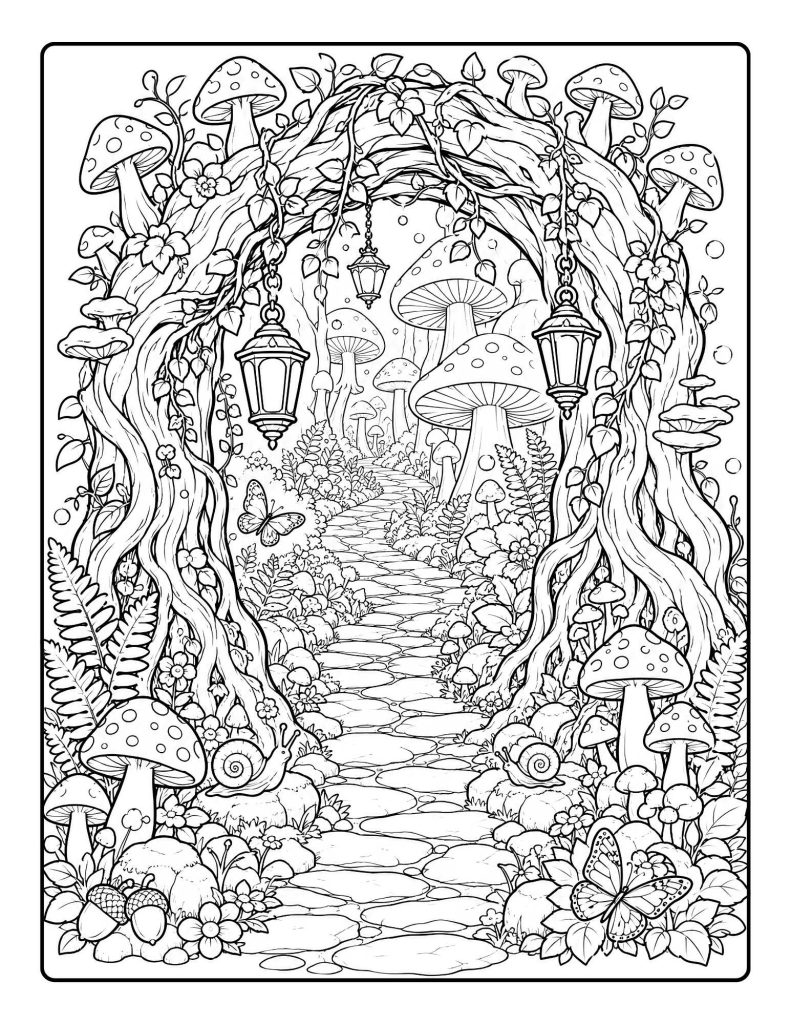
It may lead to:
- the oldest mushroom cottage
- a secret village
- the forest library
- a moonlit celebration
- the home of the lantern keeper
- a hidden garden
- a portal to another woodland
- the place where all the stories meet
The characters from other pages may be traveling toward this path.
The snail could be delivering the letter there.
The frog may have crossed the pond to reach it.
The parade may be following the lanterns.
The empty swing may belong to someone waiting at the end of the trail.
Like building tiny stories around your coloring pages? Among the Mushrooms includes 50 single-sided scenes filled with mushroom cottages, woodland animals, ponds, lanterns, paths, flowers, ferns, and magical details waiting for your imagination.
10. Write a One-Sentence Story Below Each Finished Page
You do not need to write a full book.
After coloring a page, write one sentence describing what happened.
Examples:
- The snail carried the final invitation through the rain before the lantern festival began.
- Every autumn, the hedgehog delivered the first basket of acorns to the village bakery.
- The frog crossed the pond at midnight to return a missing library book.
- No one used the mushroom swing until the butterflies appeared.
- The fox slept beneath the toadstools while the whole forest searched for it.
- The bakery stayed open all night for travelers following the lantern path.
A single sentence can preserve the story you imagined while coloring.
Create a Character List
Keep a small notebook beside the coloring book.
Write down:
- character name
- job or role
- home
- favorite colors
- important objects
- relationships
- destination
- secret
For example:
Name: Mosswick
Character: Snail mail carrier
Home: Cottage near the old bridge
Favorite color: Forest green
Important object: Golden letter seal
Secret: Knows every hidden path in the village
This can turn separate coloring sessions into an ongoing creative project.
Make a Mushroom Village Map
Look at several pages and decide how the locations connect.
Your map might include:
- the pond
- the bakery
- the old tree library
- the snail’s postal route
- the mushroom swing
- the lantern path
- the carousel
- the hidden root cottage
- the tree staircase
- the village bridge
You can sketch a simple map in a notebook.
It does not need to match the illustrations perfectly. It only needs to support your story.
Create a Seasonal Version of the Same Story
The same village can change with the seasons.
Spring
- fresh green plants
- pink and yellow flowers
- pale blue skies
- butterflies
- light rain
Summer
- bright foliage
- berries
- ponds
- warm sunlight
- village celebrations
Autumn
- acorns
- fallen leaves
- berry pies
- rust and gold mushrooms
- lantern festivals
Winter
- snow on mushroom roofs
- dark green ferns
- silver paths
- golden windows
- indoor reading nights
You can choose a different season for every page or make the entire book follow one time of year.
Use the Pages for Creative Writing With Older Children or Teens
A coloring page can become a shared storytelling activity.
Ask:
- What happened five minutes before this scene?
- What will happen next?
- Which character is hiding?
- What problem must be solved?
- What object is most important?
- Which path should the character choose?
- What sound can be heard?
- What is inside the cottage?
- Why is the lantern still burning?
One person can color while another writes down the ideas.
The activity can remain playful without becoming a formal writing assignment.
Create a Five-Page Woodland Story
Choose five pages and arrange them in an order.
For example:
- The snail receives a letter.
- The frog crosses the pond.
- The bakery prepares a feast.
- The parade begins.
- Everyone reaches the lantern path.
Write one or two sentences for each page.
This creates a short illustrated story using existing coloring designs.
Who May Enjoy This Activity?
Turning coloring pages into stories may appeal to:
- adults who enjoy cozy fantasy
- teens who like creative writing
- parents and older children
- teachers planning imaginative activities
- cottagecore and mushroom fans
- book lovers
- role-playing and world-building enthusiasts
- colorists who want more meaning behind each page
- anyone who enjoys making small fictional worlds
The story can remain private, be shared with friends, or simply exist in your imagination while you color.
Final Thoughts
A coloring page does not need words to suggest a story.
A bag, letter, lantern, pathway, empty swing, or cottage window can be enough.
Ask one question about the scene and follow the answer.
Where is the snail going? Who is waiting at the bakery? Why is the frog traveling at night? What is written in the open library book?
The more pages you color, the larger the hidden forest can become.
Disclosure:
This post may feature HoneySketch books or products. If you purchase one of our books through a link on this page, HoneySketch may earn royalties or income from that sale at no extra cost to you.