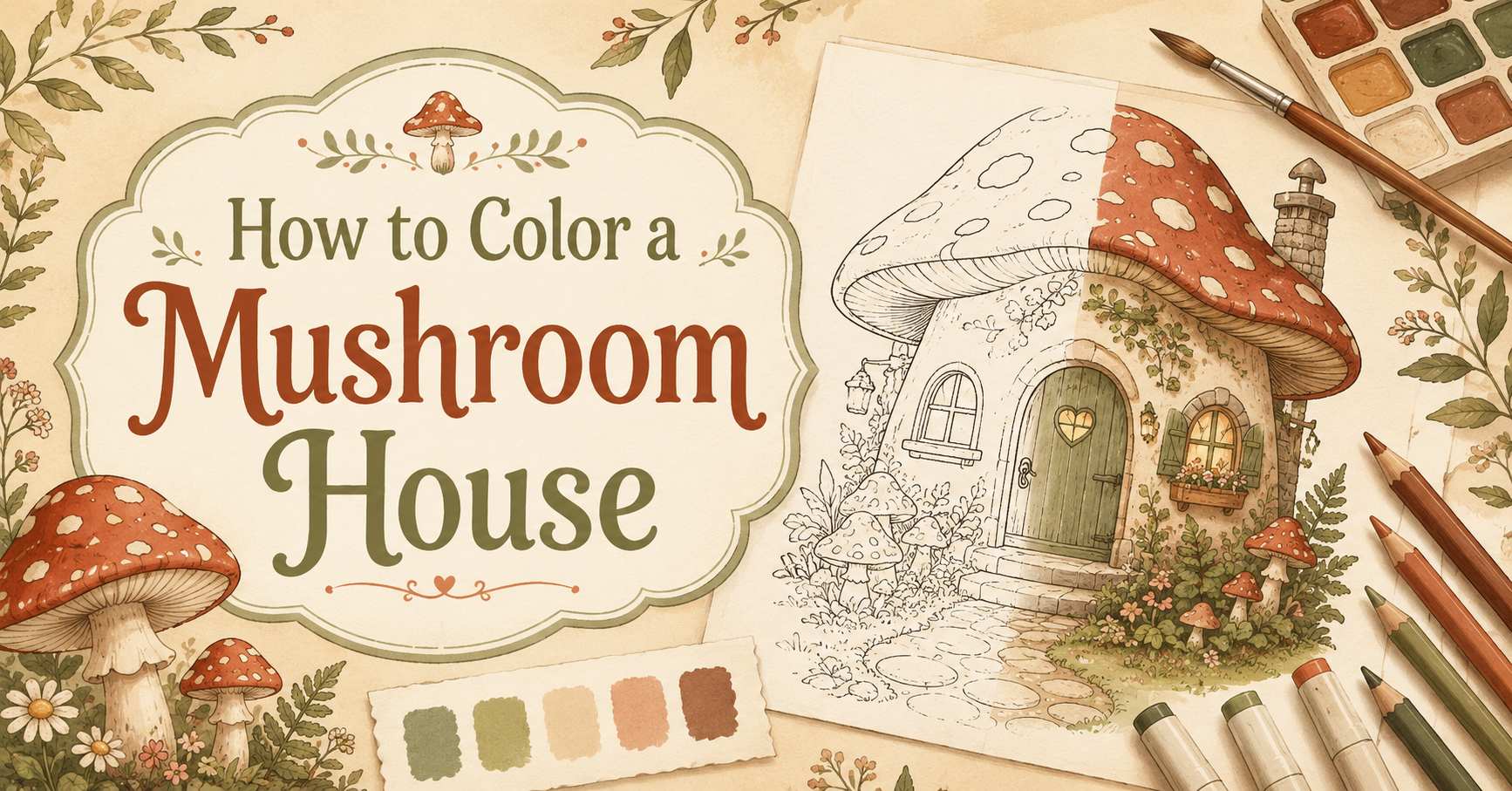
A mushroom house may begin as a simple black-and-white cottage, but the colors you choose decide who might live there.
A red roof and mossy garden can create a traditional woodland cottage. Lavender and pale blue can turn the same house into a delicate fairy home. Deep navy, violet, and golden windows can make it feel like a secret cottage discovered beneath the moon.
The best part is that there is no single correct way to color one.
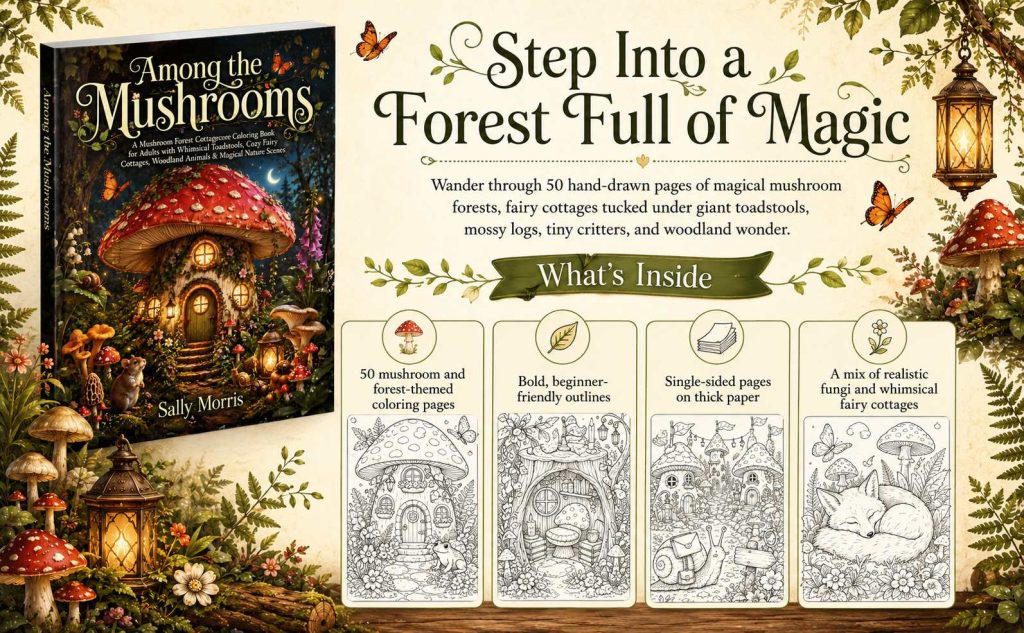
The mushroom house coloring pages featured below come from Among the Mushrooms, a whimsical cottagecore coloring book by Sally Morris. The book includes 50 single-sided pages filled with mushroom homes, fairy doors, woodland animals, ponds, lanterns, ferns, flowers, moss, and enchanted forest scenes.
Here are ten different ways to color a mushroom house and the small details surrounding it.
1. Classic Red and Cream Woodland Cottage
The traditional red mushroom cap is popular for a reason. It is cheerful, recognizable, and easy to coordinate with natural forest colors.
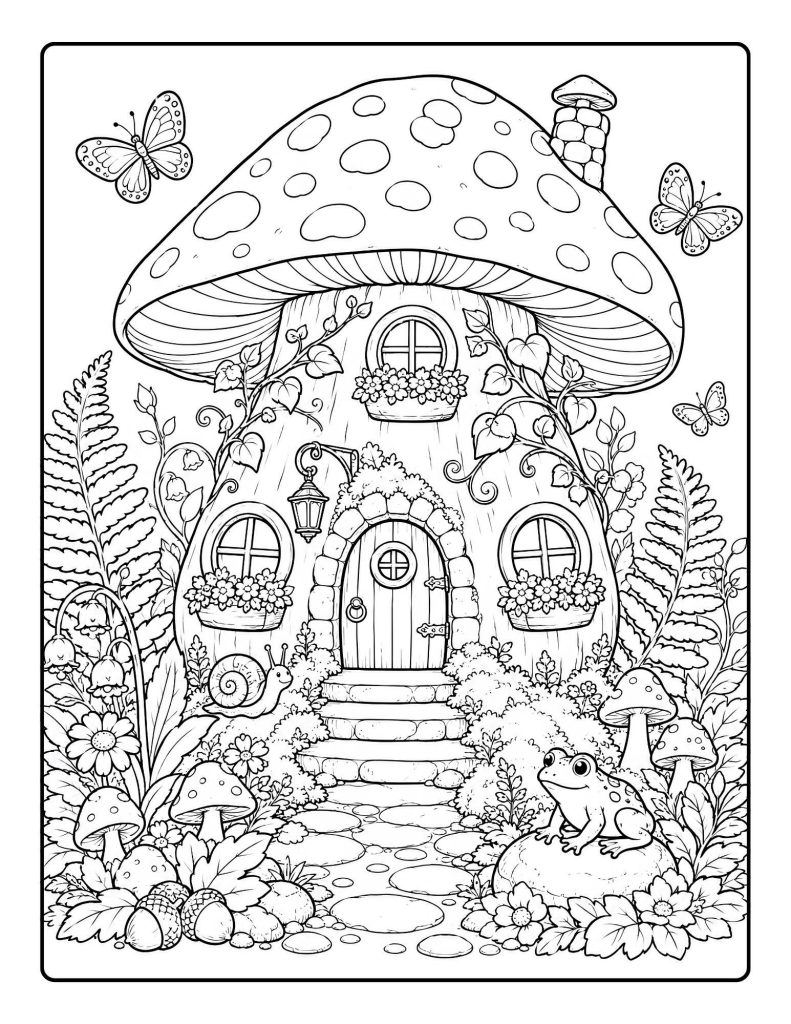
Use:
- deep red or rust for the roof
- cream for the spots and underside
- warm tan for the cottage walls
- dark brown for the door
- moss and forest green for the garden
- golden yellow for lanterns and windows
Add darker red beneath the edge of the mushroom cap and wherever vines or flowers overlap the roof.
The cottage walls do not need to be one flat shade. Use pale tan as the base, medium brown near the windows and door, and a little gray-brown beneath the roof.
A classic red roof looks especially attractive beside green ferns, purple flowers, and warm yellow window light.
Also check out: “How to Color an Axolotl: 10 Cute Color Palette Ideas“
2. Soft Pastel Fairy Cottage
Pastel colors can make a mushroom house feel light, magical, and gentle.
Try:
- dusty pink roof
- cream spots
- pale lavender door
- sage-green vines
- soft blue windows
- peach flowers
- light gray pathway
Use colored pencils with light pressure and build the color gradually. Heavy coloring can make pastels look brighter and stronger than intended.
Leave small areas of white on the roof, flowers, and windows to create highlights.
A pale pink cottage also pairs beautifully with mint, lavender, butter yellow, and warm cream.
3. Peaceful Pond Cottage
A mushroom house beside water looks especially inviting when warm cottage colors are balanced with cooler pond shades.

Try this combination:
- burgundy or warm red roof
- cream cottage walls
- blue-green pond
- sage lily pads
- soft gray stepping stones
- yellow lanterns
- pink and purple water flowers
Color the water lightly and use darker blue around the stepping stones, fish, plants, and shoreline.
Keep the cottage windows and lanterns warm. The contrast between cool water and golden light can make the home feel safe and welcoming.
A small amount of blue can also be reflected on the lower edges of stones and plants near the pond.
4. Lavender and Sage Cottagecore Home
Lavender and sage are useful when you want a cottagecore look without using very bright colors.
Use:
- dusty lavender mushroom roof
- warm cream spots
- sage-green ferns and vines
- muted brown door
- pale pink flowers
- golden window light
- beige stones
Repeat lavender in a few flowers or butterflies. Repeat sage around the garden and flower boxes.
The door could be muted green, warm brown, dusty blue, or pale gray.
This palette works well for quiet cottage scenes, reading nooks, flower gardens, and gentle woodland animals.
5. Cheerful Storybook Bakery
A mushroom bakery can use slightly brighter colors than a quiet forest home.

Try:
- coral or cherry-red roof
- turquoise door
- cream cottage walls
- yellow and white awning
- golden pie crusts
- red and purple berries
- bright green leaves
Color the food display first so you can decide which shades should be repeated around the cottage.
Berry colors can reappear in the flower pots. The awning colors can be repeated on the door, window frame, or baskets.
Avoid giving every item a completely different color. Repeating a small palette helps the bakery feel lively without becoming visually confusing.
Like these mushroom cottage ideas? The full Among the Mushrooms coloring book includes mushroom homes, forest bakeries, lantern paths, ponds, woodland animals, and cozy hidden places.
6. Honey-Gold Woodland Cottage
A warm golden palette can make a mushroom home feel sunny and comforting.
Use:
- mustard or honey-yellow roof
- pale cream spots
- warm beige walls
- chestnut-brown door
- olive and moss-green plants
- rust flowers
- amber lanterns
Add a small amount of orange near the lower edge of the roof to create warmth and depth.
Use darker brown around the door hinges, window frames, roof edge, and stone path.
This palette looks especially attractive with acorns, hedgehogs, foxes, baskets, autumn leaves, and forest berries.
7. Warm Autumn Hedgehog Cottage
Autumn is a natural fit for mushroom homes.
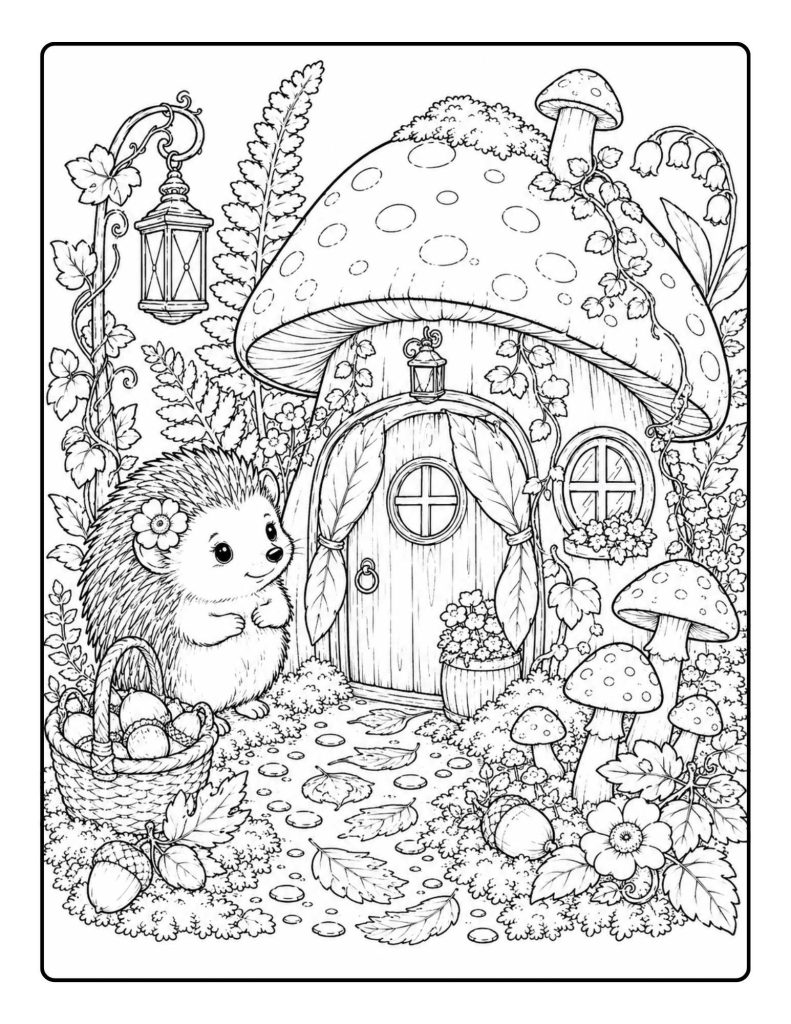
Choose:
- burnt-orange roof
- cream spots
- burgundy door or curtains
- olive-green vines
- golden-yellow flowers
- chestnut-brown paths and baskets
- rust, mustard, and red leaves
Mix the leaf colors instead of making every leaf orange.
The cottage can remain lighter than the surrounding plants so it stays easy to see. Warm cream, pale tan, or muted peach work well for the walls.
For a hedgehog, combine several browns across the spines and keep the face and belly light.
8. Moonlit Blue and Violet Cottage
A nighttime palette creates a completely different mood.

Use:
- midnight-blue mushroom roof
- violet shadows
- blue-gray walls
- charcoal door
- silver stars or moths
- pale yellow candlelight
- muted green ivy
The candle or lantern should be the lightest and warmest part of the scene.
You may also like: “How to Color Cottagecore Coloring Pages: 10 Cozy Palette Ideas“
Begin with pale yellow around the flame. Add golden yellow farther outward, then use a small amount of orange near the center.
Surround the window with cool blues, violets, and gray. This contrast will make the light appear stronger.
Leave a narrow white highlight on the window frame or candle flame.
9. Jewel-Tone Fairy House
Jewel tones can make a cottage feel rich and magical.
Try:
- amethyst-purple roof
- emerald-green vines
- sapphire-blue door
- ruby-red flowers
- deep teal shadows
- antique-gold lanterns
- cream highlights
Use jewel tones in selected areas rather than applying every strong color everywhere.
The cottage walls can remain cream, light gray, or pale tan. This neutral area will keep the richer colors from competing.
Metallic or glitter gel pens can add small accents to lanterns, door handles, stars, flower centers, and window frames.
10. Earthy Forest-Root Cottage
A cottage hidden between old tree roots can blend almost completely into its surroundings.

Use:
- walnut and chestnut brown for the roots
- muted red or brown mushroom caps
- olive and moss green for plants
- warm gray stones
- cream flowers
- dark green ivy
- antique-gold lanterns
Use several brown shades on the tree rather than one solid color.
Follow the direction of the bark with your pencil strokes. Add darker brown in cracks, beneath overlapping roots, around the door, and behind mushrooms.
Pale tan can be used on raised areas where light would touch the wood.
This earthy palette works well when you want the cottage to feel old, hidden, and naturally grown into the forest.
Like these cozy mushroom-house palettes? You can use them on the fairy cottages, bakeries, pond homes, tree-root hideaways, and forest villages inside the full Among the Mushrooms coloring book.
How to Color the Mushroom Roof
The roof is usually the largest area of a mushroom house, so it naturally becomes the main focus.
Begin with a light layer of your chosen color.
Add darker shading:
- beneath the lower edge
- around the outer sides
- behind flowers and vines
- near the chimney
- beneath raised spots
- where the roof overlaps the cottage walls
Leave the upper center slightly lighter to suggest soft light.
The spots may be white, cream, pale yellow, pink, or a lighter version of the roof color.
For a softer look, outline each spot with a slightly darker shade rather than leaving a sharp white circle.
How to Color the Mushroom Underside
The underside of a mushroom cap contains lines that spread outward like a fan.
Color between the lines with a light cream, tan, pink, gray, or lavender.
Add darker shading near:
- the center where the stem meets the cap
- the outer edge
- areas beneath deep folds
- the side facing away from the light
Avoid filling every line with heavy black or dark color. Gentle shading will keep the underside soft and dimensional.
How to Color Cottage Walls
Mushroom cottage walls often resemble thick stems.
Useful colors include:
- warm cream
- pale tan
- light peach
- muted pink
- blue-gray
- soft brown
- warm white
Use vertical pencil strokes to suggest natural texture.
Add shadows beneath the roof, around windows, behind vines, and beside the door.
The walls should usually be quieter than the roof so the mushroom cap remains the main feature.
Choosing Colors for Doors and Windows
The door can add personality to the cottage.
Try:
- red for a traditional home
- sage for a soft cottagecore home
- lavender for a fairy house
- turquoise for a cheerful storybook cottage
- burgundy for an autumn home
- navy for a moonlit cottage
- brown for a natural woodland house
Windows can appear dark, reflective, or warmly lit.
For glowing windows, use cream, pale yellow, gold, and a small amount of orange.
For daytime windows, use pale blue, blue-gray, or a reflection of nearby greenery.
Coloring the Cottage Garden
Choose two or three greens rather than one.
For example:
- pale sage for soft leaves
- medium fern green for most plants
- dark forest green for shadows
Select two or three flower colors and repeat them throughout the scene.
A balanced garden might use lavender, pale yellow, and dusty pink flowers with sage and forest-green leaves.
Stones can be warm gray, beige, brown, or mossy green.
Who May Enjoy These Mushroom House Ideas?
These palettes may be helpful for:
- adults and teens coloring mushroom cottages
- cottagecore and goblincore fans
- beginners who struggle to choose colors
- experienced colorists trying a new mood
- seniors enjoying relaxing coloring activities
- nature and mushroom lovers
- colored-pencil users
- marker users
- fantasy and fairy-house fans
- gift buyers looking for creative inspiration
Each idea can be followed closely or changed to match the supplies you already own.
Final Thoughts
A mushroom house can become a different home every time you color it.
One page may become a classic red woodland cottage. Another can become a lavender fairy home, a golden autumn retreat, a cheerful village bakery, or a moonlit hideaway with glowing windows.
Begin by choosing the feeling you want the cottage to have.
Warm, cheerful, quiet, magical, earthy, or mysterious?
Once you know the mood, choosing colors becomes much easier.
Disclosure:
This post may feature HoneySketch books or products. If you purchase one of our books through a link on this page, HoneySketch may earn royalties or income from that sale at no extra cost to you.