Flowers can be colored in almost any way imaginable.
A rose may be red, pink, yellow, lavender, blue, or a completely invented combination. Leaves can be bright spring green, deep forest green, soft sage, or even purple.
That freedom makes floral pages especially enjoyable for colorists who do not want to worry about choosing the “correct” colors.
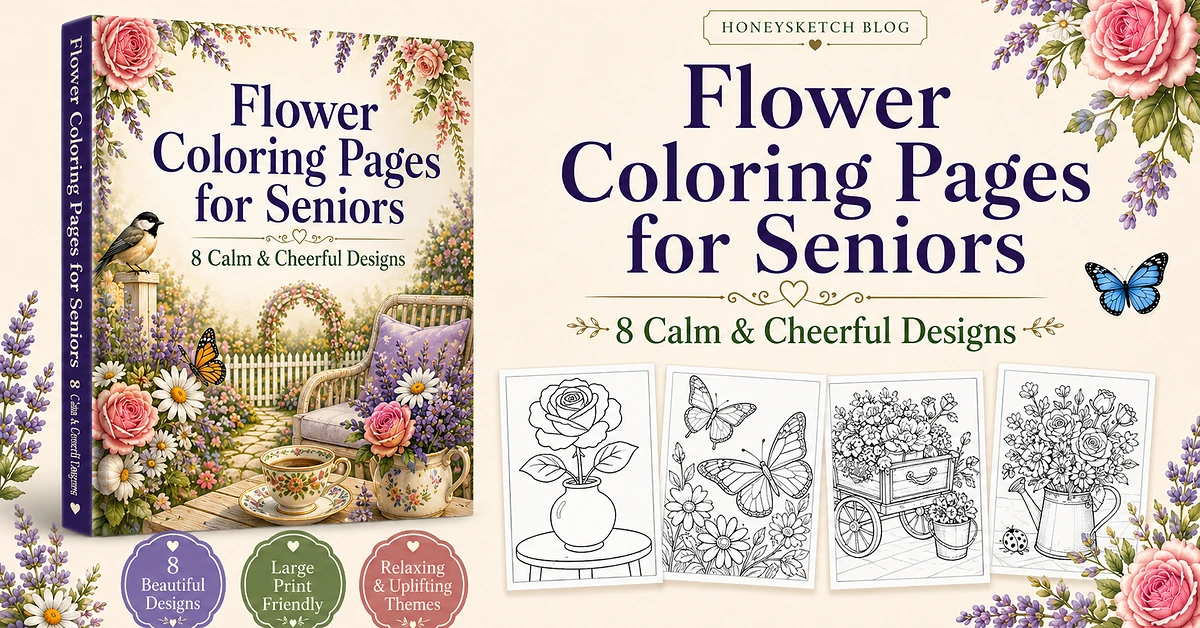
The flower coloring pages in this collection range from one simple rose to fuller garden scenes with benches, butterflies, flower carts, and familiar outdoor settings.
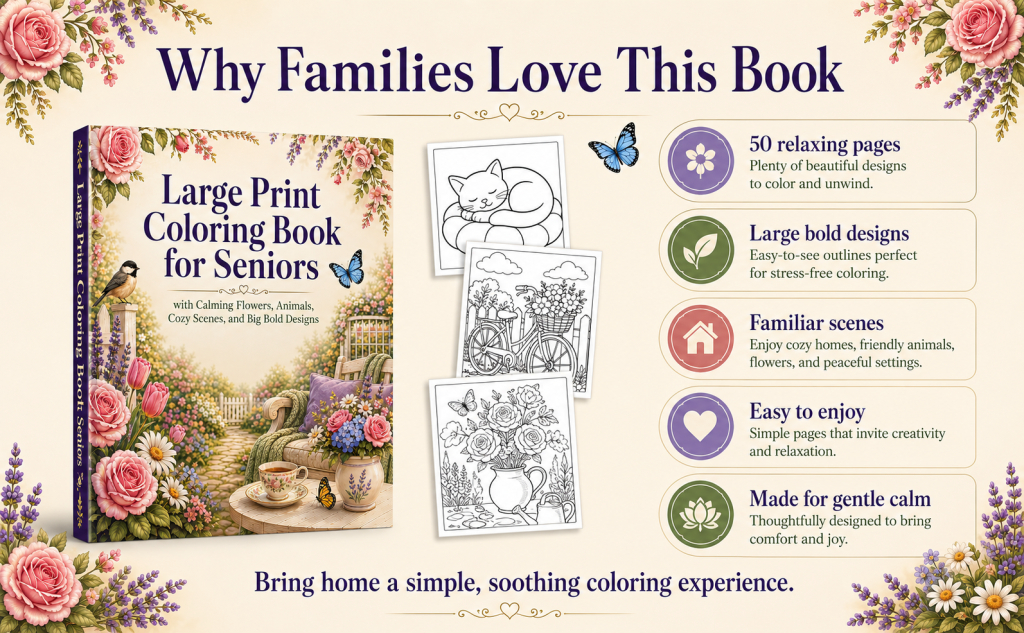
Each design comes from the HoneySketch Large Print Coloring Book for Seniors, which includes 50 single-sided pages with flowers, animals, cozy scenes, and bold outlines.
Why flower coloring pages offer so much variety
Flowers can support many different coloring styles.
A beginner can fill each petal with one solid color. Someone who enjoys extra detail can blend two shades, add darker petal edges, or use several colors across one bouquet.
Floral pages also make it easy to create a coordinated palette.
Choose three to five colors and repeat them throughout the image. This gives the finished page a balanced look without requiring a new decision for every petal.
1. One large rose in a vase
The single rose page is one of the clearest floral designs in the book.
The large flower is the main focus. Two broad leaves, a round vase, and a simple tabletop complete the picture without distracting from the rose.

Like these floral designs? The complete HoneySketch paperback includes 50 single-sided coloring pages featuring flowers, animals, pets, gardens, porches, and other familiar scenes.
Like these floral designs? The complete HoneySketch paperback includes 50 single-sided coloring pages featuring flowers, animals, pets, gardens, porches, and other familiar scenes.
Simple rose color combinations
Try:
- pink rose, sage leaves, cream vase
- yellow rose, dark green leaves, blue vase
- red rose, olive leaves, pale gray vase
- lavender rose, mint leaves, soft pink vase
- peach rose, forest green leaves, turquoise vase
The petals can all use one color. For a little more depth, use a darker shade near the center of the flower and a lighter shade toward the outer petals.
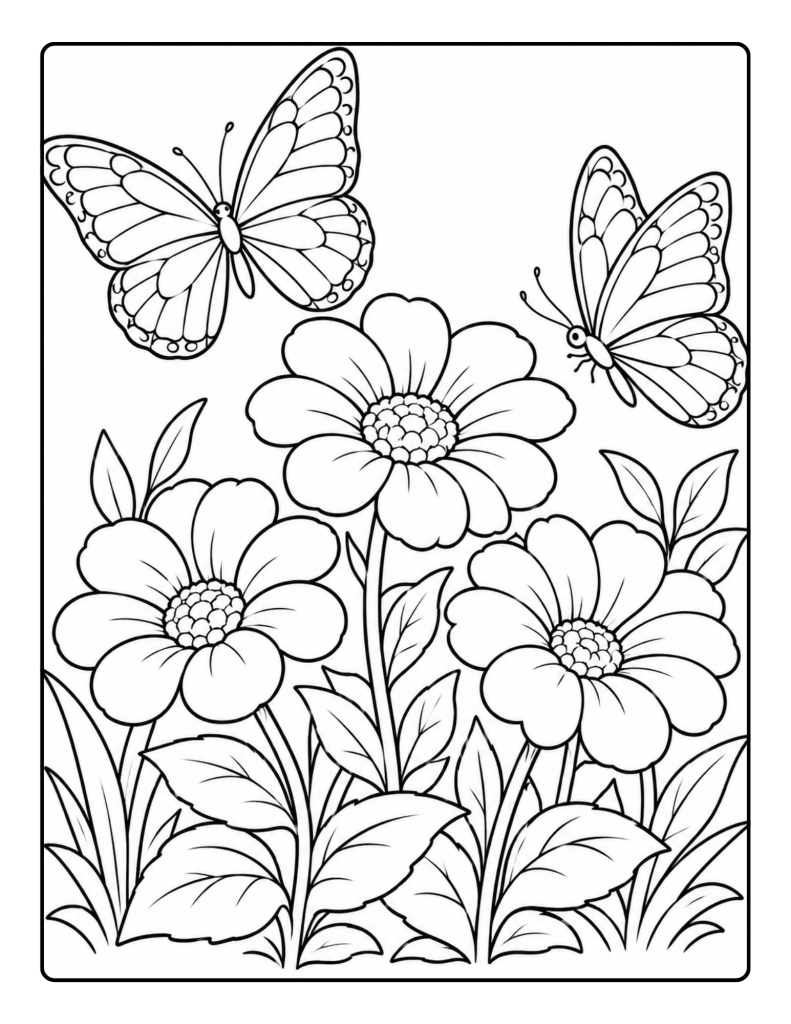
2. Three flowers with butterflies
This page adds more variety while keeping the main shapes large.
Three open flowers fill most of the design, with two butterflies above them. The petals are broad, and the butterfly wings are divided into clear sections.
Cheerful palette ideas
For a bright spring palette:
- yellow
- coral
- sky blue
- leaf green
- lavender
For a softer garden palette:
- dusty rose
- sage green
- pale purple
- warm cream
- muted blue
For a bold palette:
- deep red
- bright orange
- turquoise
- violet
- dark green
The three flowers can match, or each flower can use a separate color family.
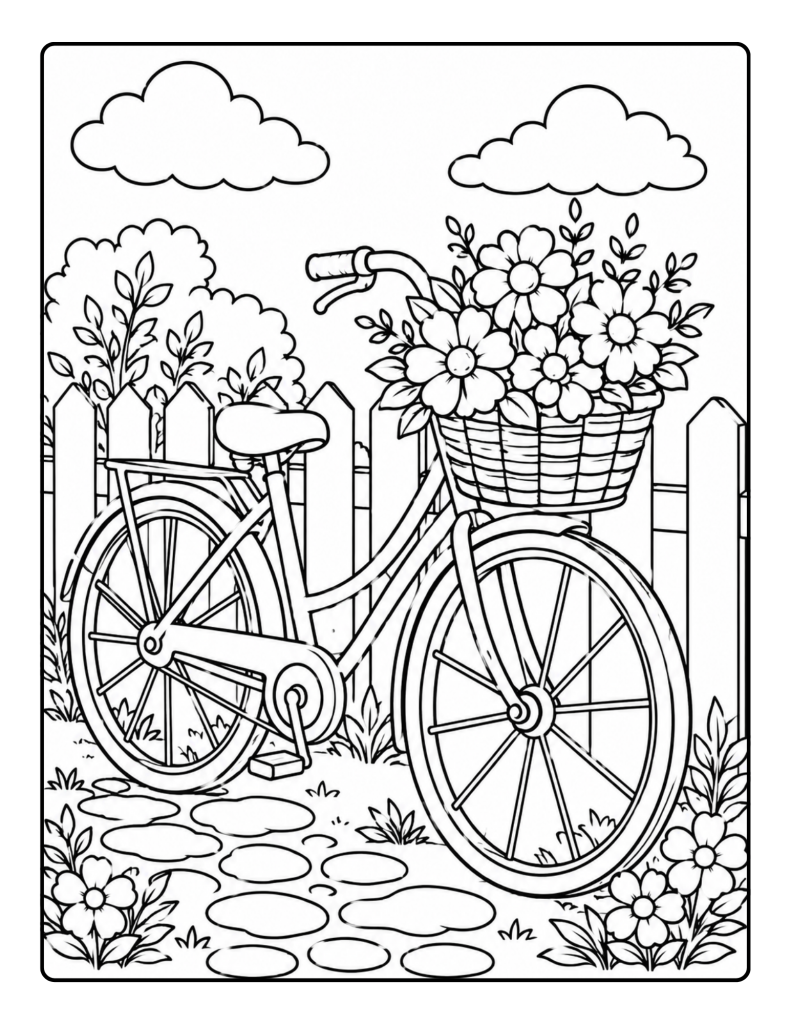
3. A bicycle basket filled with flowers
The bicycle page combines a familiar object with a cheerful floral arrangement.
The large wheels provide open spaces, while the basket flowers, fence, plants, and stepping stones offer smaller areas for anyone who enjoys more detail.
An easy way to color the bicycle page
Work in stages:
- Choose one main color for the bicycle frame.
- Color the tires and metal parts.
- Select three flower colors.
- Add green to the leaves.
- Finish the fence and ground.
The bicycle might be blue, red, mint green, yellow, lavender, or black.
For a vintage look, use soft cream for the fence and dusty rose, lavender, and pale yellow for the basket flowers.
4. A wooden garden cart overflowing with flowers
The garden cart is filled with roses, daisies, tulips, and leafy branches.
Although this page contains more detail, the objects remain familiar and clearly separated.

A person can color only the largest flowers first and return to the leaves, cart, watering can, and background later.
Garden cart palette ideas
For a cottage garden look:
- blush pink roses
- white or yellow daisies
- purple tulips
- sage and olive leaves
- warm brown cart
- pale blue watering can
For a brighter look:
- red roses
- orange tulips
- yellow daisies
- emerald green leaves
- turquoise watering can
- golden brown cart
Repeating the same flower colors across the page can make a detailed image easier to organize.
Find More Flower Pages in the Full Book
5. A rose-covered garden arch
The garden arch page is designed for someone who wants a longer, more detailed project.
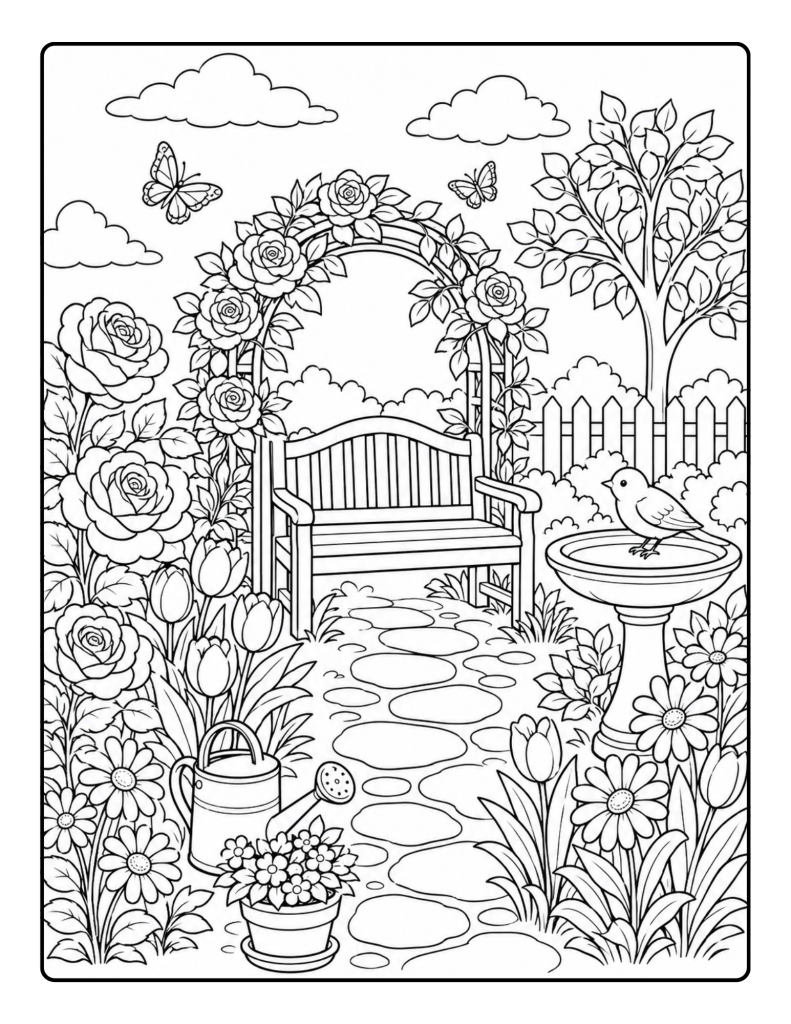
It includes:
- climbing roses
- a garden bench
- tulips
- daisies
- a birdbath
- a small bird
- a watering can
- butterflies
- a winding stone path
The page can be divided into sections rather than colored from top to bottom in one sitting.
A simple section-by-section plan
Start with the bench and arch.
Next, color the large roses. Add green to the surrounding leaves. Continue with the tulips, daisies, birdbath, and watering can.
Save the stone path and background for last.
Stopping halfway does not mean the page is unfinished. A partly colored garden can still look beautiful and be continued another day.
6. A welcoming front porch filled with flowers
The front porch page combines symmetry, familiar architecture, and several large flower arrangements.
Two matching flowerpots sit beside the door, with extra flowers near the steps and a hanging plant above.
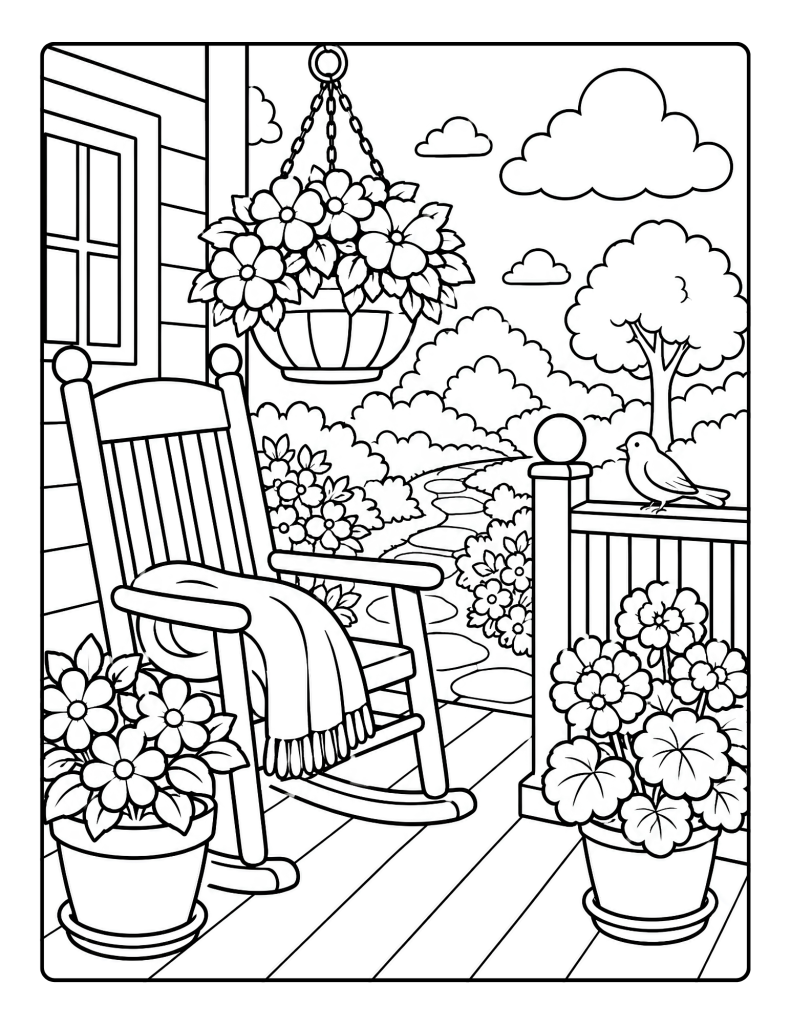
Because similar flower groups appear on both sides, the same palette can be repeated.
Front porch color ideas
Try:
- navy door with pink and white flowers
- red door with yellow flowers
- sage green door with lavender flowers
- pale blue door with coral flowers
- purple door with cream and pink flowers
The flowerpots can match the door or use a neutral shade such as terracotta, gray, beige, or white.
Choosing a flower page by detail level

Very easy
Choose a page with one large focal point:
- single rose in a vase
- one butterfly on a flower
- one large daisy
Relaxing and moderately detailed
Choose a page with a few flowers and simple supporting elements:
- three flowers with butterflies
- flower-filled front porch
- bicycle with a flower basket
More detailed
Choose a full garden scene:
- flower cart and watering can
- garden bench beneath a rose arch
- porch with several flowerpots
- birdbath surrounded by flowers
The page should match the person’s comfort and energy, not an expected skill level.
Easy ways to color flower petals
Use one solid color
This is the simplest method. Fill each petal with the same color and leave the center a contrasting shade.
Alternate two colors
Use one color on every other petal. This works especially well for daisies and simple flowers.
Use light and dark shades
Choose two pencils from the same color family. Use the darker shade near the center and the lighter shade toward the petal tip.
Create a rainbow flower
Use a different color on each petal. Realistic color is not required.
Leave a little white space
Color only the edges or centers of the petals. Leaving part of the paper white can create a soft highlighted effect.
Calming floral color palettes
Soft cottage garden
- dusty rose
- lavender
- sage green
- warm cream
- pale blue
Cheerful spring garden
- sunflower yellow
- coral
- sky blue
- grass green
- violet
Classic rose garden
- red
- blush pink
- forest green
- cream
- soft gray
Peaceful pastel garden
- pale pink
- mint
- light purple
- peach
- powder blue
Warm autumn flowers
- rust
- golden yellow
- burgundy
- olive green
- warm brown
Limiting the palette to five colors can make a detailed page feel more manageable.
Who may enjoy these flower coloring pages?
These pages may be a good fit for:
- seniors who enjoy flowers and gardens
- older adults who prefer large print designs
- beginners looking for easy floral pictures
- grandparents and elderly parents
- caregivers planning a quiet creative activity
- assisted living activity groups
- memory care activity programs
- adults who find tiny mandalas difficult to see
- garden lovers
- gift buyers looking for a thoughtful activity book
Some people may prefer one simple flower, while others may enjoy the busier garden pages. Offering two or three choices can make it easier to find the right page.
Tips for a comfortable flower-coloring session
Begin with good lighting and a clear table.
Offer a manageable number of supplies rather than every color available. Six to twelve colors may be enough for the first session.
Place the easiest-to-hold tools closest to the colorist. Thick crayons, triangular pencils, or comfortable markers may be useful depending on individual preference.
There is no need to complete the entire page.
A person might color one rose, one butterfly, or one flowerpot and return later.
Final thoughts
Flower coloring pages can be simple, detailed, realistic, or completely imaginative.
One large rose provides a gentle beginning. A bicycle basket offers a familiar and cheerful scene. A flower cart or garden arch creates a longer project for someone who enjoys adding many colors.
No two finished pages need to look the same.
Disclosure:
This post may feature HoneySketch books or products. If you purchase one of our books through a link on this page, HoneySketch may earn royalties or income from that sale at no extra cost to you.