A coloring page should feel inviting when a child first looks at it.
Clear shapes, visible outlines, and an easy-to-understand main character can make the difference between “I want to color this” and “This looks like too much work.”
That is why bold-line coloring pages are useful for young artists and beginners. They make the main areas easier to see while still leaving room for personal colors, patterns, stories, and decorations.
The pages featured in this post are previews from The Big Axolotl Adventure Coloring Book by Sally Morris.
The book contains 50 single-sided axolotl designs for kids ages 6–10. Its scenes include ocean animals, food, camping, space, friendship, fantasy, school, art, music, and adventure.
What Makes a Coloring Page Feel Easy?
“Easy” does not have to mean empty or boring.
A page can contain a complete scene while still being approachable. Helpful features include:
- Thick, clearly visible outlines
- One large central character
- Large open coloring spaces
- Recognizable objects
- Limited tiny details
- Background elements that can be colored or left blank
- Simple repeating shapes
- A clear visual focus
These features allow children to begin with the largest area instead of wondering where to start.
They can color the main character first, complete a few background objects, or finish every part of the page depending on their mood and available time.
Large Shapes Make It Easy to Begin
The giant ice cream page is a good example of an easy design that still feels playful.
The axolotl and ice cream cone fill most of the page, and the three scoops provide large rounded spaces that work well with crayons, broad markers, or colored pencils.
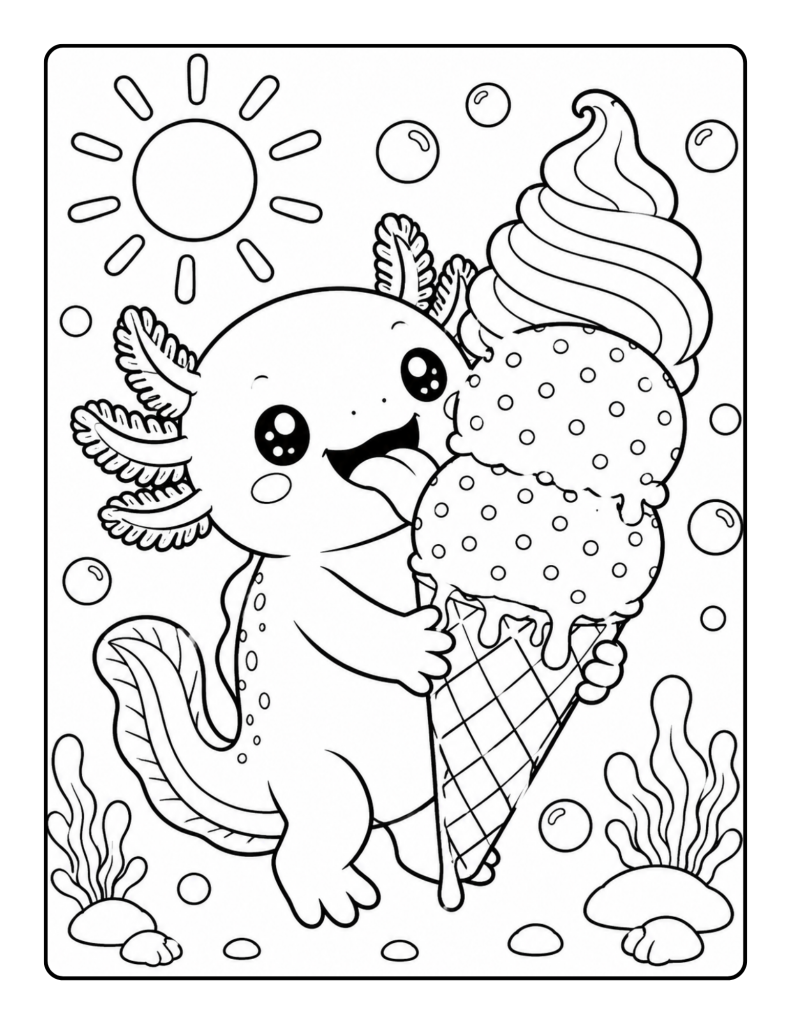
Children can give each scoop a different color or keep the entire cone within one coordinated palette.
Possible flavor ideas include:
- Strawberry pink
- Mint green
- Chocolate brown
- Blueberry blue
- Lemon yellow
- Rainbow sherbet
The bubbles, sun, rocks, and sea plants are optional details. A child can color them all or focus only on the axolotl and ice cream.
Discover 50 Bold and Playful Pages
Explore easy-to-see outlines, cheerful characters, and imaginative scenes in the complete coloring book.
See The Big Axolotl Adventure Coloring Book on Amazon
Easy coloring tip
Start with the largest shape on the page.
Finishing one large scoop or the axolotl’s body can quickly make the page feel less empty and help build confidence.
Clear Characters With Simple Backgrounds
The axolotl-and-starfish page uses two large characters as its main focus.
The background includes hearts, shells, stones, and plants, but those details do not compete with the central hug.
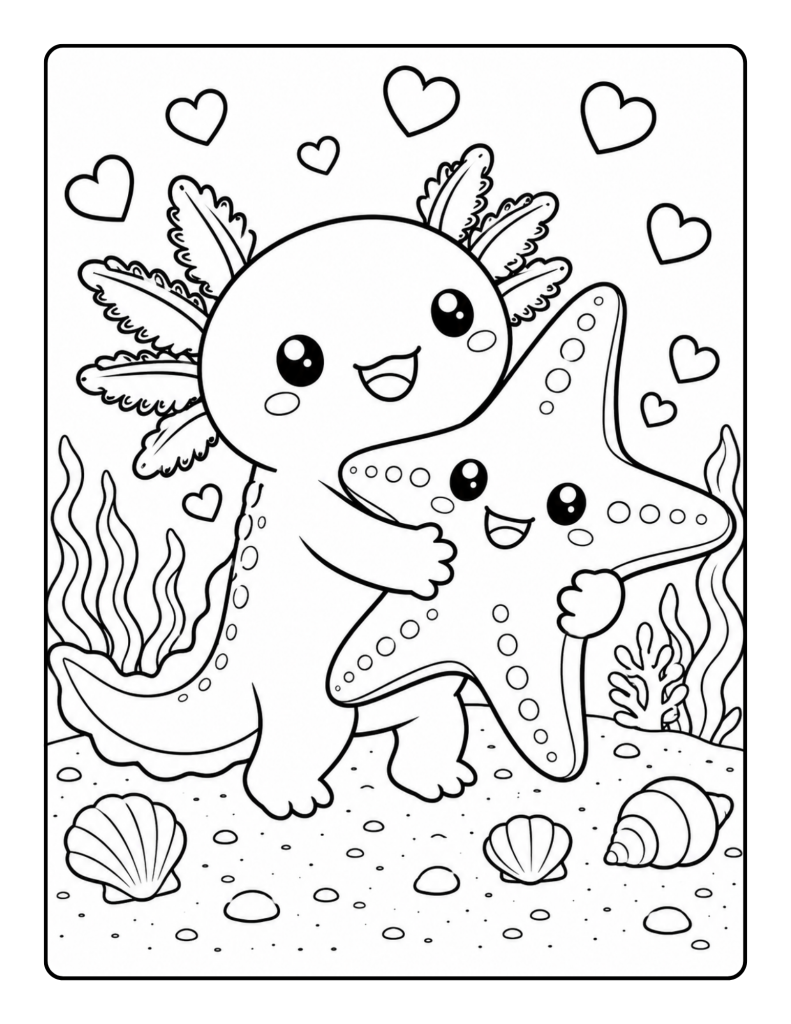
This type of composition works well because children can immediately understand the scene.
The axolotl can be pink, blue, green, purple, or any color the child prefers. The starfish can be orange, yellow, coral, rainbow-striped, or covered with colorful dots.
The surrounding hearts can repeat colors from both characters, helping the finished page look connected.
Children who are unsure which colors to choose can use these 10 cute axolotl color palette ideas
Repeating Shapes Can Feel Relaxing
The dancing axolotl page includes music notes and swirling rows of bubbles.
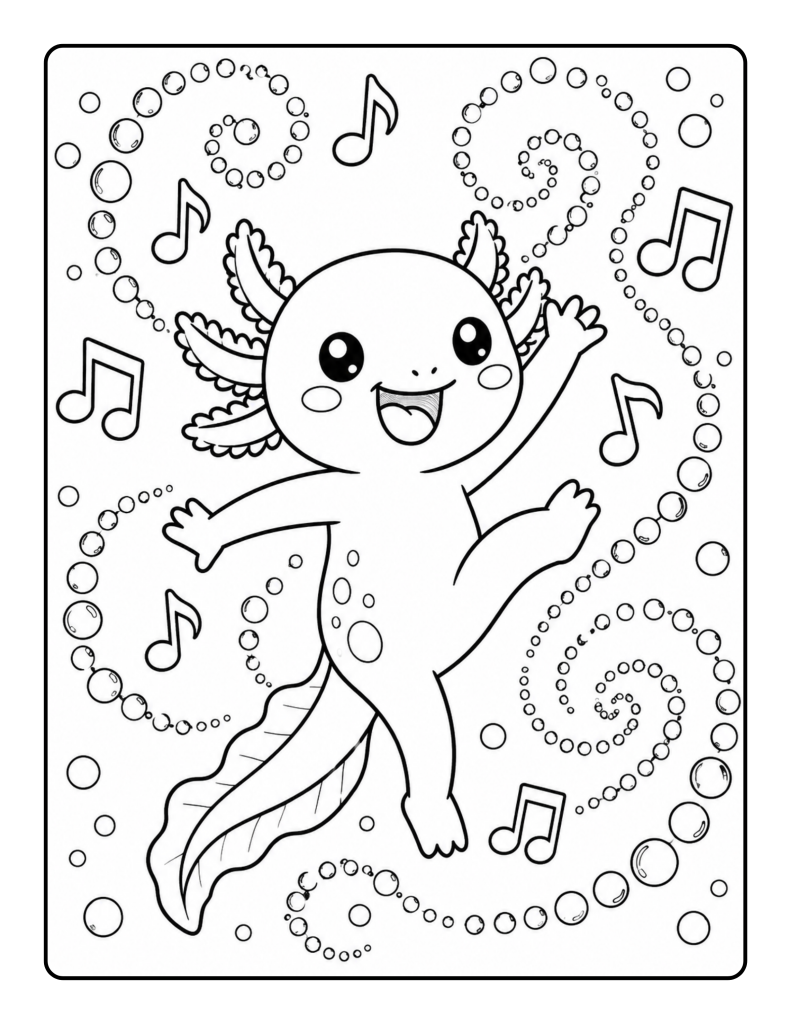
Repeating shapes can feel calming because children do not need to make a brand-new decision for every small area.
They might:
- Color every music note the same color
- Alternate two colors through each bubble spiral
- Create a rainbow sequence
- Use light and dark versions of one shade
- Leave some bubbles white as highlights
The large axolotl remains the main subject, while the repeating background patterns add movement without becoming too complicated.
Bold Outlines Can Still Support Imagination
Simple pages do not limit creativity.
The superhero design uses clear costume sections, large boots, a flowing cape, and simple city buildings. Those areas give children plenty of room to invent an original character.
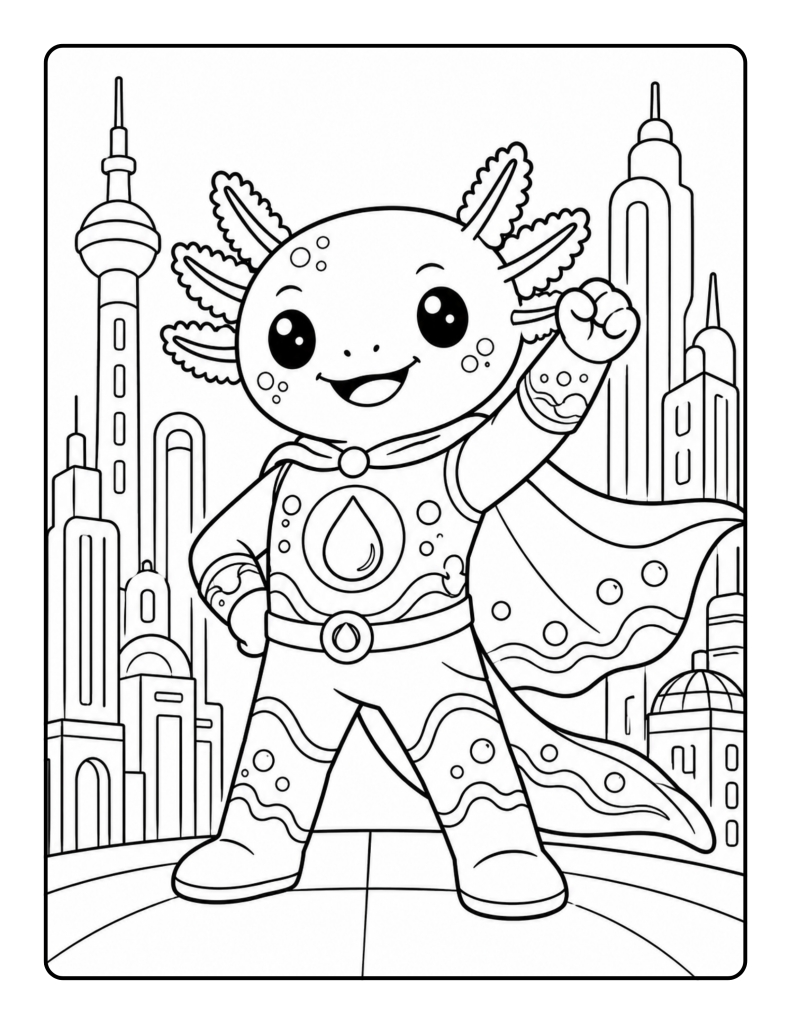
They can choose:
- A superhero name
- Costume colors
- A symbol
- Special powers
- A mission
- The colors of the city
A red-and-blue costume can feel classic, while purple and gold create a royal hero. Pink and silver produce a bright futuristic look, and teal with orange creates strong contrast.
A Simple Page Can Become a Custom Character
The design-your-own-axolotl activity gives children a clean character outline and clear spaces for choosing the colors of the gills, eyes, body, and tail.
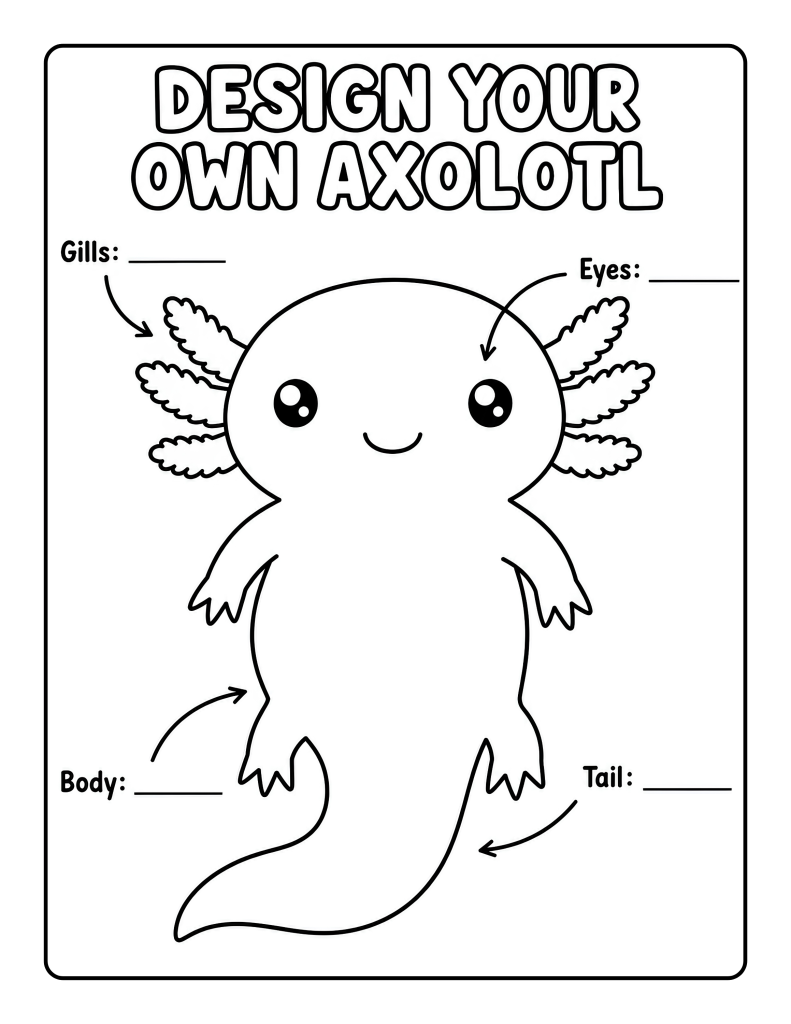
Because the background is minimal, attention stays on the child’s own decisions.
They can add:
- Spots
- Stripes
- Hearts
- Stars
- Freckles
- Scales
- A crown
- Glasses
- A costume
- A backpack
After coloring, the child can give the axolotl a name and special personality.
A simple outline becomes a completely original character.
Add Detail Only When You Want It
The pearl discovery page has a large axolotl, shell, and pearl in the center.
Those three objects are enough to create a finished-looking page.
Children who want a longer activity can continue with the background seaweed, shells, stones, bubbles, and tiny sparkles.

This flexibility is important.
Some days, a child may want to color every detail. On another day, coloring only the central character and pearl may feel like enough.
Both versions are complete creative experiences.
Ready for More Easy Axolotl Fun?
Discover 50 cute, playful, and beginner-friendly designs in the full coloring book.
View The Big Axolotl Adventure Coloring Book on Amazon
Why Bold Lines Can Help Young Artists
Big outlines make it easier to identify where one shape ends and another begins.
They can also help with:
- Hand control
- Color placement
- Visual focus
- Recognizing separate objects
- Completing a page in shorter sessions
- Reducing frustration with tiny areas
Coloring outside a line is not a mistake that ruins the page. The lines simply provide a helpful guide.
Children can still shade, mix colors, add patterns, and draw additional details if they want a more advanced result.
Best Coloring Supplies for Bold-Line Pages
Crayons
Crayons are useful for large spaces and relaxed coloring.
They are easy to hold, portable, and simple to layer.
Colored pencils
Colored pencils provide more control for small objects such as eyes, stars, shells, and costume details.
Children can press lightly for soft colors or add extra layers for a darker result.
Markers
Markers create bright, even colors and can fill large areas quickly.
Place a blank sheet behind the active page to help protect the next design. Very wet markers may still bleed through, so test carefully.
Mixed supplies
Children can use crayons for the background, pencils for details, and markers for the main character.
There is no requirement to use only one type of coloring tool.
Easy Ways to Begin a Page
A child who does not know where to start can try one of these methods.
Start with the character
Choose the axolotl’s body and gill colors before working on the background.
Choose only four colors
A limited palette reduces the number of decisions and can make the final page look coordinated.
Color one object at a time
Finish the ice cream, starfish, pearl, or superhero costume before moving to the next object.
Use light colors first
Beginning with pale colors makes it easier to add darker layers later.
Leave some areas white
Every bubble, cloud, shell, or background space does not need to be filled.
White areas can help the colored sections stand out.
Who Are Easy Axolotl Coloring Pages Good For?
These pages can be a good choice for:
- Kids ages 6–10
- Beginning colorists
- Children who prefer large shapes
- Young artists who become frustrated by tiny details
- Parents looking for a quiet activity
- Teachers needing an easy classroom reward
- Families preparing for travel
- Children who want a quick creative break
The pages can also suit older children who enjoy adding patterns, shading, and custom backgrounds to simpler designs.
Final Thoughts
An easy coloring page should not feel plain.
It should offer a clear place to begin and enough freedom to make the finished artwork personal.
Large ice cream scoops, friendly characters, repeated bubbles, superhero costumes, blank character designs, and glowing pearls all provide simple starting points with plenty of room for imagination.
Explore all 50 bold-lined scenes in The Big Axolotl Adventure Coloring Book by Sally Morris.
Disclosure
This post may feature HoneySketch books or products. If you purchase one of our books through a link on this page, HoneySketch may earn royalties or income from that sale at no extra cost to you.