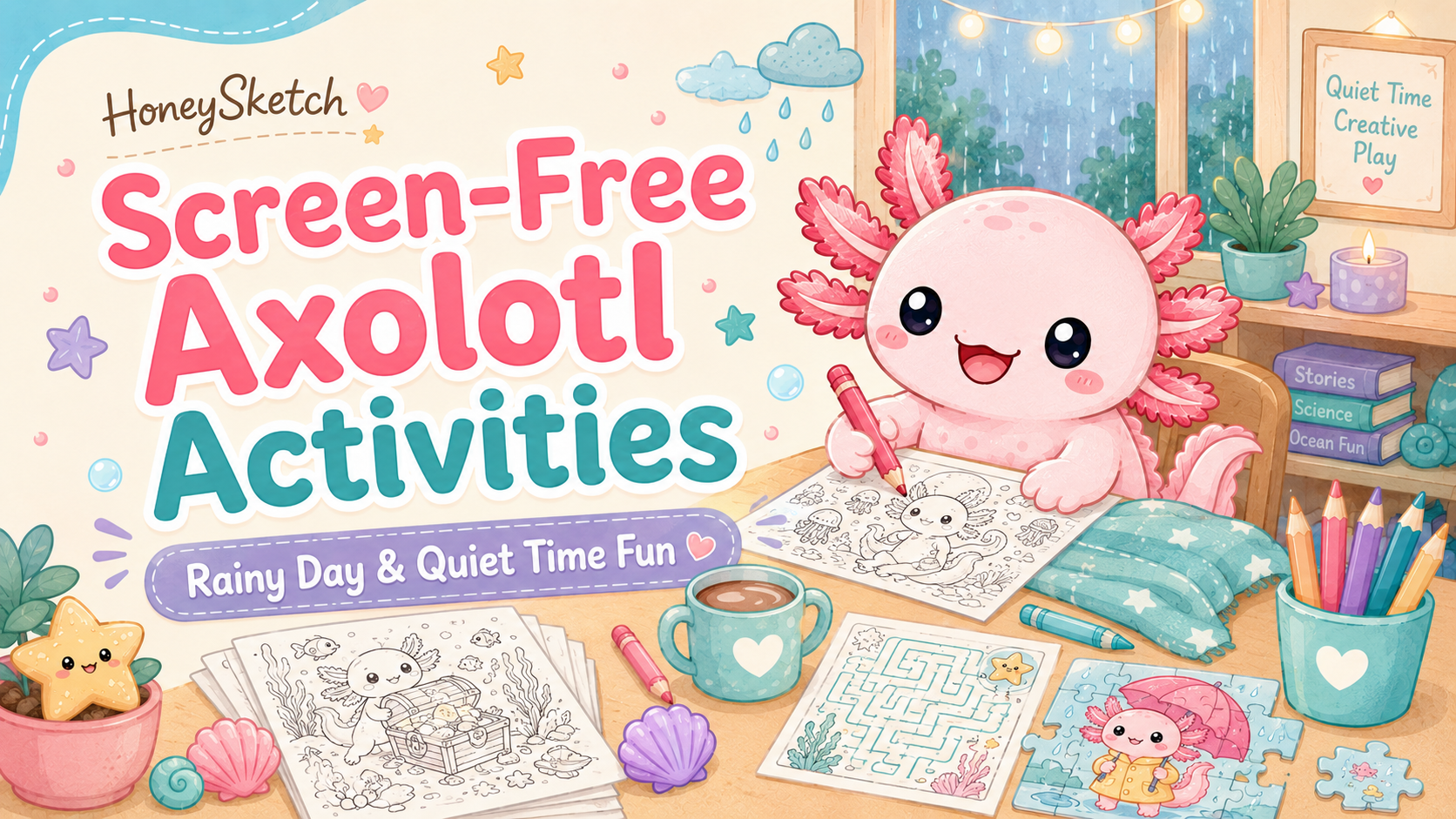
A rainy day can feel long when children have energy but outdoor plans are no longer possible.
Quiet time can also be difficult when a child wants something interesting to do but the family needs a calmer pace.
Screen-free activities do not need to be complicated, expensive, or perfectly organized.
A coloring book, a few art supplies, blank paper, and a little imagination can create an entire afternoon of small creative choices.
The pages featured in this post come from The Big Axolotl Adventure Coloring Book by Sally Morris.
The book includes 50 cute and easy axolotl scenes for kids ages 6–10, with bold outlines, single-sided pages, and themes such as ocean life, friendship, food, school, camping, music, fantasy, and adventure.
The ideas below use those pages as starting points.
Families can choose one activity, combine several, or save different ideas for different days.
Keep the Setup Simple
A useful quiet-time station can fit in one box or basket.
Consider including:
- Coloring book
- Crayons or colored pencils
- Pencil sharpener with a closed container
- Blank paper
- Folder for finished pages
- A few stickers
- Child-safe scissors and glue, with supervision
- Clipboard or firm surface for travel
Too many supplies can feel distracting.
Start with a small selection and add something new only when the child needs another option.
Activity 1: Quiet Coloring at the Desk
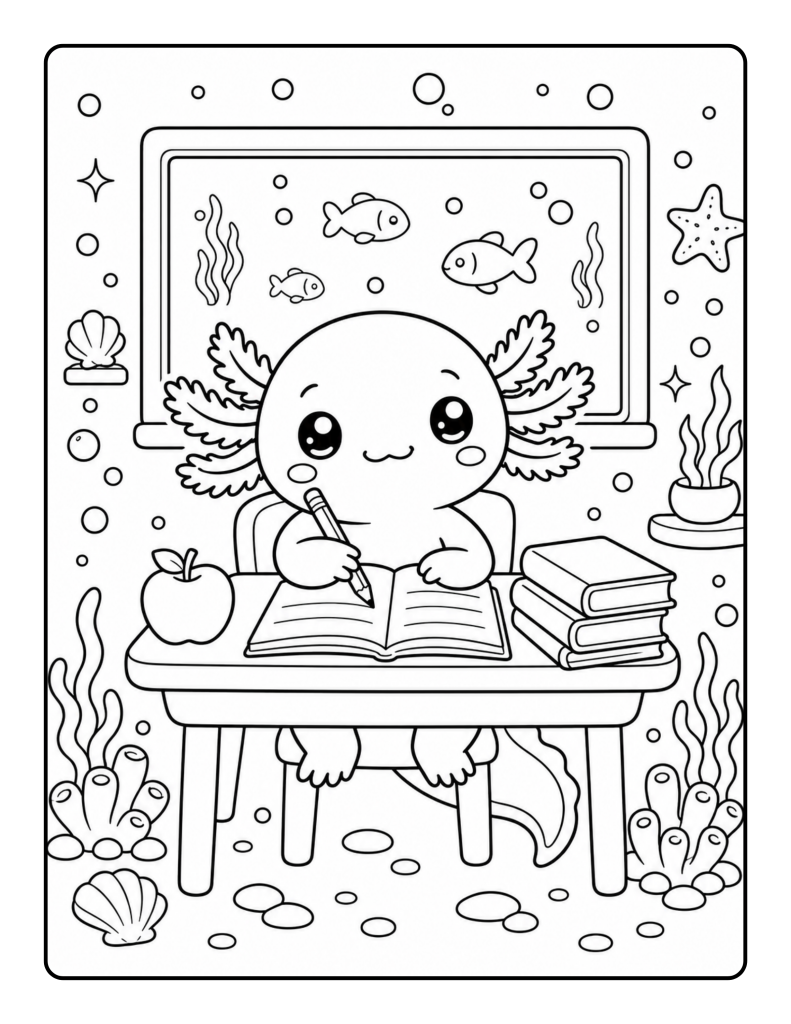
The school-desk page is a natural choice for an independent coloring session.
The main character, books, apple, notebook, window, and sea plants are clear and easy to identify.
Invite the child to choose a limited palette of four or five colors.
A small palette reduces the number of decisions and can make the finished page feel connected.
There is no need to complete the page in one sitting.
Color the axolotl and desk first, then return to the books and background later.
Explore 50 Screen-Free Coloring Adventures
Discover camping, art, music, reading, friendship, food, fantasy, and underwater activities in the full coloring book.
See The Big Axolotl Adventure Coloring Book on Amazon
Activity 2: Color and Tell a Story
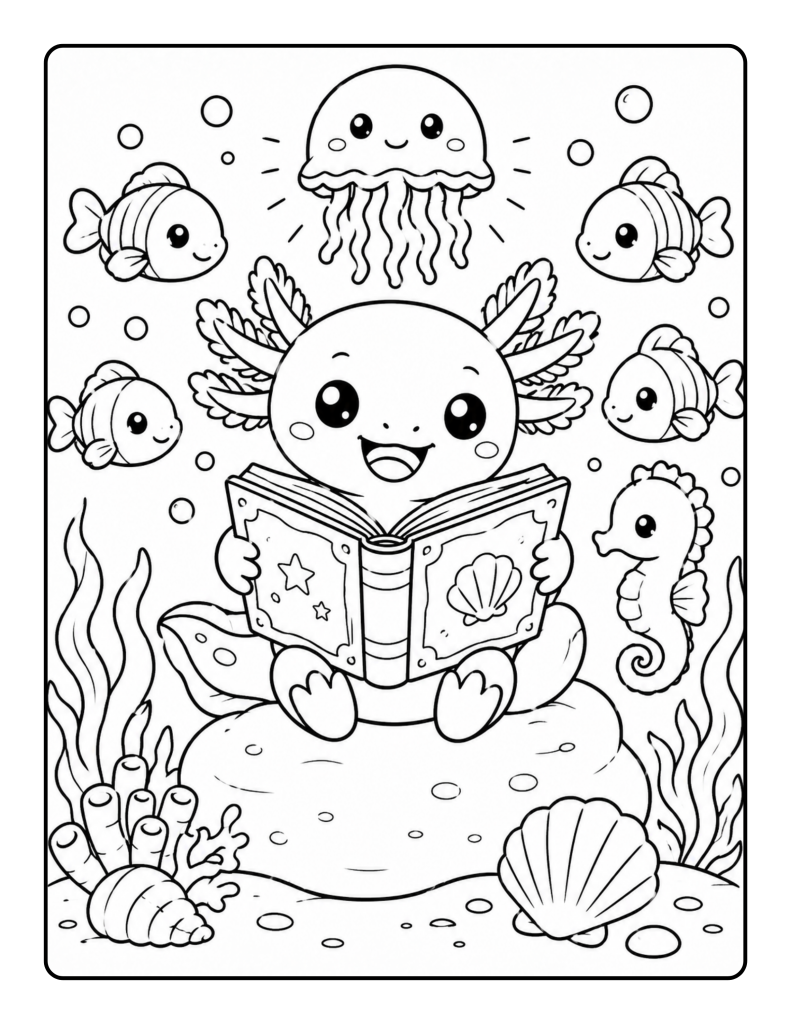
The reading page already contains an audience: fish, a jellyfish, and a seahorse gathered around the axolotl’s book.
After coloring, ask one simple question:
What story are they hearing?
The child can answer aloud, write one sentence, or draw a second picture.
A story might involve:
- A lost shell
- A glowing cave
- A brave seahorse
- A journey to the surface
- A secret coral library
- A pearl that grants wishes
The goal is not formal writing. It is to let the picture inspire language and imagination.
Activity 3: Make an Axolotl Art Studio
The artist page shows a paintbrush, palette, apron, easel, and portrait.
Use it as the beginning of a small art-studio activity.

After coloring the printed page, give the child blank paper and ask them to create another axolotl portrait.
They may copy the basic round shape or invent something completely new.
Place both pieces side by side as a miniature gallery.
A handwritten label with the artist’s name can make the display feel special.
Activity 4: Plan an Indoor Camping Hour
A blanket fort, flashlight, soft pillow, and camping coloring page can turn a rainy afternoon into an indoor adventure.
Color the tent, lantern, campfire, stars, and pond, then move into the fort for a snack or story.

The child can pretend the room is a forest and the blanket is a tent.
Avoid real flames or unsafe camping equipment indoors.
The pretend campfire stays safely on the coloring page.
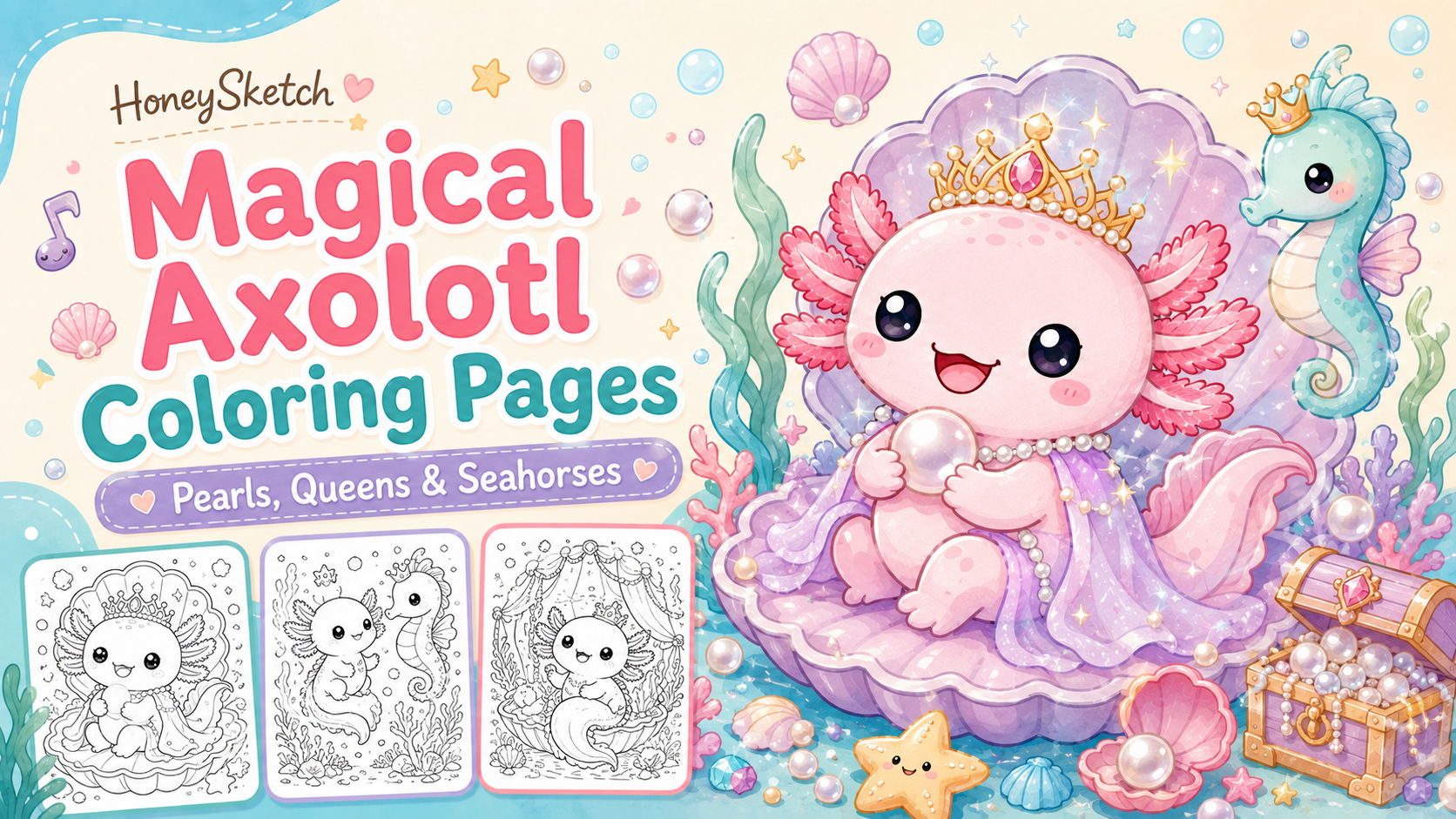
Children interested in reading, writing, art, dancing, and music can explore these creative axolotl activity coloring pages
Activity 5: Add a Music Mood
Music can change the feeling of a coloring session.
Choose:
- Calm instrumental music
- Gentle nature sounds
- Soft ocean sounds
- A familiar child-friendly playlist
Keep the volume comfortable.
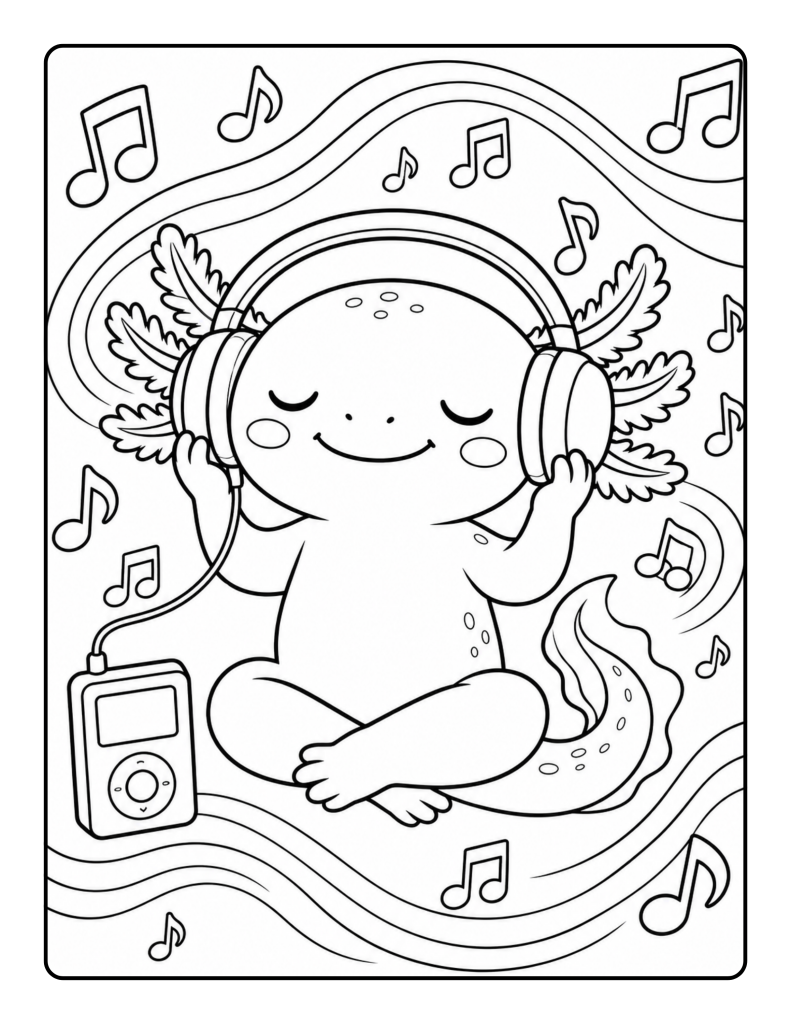
The headphones page is ideal for this activity.
Children can color the music notes and flowing lines according to what they hear.
Slow music might inspire blue and purple.
Energetic music might inspire red, orange, pink, and yellow.
The music remains background support rather than another screen to watch.
Activity 6: Create a Cozy Reading Corner
The shell-bedroom page includes a large bed, books, curtains, a star lamp, treasure chest, and underwater window.
It fits naturally into a cozy reading activity.

Set up a pillow or blanket, color for a while, and then read an age-appropriate book together or independently.
The child can compare the real reading space with the axolotl’s room.
Ask what they would add to their own perfect underwater bedroom.
A calm transition from coloring to reading can work well before bedtime or during afternoon quiet time.
Activity 7: Try a Movement Break
Screen-free time does not need to mean sitting for hours.
The bubble-dance page can inspire a short movement break.
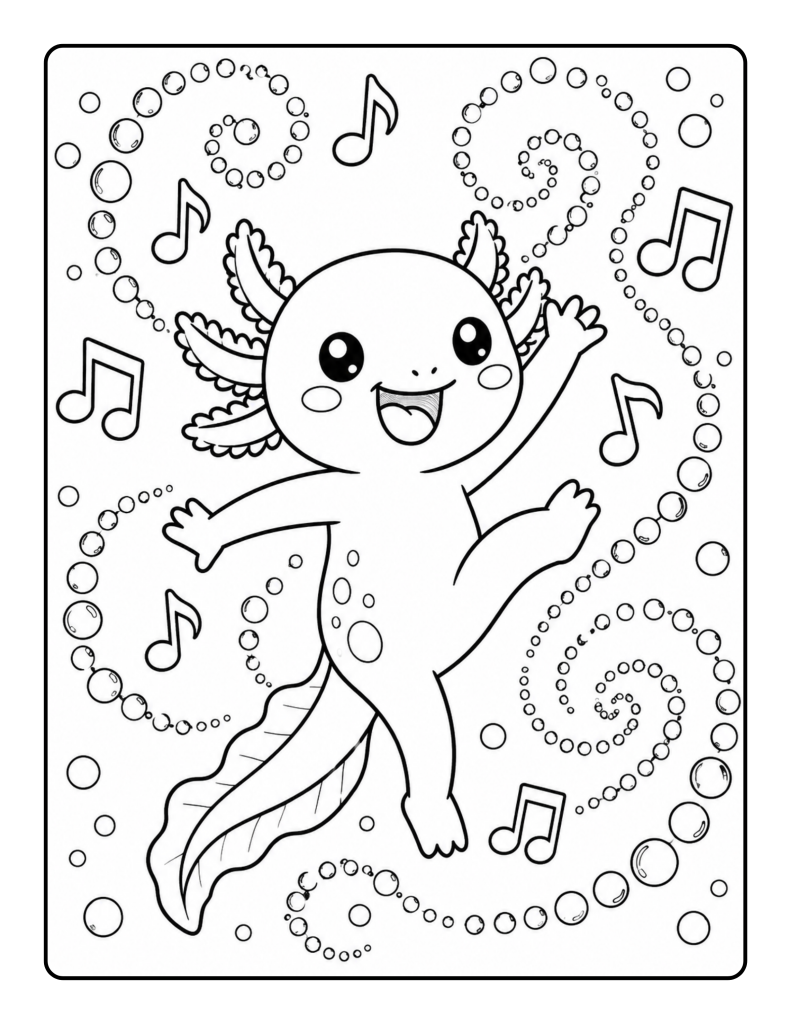
Play one song and let the child move like an axolotl floating through bubbles.
Arms can wave like gills, and the body can sway like a tail.
After the song ends, return to the page and color the bubbles in a repeating pattern.
The movement can reset attention without changing the overall calm structure of the activity period.
Create a Calm and Creative Afternoon
Explore all 50 cute axolotl coloring adventures in the complete paperback.
View The Big Axolotl Adventure Coloring Book on Amazon
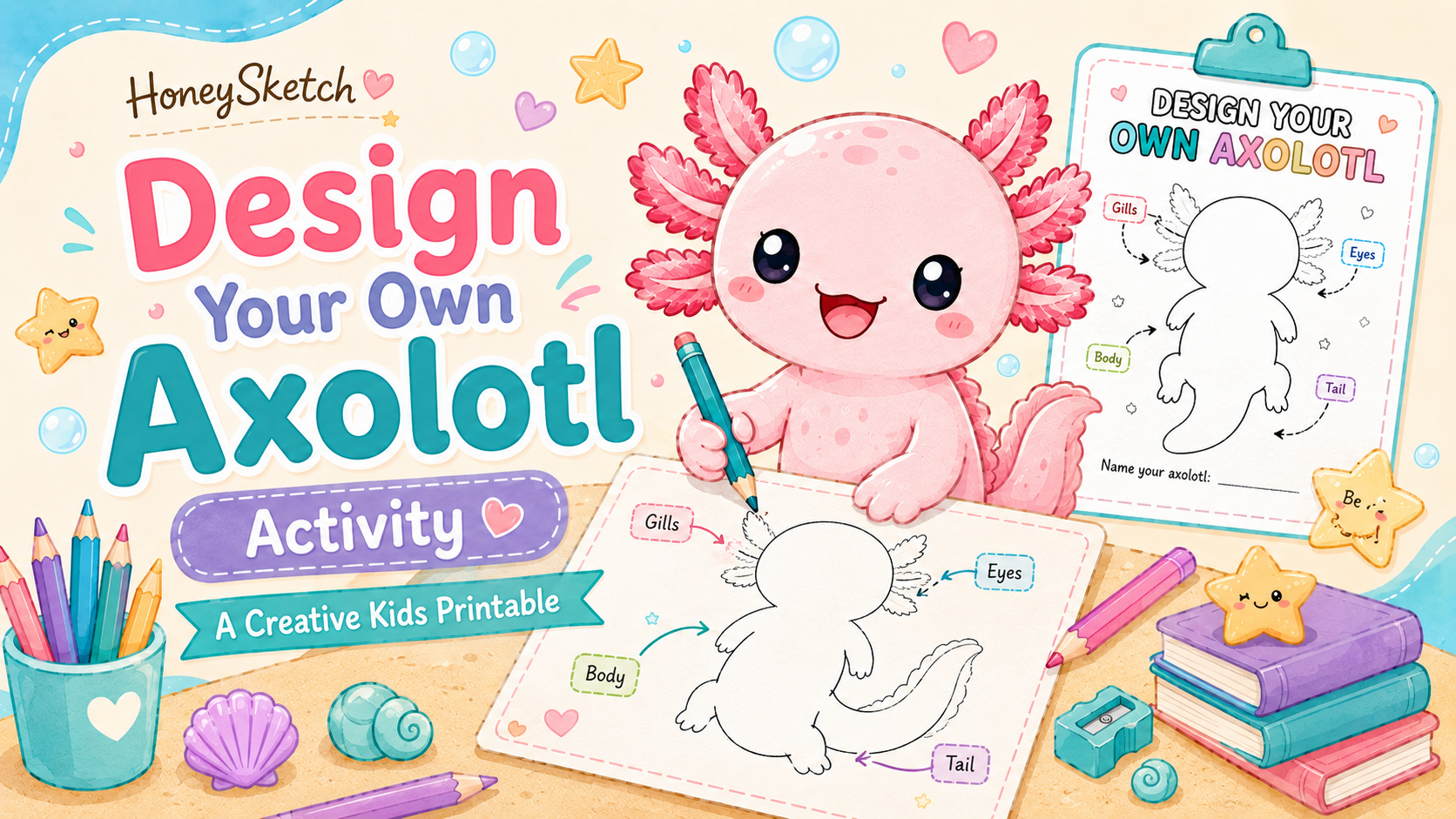
Activity 8: Design a New Character
The design-your-own axolotl page gives children more control than a finished scene.
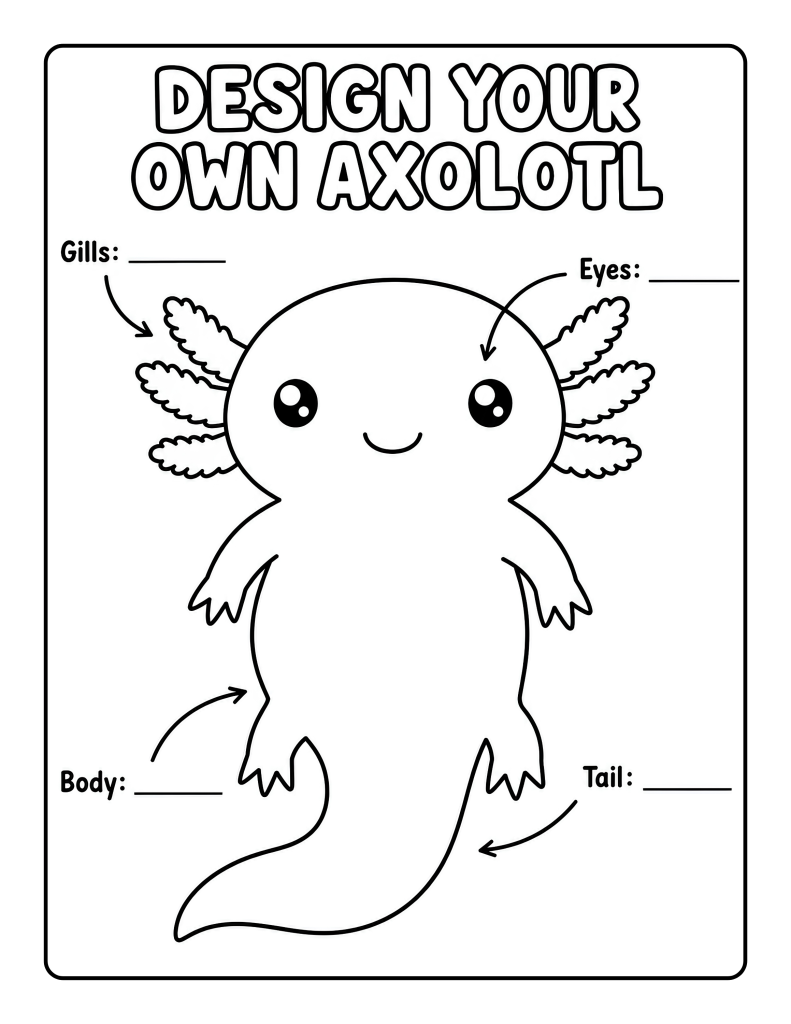
They choose the gill, eye, body, and tail colors and then add patterns or accessories.
Once the design is complete, create a short profile:
- Name
- Favorite food
- Special talent
- Best friend
- Home
- Next adventure
This activity can last longer than ordinary coloring because the child is building a character rather than only choosing colors.
This activity can be expanded with our complete design-your-own-axolotl activity
Activity 9: Make a Page-to-Page Story
Choose three coloring pages and arrange them in an order.
For example:
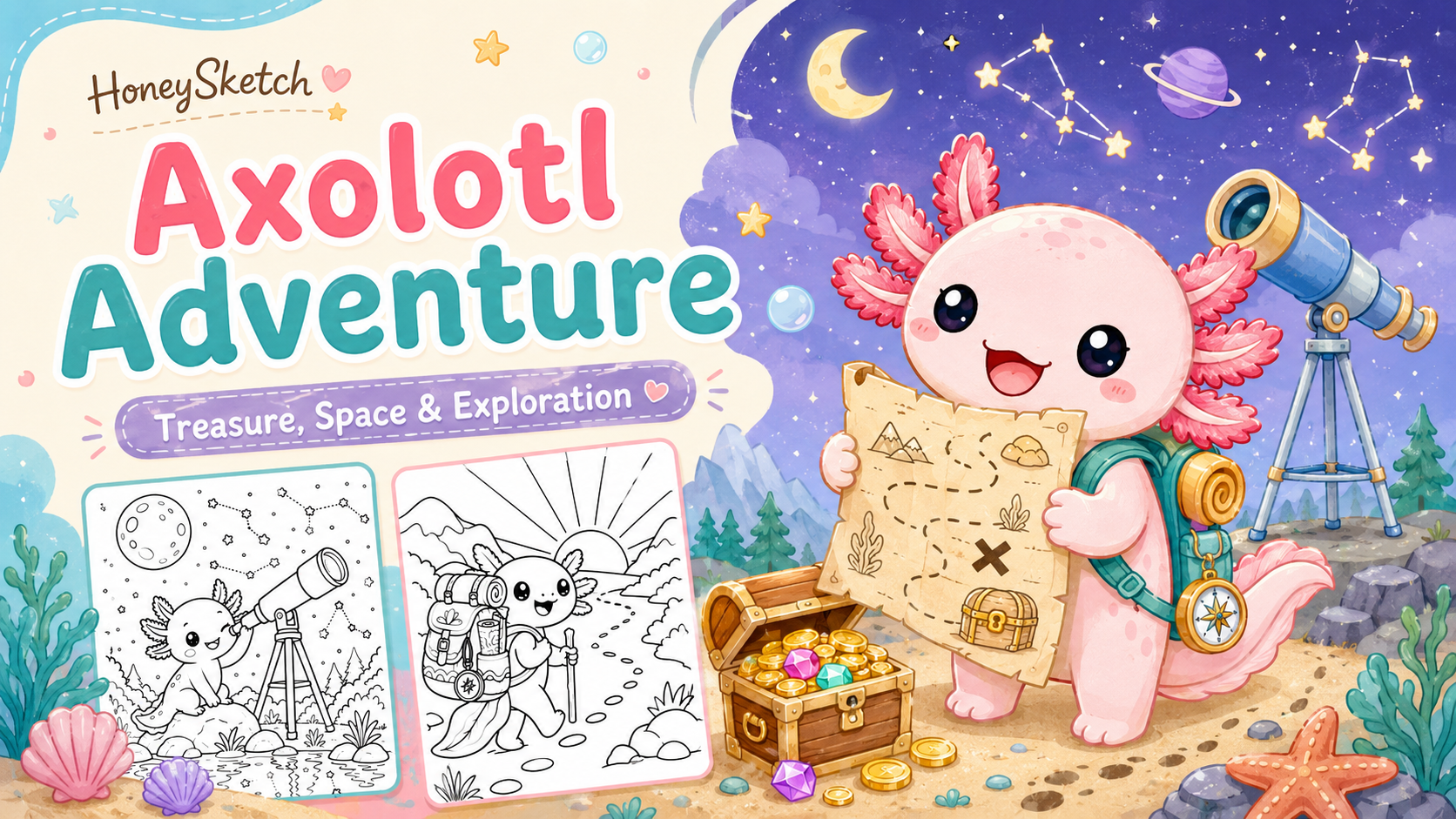
- The axolotl studies a treasure map.
- The axolotl discovers a pearl.
- The axolotl celebrates with friends.
Color the pages over several sessions, then ask the child to connect them with a beginning, middle, and end.
Older children can write captions on separate paper.
Younger children can tell the story aloud.
Activity 10: Create a Finished-Art Display
Finished pages often disappear into a pile.
Displaying one or two pages shows that the child’s effort matters.
Options include:
- Refrigerator display
- Clipboard gallery
- Washi-tape wall area
- Binder with plastic sleeves
- Handmade paper frame
- Gift for a family member
- Rotating “art of the week” space
Avoid cutting original book pages unless the adult is comfortable removing them.
A copied or digitally purchased printable can be used for crafts only when its license allows it.
Activity 11: Make a Color Hunt
Choose five colors before beginning and look for matching objects around the room.
For example:
- Blue from a pillow
- Yellow from a toy
- Green from a plant
- Pink from a book cover
- Brown from a table
After the color hunt, use those same shades on the page.
This adds a small observation activity without requiring special materials.
Activity 12: Build an Axolotl Quiet-Time Basket
A reusable basket can make future quiet time easier.
Include:
- Coloring book
- Small supply case
- Blank paper
- Stickers
- Folder for finished pages
Rotate one extra item occasionally:
- New pencil colors
- Ocean sticker sheet
- Character-prompt card
- Small notebook
- Postcard to decorate
- Clean leaf for color inspiration
Keep the basket somewhere accessible, but reserve it for calm activity periods so it continues to feel special.
Choosing the Right Activity for the Moment
A child with lots of energy may benefit from the dance break before coloring.
A tired child may prefer the shell-bedroom page and a story.
A child seeking a challenge may enjoy character design or connecting three pages into a narrative.
It is fine to stop after ten minutes.
Screen-free time does not need to become a long project to be valuable.
Who Can Use These Ideas?
These activities are designed mainly for kids ages 6–10, but adults can simplify or expand them based on the individual child.
They can work for:
- Families
- Classrooms
- Homeschool
- Playdates
- Travel
- Waiting periods
- Rainy weekends
- Quiet afternoons
- After-school time
Supervise scissors, glue, markers, small items, and craft tools according to the child’s age and product instructions.
Final Thoughts
The easiest screen-free activities begin with something that is already ready to use.
Open a coloring page. Choose a few colors.
Add a story, song, drawing, blanket fort, or character profile only when it feels helpful.
The activity can remain simple or grow into an entire afternoon.
Find 50 cute starting points for quiet-time and rainy-day creativity in The Big Axolotl Adventure Coloring Book by Sally Morris.
Disclosure
This post may feature HoneySketch books or products. If you purchase one of our books through a link on this page, HoneySketch may earn royalties or income from that sale at no extra cost to you.