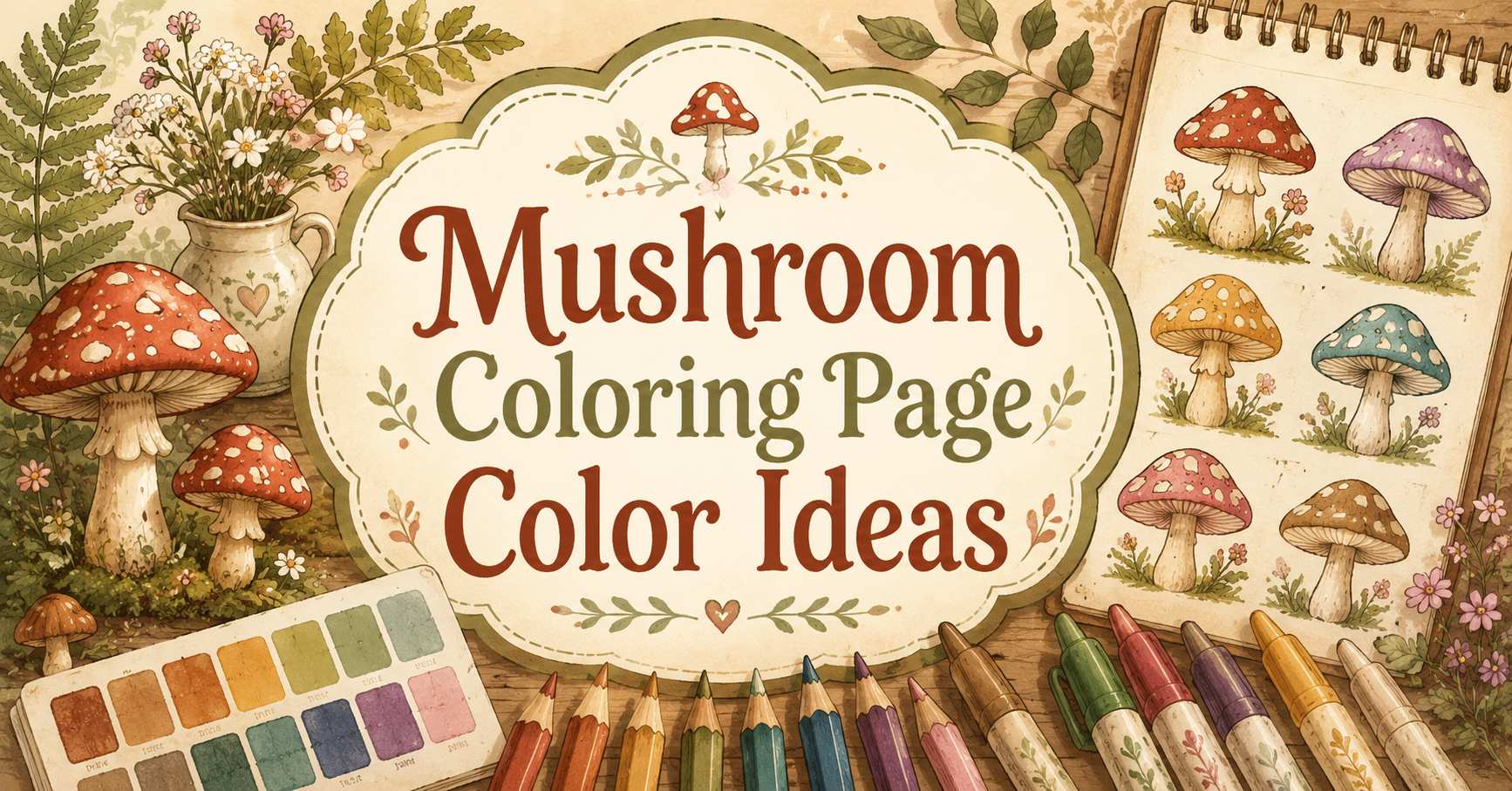
Choosing colors can sometimes take longer than the actual coloring.
A mushroom cottage could have a classic red roof, but it could also be lavender, turquoise, golden yellow, or midnight blue. A forest can feel warm and autumnal, fresh and green, softly pastel, or mysterious and moonlit.
There is no single correct way to color a magical woodland scene.
The palette ideas below can be used for mushroom houses, fairy doors, woodland animals, lanterns, paths, ponds, flowers, ferns, and toadstools.
The palette ideas below can be used for mushroom houses, fairy doors, woodland animals, lanterns, paths, ponds, flowers, ferns, and toadstools.
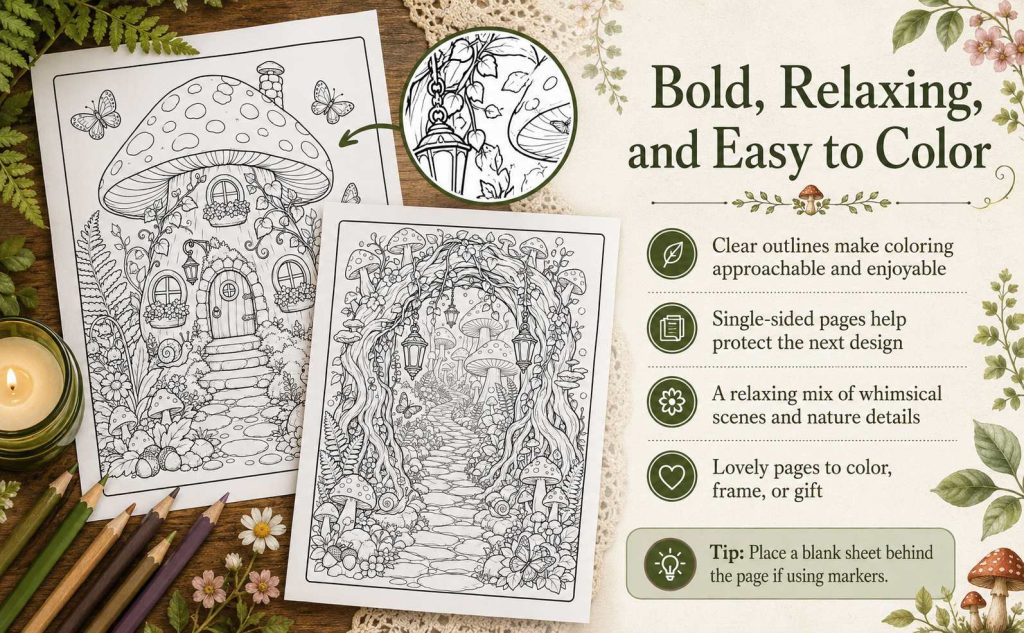
The featured pages come from Among the Mushrooms, a mushroom forest cottagecore coloring book by Sally Morris containing 50 single-sided designs with a mixture of simple, medium, and more detailed scenes.
Choose one complete palette or combine your favorite colors from several.
1. Classic Woodland Red and Green
This is the traditional mushroom forest palette most people recognize immediately.

Main Colors
- deep red
- cream
- forest green
- moss green
- warm brown
- golden yellow
Use deep red for the largest mushroom caps and cream for their spots and undersides.
Forest green works well for ferns, while moss green can be used on softer plants, ground cover, and climbing vines. Warm brown suits cottage walls, pathways, tree roots, baskets, and animal fur.
Save golden yellow for lanterns, windows, flowers, or small magical details.
This palette works especially well for mushroom house coloring pages because it feels warm, familiar, and storybook-inspired.
2. Soft Cottagecore Pastels
A pastel palette can make a mushroom village feel gentle, cheerful, and dreamlike.
Main Colors
- dusty pink
- sage green
- pale lavender
- soft blue
- cream
- peach
Use dusty pink or lavender on mushroom caps. Sage green can cover the ferns and vines, while cream works well for cottage walls, rabbit fur, flower petals, and mushroom spots.
Peach adds warmth to doors, animals, flowers, and lantern light.
Pastels usually look best when applied in several light layers rather than one heavy layer. Colored pencils make this easier because you can slowly build the color while keeping the page soft.
3. Moonlit Mushroom Cottage
Cool colors can transform a daytime cottage into a quiet nighttime retreat.

Main Colors
- navy blue
- violet
- blue-gray
- silver
- charcoal
- pale yellow
Use navy and violet in the sky, mushroom roofs, distant plants, and deep shadows.
Blue-gray works well for stones, pathways, tree bark, and cottage walls. Silver can be added to stars, moth wings, window frames, or magical decorations.
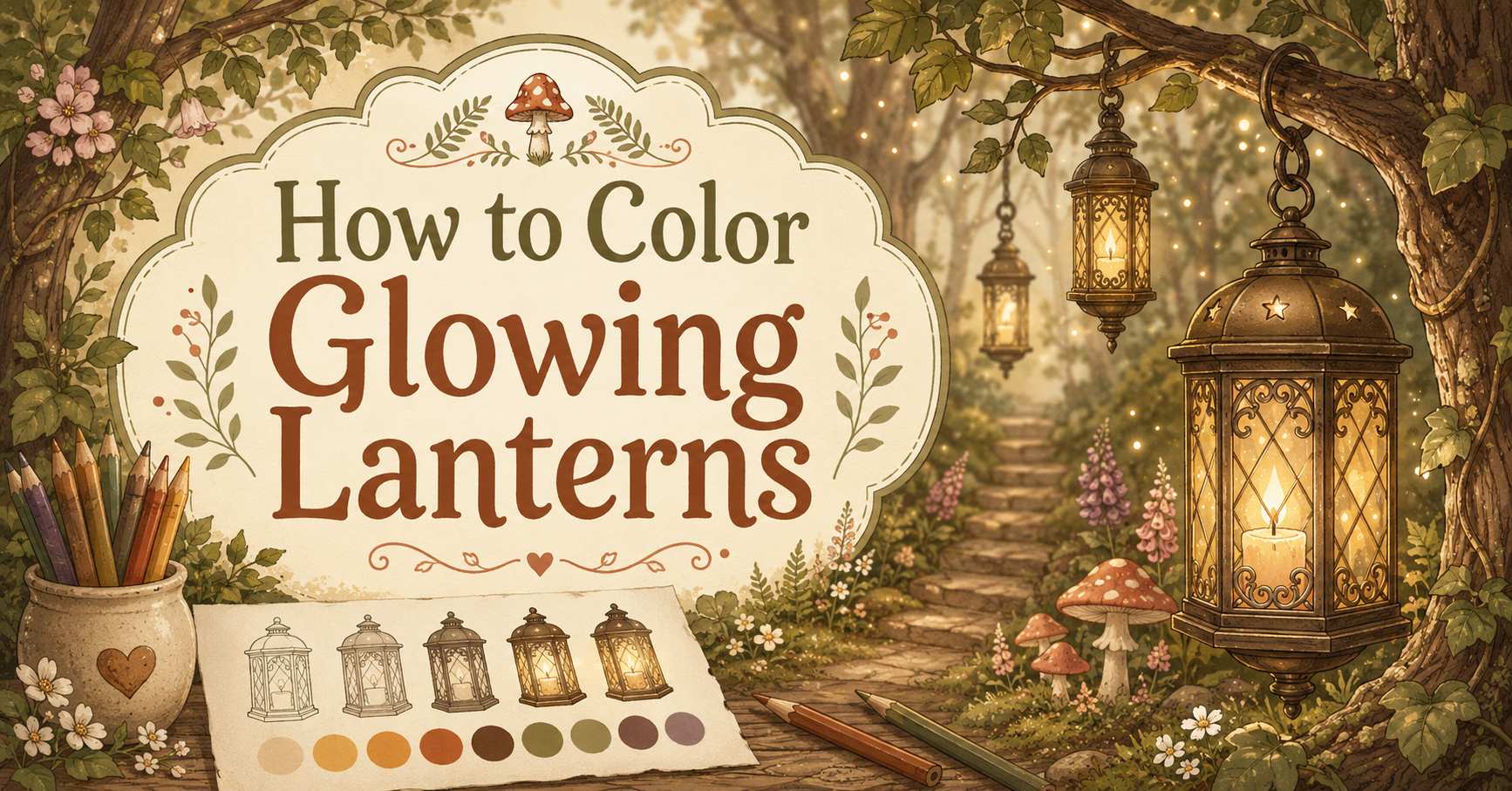
Pale yellow should be reserved for candles, lanterns, and windows. Keeping the surrounding colors cool will make the warm light look brighter.
You can also add a small amount of violet to the outer edge of yellow light to help the warm and cool areas blend naturally.
4. Warm Autumn Mushroom Forest
Autumn colors naturally suit mushrooms, acorns, foxes, hedgehogs, and forest cottages.
Main Colors
- burnt orange
- mustard yellow
- burgundy
- olive green
- chestnut brown
- cream
Mix several colors throughout the fallen leaves instead of making every leaf orange.
Use burgundy for some mushroom caps, flowers, doors, or clothing. Mustard yellow works beautifully on lanterns, small leaves, scarves, and cottage decorations.
Olive green keeps the plants looking natural without feeling too bright.
Chestnut brown can be used for tree roots, animal fur, baskets, wooden doors, and paths.
This palette works particularly well for fox, hedgehog, snail, and acorn scenes.
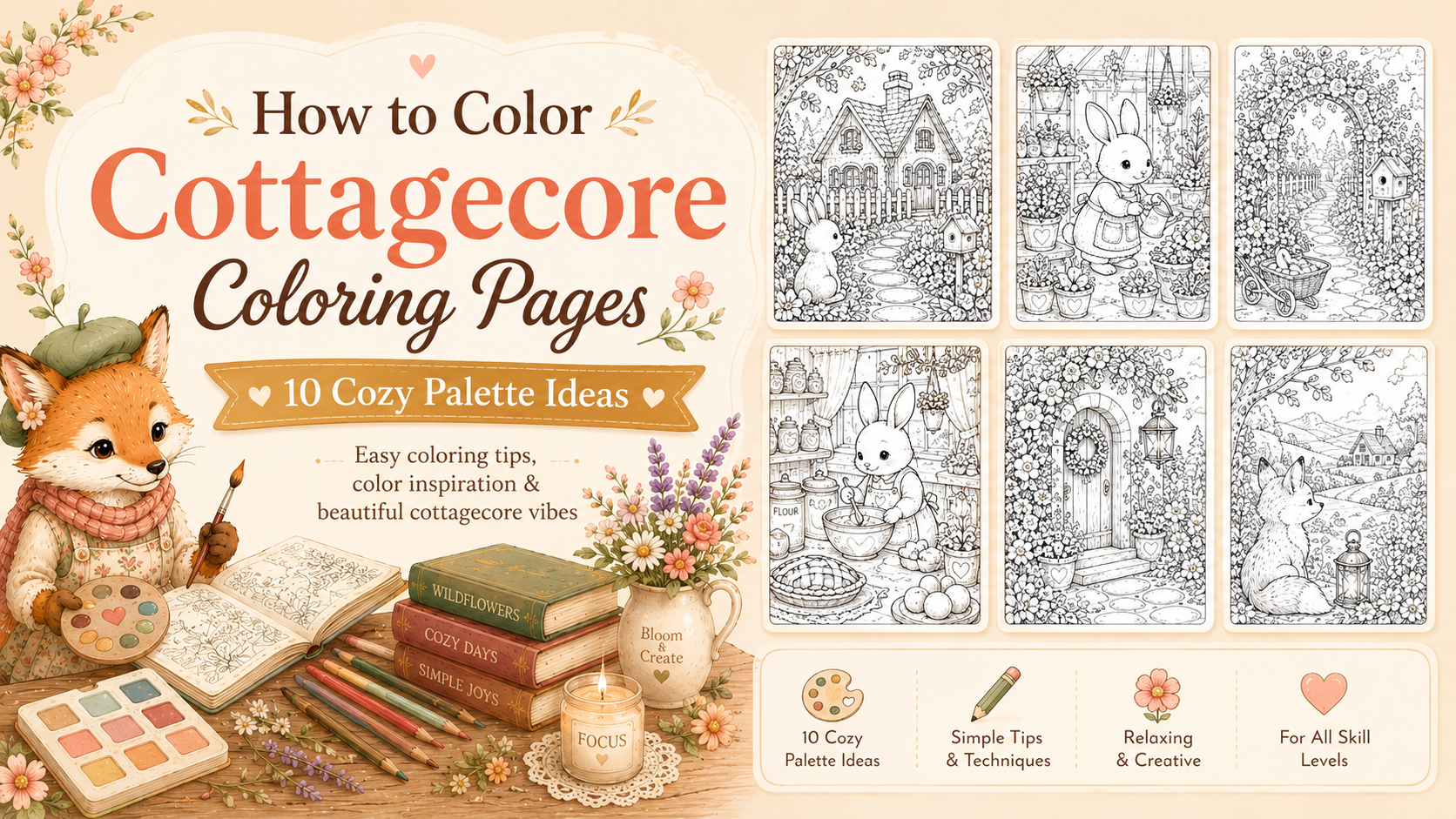
Also check out: “How to Color Cottagecore Coloring Pages: 10 Cozy Palette Ideas“
5. Gentle Woodland Pastels
This palette is softer and more natural than a bright fairy pastel combination.

Main Colors
- pale peach
- warm cream
- dusty lavender
- muted sage
- light brown
- soft gray
Use pale peach on foxes, rabbits, flowers, and mushroom caps. Warm cream can be added to animal chests, cottage walls, and flower petals.
Muted sage and dusty lavender keep the forest interesting without creating a strong contrast.
Soft gray can be used for stones, shadows, tree bark, and pathways.
This combination is ideal for quiet scenes such as sleeping animals, reading nooks, candlelit windows, and peaceful forest paths.
Like these cozy palette ideas? Among the Mushrooms includes 50 mushroom cottages, animals, ponds, lantern paths, fairy doors, and magical forest scenes ready for your own color combinations.
6. Warm Library and Candlelight
Some forest scenes feel especially cozy when colored with rich indoor shades.

Main Colors
- walnut brown
- burgundy
- forest green
- antique gold
- cream
- rust
Use walnut brown for shelves, tree-stump walls, doors, and furniture.
Burgundy and forest green work beautifully on book covers, curtains, rugs, cushions, and decorative details. Cream can soften the page through paper, fabric, candles, and flower petals.
Antique gold is ideal for lanterns, frames, teacups, clasps, and magical accents.
Rust can connect the indoor palette to the surrounding mushrooms and autumn leaves.
Repeat the same five or six colors throughout the scene so that the room feels coordinated rather than cluttered.
7. Bright Storybook Mushroom Village
This palette creates a cheerful, animated feeling.
Main Colors
- turquoise
- sunny yellow
- coral
- bright green
- purple
- white
Use turquoise and coral on mushroom roofs, cottage doors, clothing, baskets, and snail shells.
Sunny yellow is perfect for windows, lanterns, flowers, and small decorative details. Bright green keeps the plants lively, while purple can be used on flowers, butterflies, roofs, and accessories.
Because these colors are strong, leave some areas white or cream to give the page breathing room.
This palette works well for village scenes, bakeries, carousels, mail carriers, parades, and playful frog adventures.
8. Enchanted Jewel-Tone Forest
Jewel tones create a rich fantasy atmosphere.
Main Colors
- emerald green
- sapphire blue
- amethyst purple
- ruby red
- deep teal
- gold
Use emerald and deep teal across the leaves, ferns, moss, and cottage vines.
Amethyst, ruby, and sapphire can be added to mushroom caps, flowers, butterflies, doors, clothing, and animal accessories.
Gold works best in smaller areas such as lanterns, stars, window frames, flower centers, and decorative patterns.
Keep some natural brown and cream in the scene so the jewel tones remain special rather than covering every object.
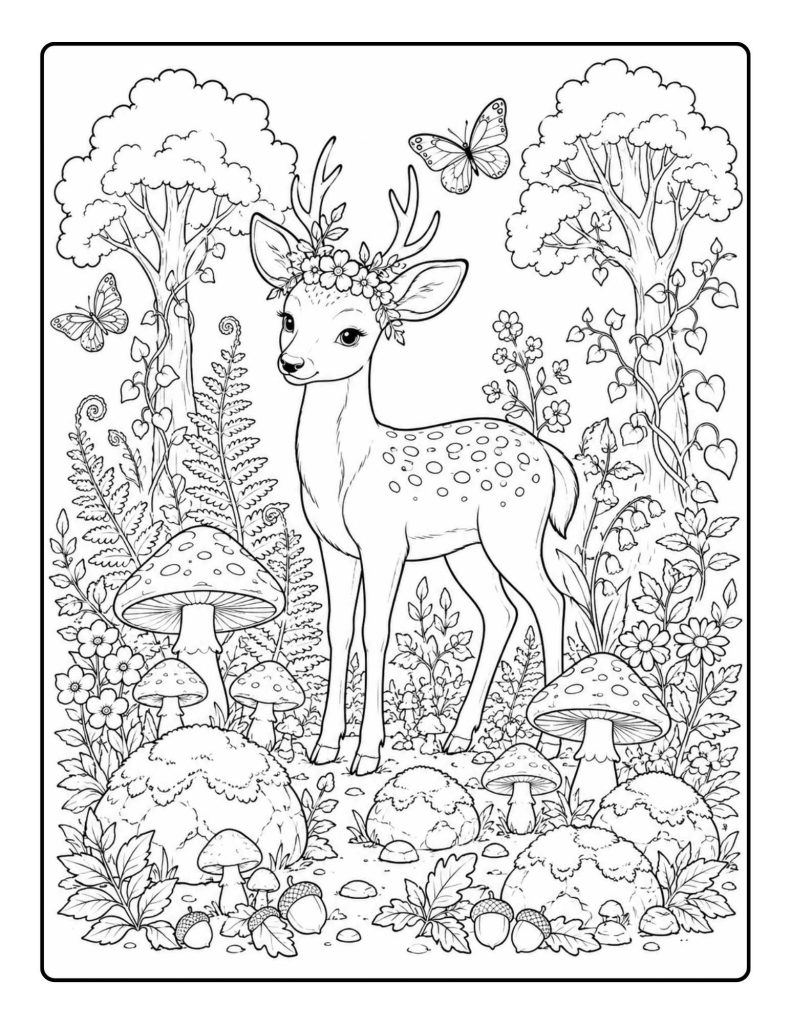
This palette is especially effective for deer, owl, butterfly, lantern, and fairy-cottage designs.
9. Misty Blue Forest Morning
A cool morning palette can make a forest feel peaceful and fresh.
Main Colors
- pale blue
- blue-green
- light gray
- soft sage
- muted lavender
- cream
Use pale blue and blue-green for ponds, morning shadows, distant plants, and mushroom caps.
Light gray works well for stones, misty pathways, tree bark, and cottage walls. Sage and lavender add gentle plant and flower colors without overpowering the cool mood.
Cream can be used on animals, mushroom stems, cottage curtains, and highlights.
For a misty effect, keep the background lighter and use slightly stronger colors in the foreground.
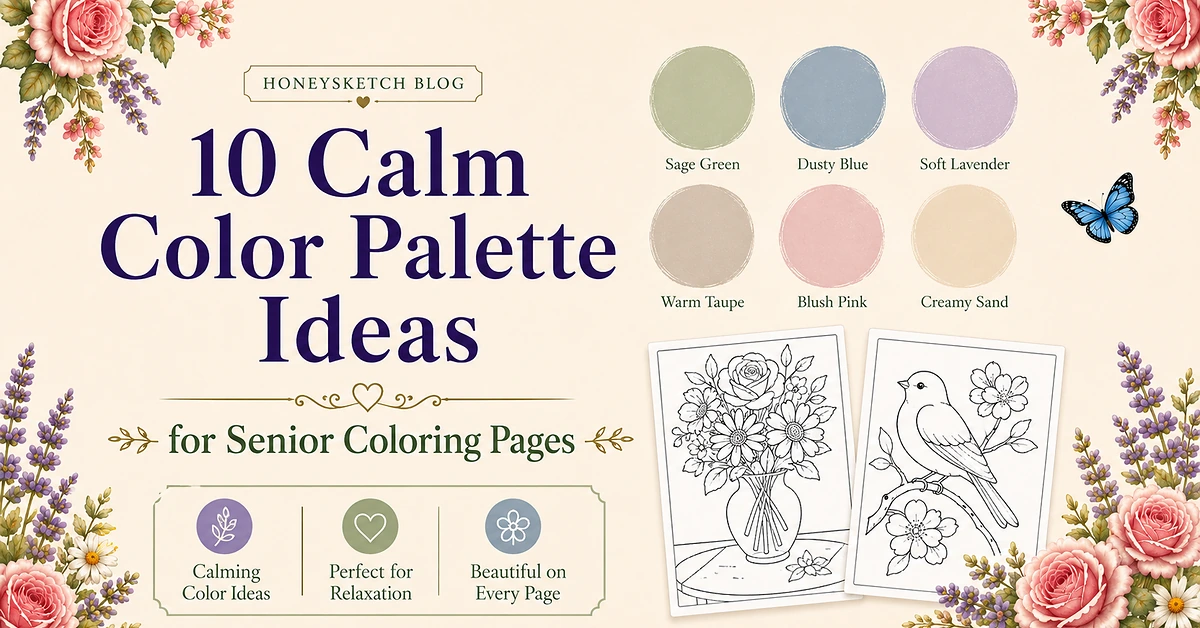
You may also like: “Beautiful Flower Coloring Pages for Seniors With Easy, Bold Outlines”
10. Witchy Midnight Mushroom Forest
A darker palette can give the forest a magical, mysterious, and slightly witchy feeling.
Main Colors
- midnight blue
- charcoal
- dark violet
- moss green
- antique gold
- muted red
Use midnight blue for the sky and large shadowed areas.
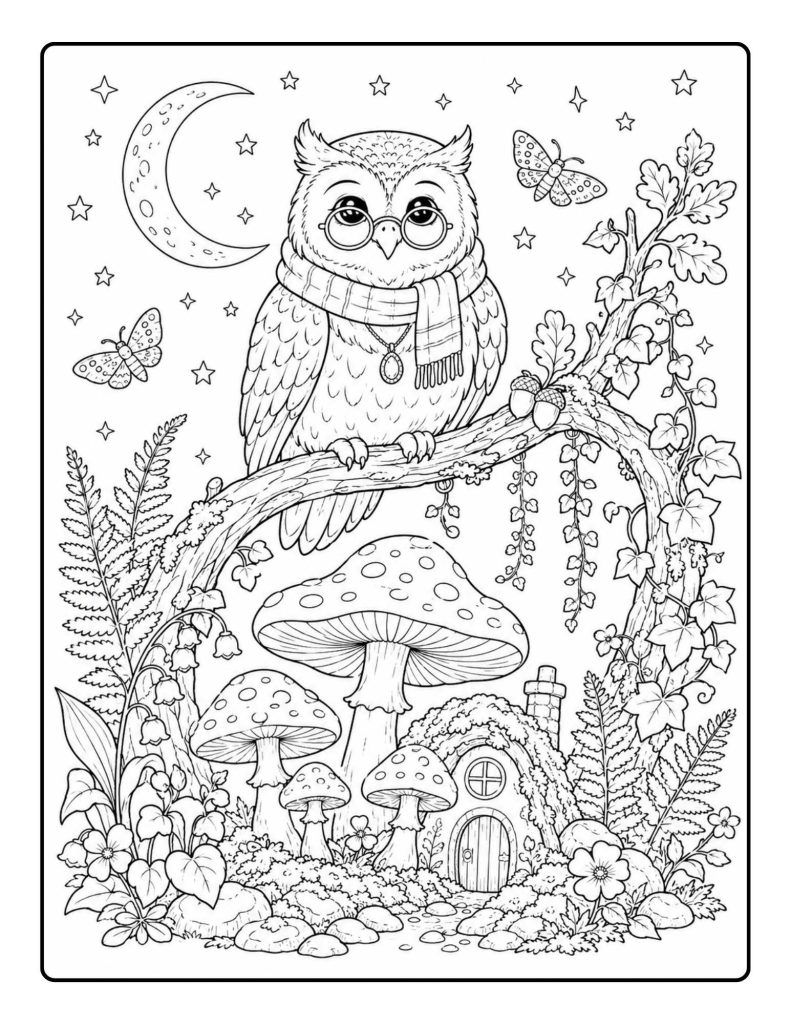
Charcoal can be used on tree bark, stones, owl feathers, cottage roofs, and the undersides of mushrooms. Dark violet adds richness to flowers, mushroom caps, scarves, curtains, and magical details.
Moss green keeps the forest connected to nature, while antique gold brings warmth to moons, stars, lanterns, pendants, and windows.
Muted red works well as an occasional accent on mushroom caps, berries, books, or doors.
The key is contrast. Keep the lanterns, stars, and windows light so they remain visible against the deeper colors.
Like these mushroom coloring page ideas? You can try them on the fairy cottages, woodland animals, forest paths, ponds, lanterns, snails, frogs, foxes, and toadstools inside the full Among the Mushrooms coloring book.
How to Build Your Own Mushroom Coloring Palette
You do not need dozens of colors to complete a detailed page.
A simple palette can be built using:
- one main mushroom color
- two greens
- one brown
- one flower color
- one accent color
- one light neutral
- one dark neutral
For example:
- burgundy mushroom caps
- olive and sage plants
- chestnut wood
- lavender flowers
- golden lanterns
- cream highlights
- dark brown shadows
Seven coordinated colors are often enough to make a full page feel varied and complete.
You can create lighter and darker versions by changing pencil pressure or adding additional layers.
How to Repeat Colors Across the Page
Repeating colors helps bring a detailed illustration together.
A lavender mushroom cap could connect to lavender flowers and butterfly wings. Golden lantern light could reappear in window frames, flower centers, and small stars.
Try repeating each important color in at least three places.
This does not mean every object must match. The goal is simply to create small visual connections across the design.
Choosing Colors for Mushroom Caps
Mushrooms do not need to be red.
Other beautiful options include:
- burgundy
- burnt orange
- golden yellow
- dusty pink
- lavender
- turquoise
- navy
- sage green
- coral
- cream
- warm brown
The spots can be cream, white, pale yellow, pink, or a lighter version of the cap color.
For extra depth, add darker shading near the bottom edge of the cap and beneath areas where vines, flowers, or moss overlap.
Choosing Colors for Mushroom Stems and Cottage Walls
Cream is a popular choice, but it is not the only option.
Try:
- pale tan
- soft gray
- light peach
- muted pink
- blue-gray
- warm white
- light brown
Add gentle vertical strokes to suggest natural texture.
For cottage walls, use slightly darker color near windows, doors, roofs, and surrounding plants.
Who May Enjoy These Palette Ideas?
These color combinations may be useful for:
- adult and teen colorists
- beginners who struggle to choose colors
- experienced colorists looking for a new mood
- cottagecore and goblincore fans
- mushroom enthusiasts
- nature lovers
- colored-pencil users
- marker users
- seniors enjoying relaxing creative activities
- anyone coloring fairy cottages or woodland animals
You can follow each palette closely or use it only as a starting point.
Final Thoughts
The same mushroom coloring page can tell many different stories.
Classic red and green can create a familiar woodland cottage. Pink, lavender, and sage can turn it into a soft fairy garden. Navy, violet, and gold can make it feel like a moonlit forest filled with glowing lanterns.
Start with the mood you want rather than searching for the most realistic colors.
Do you want the page to feel warm, peaceful, cheerful, mysterious, autumnal, or magical?
Once you choose the feeling, the colors become much easier to select.
Disclosure:
This post may feature HoneySketch books or products. If you purchase one of our books through a link on this page, HoneySketch may earn royalties or income from that sale at no extra cost to you.