A shared activity does not need to be complicated to feel meaningful.
Sometimes, a quiet table, a familiar picture, and a small collection of colors are enough.
Coloring can offer seniors and caregivers something simple to do together without requiring constant conversation, complicated instructions, or a perfect finished result.
One person might color a flower while the other colors the leaves. Two people might work on separate pages. Someone may color for five minutes and decide they have had enough.
All of those experiences are completely acceptable.
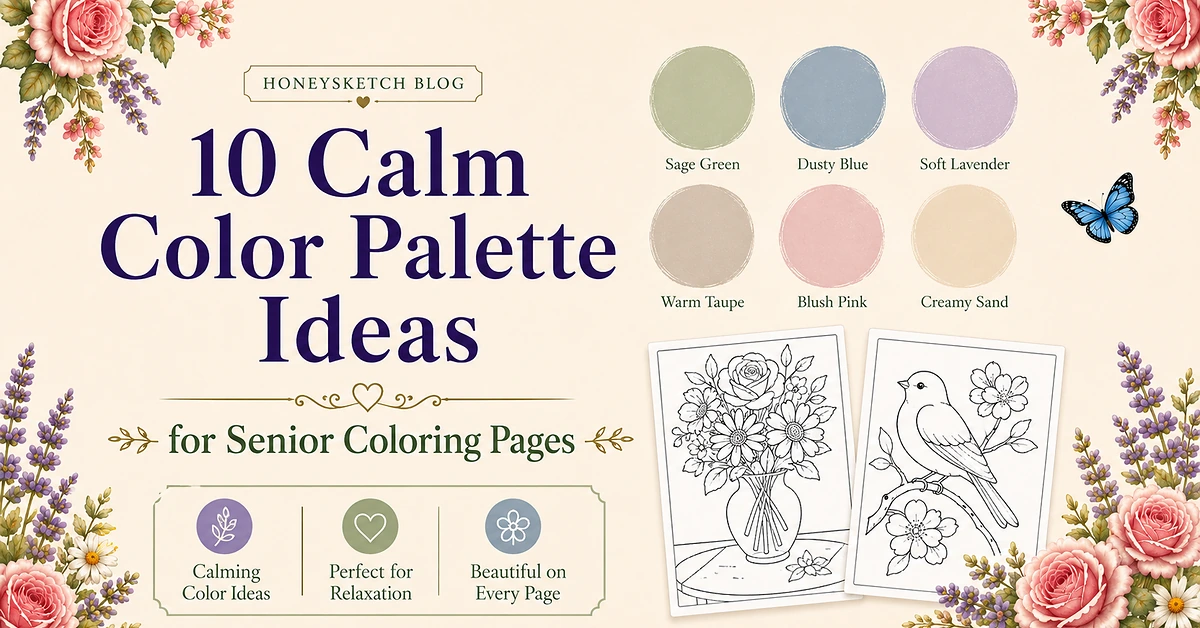
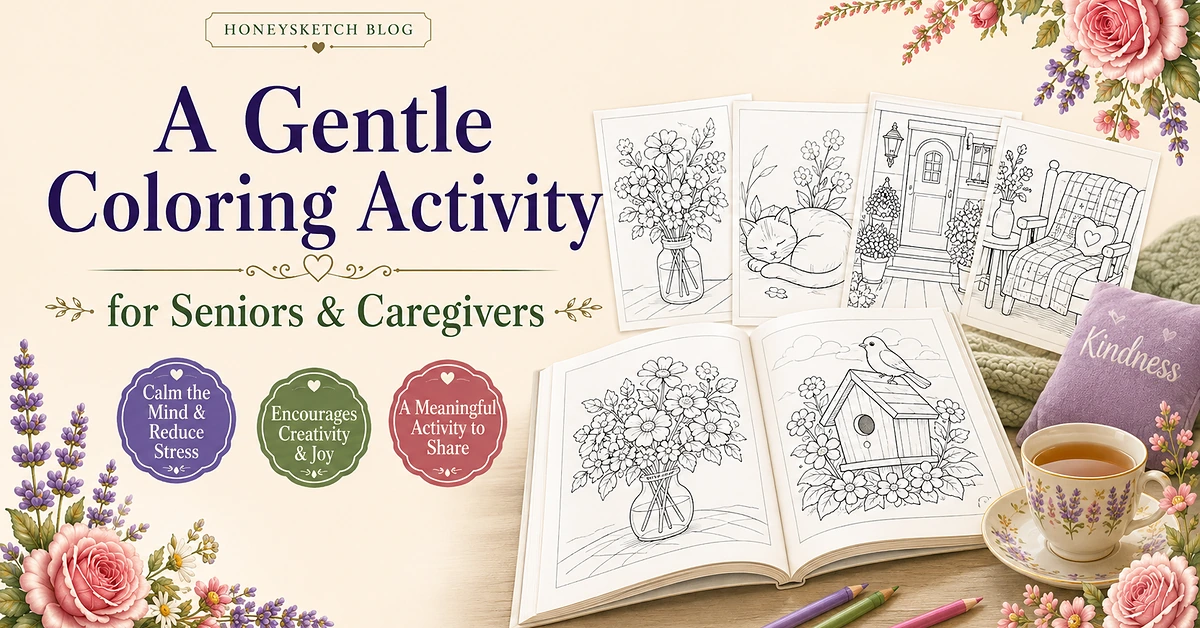
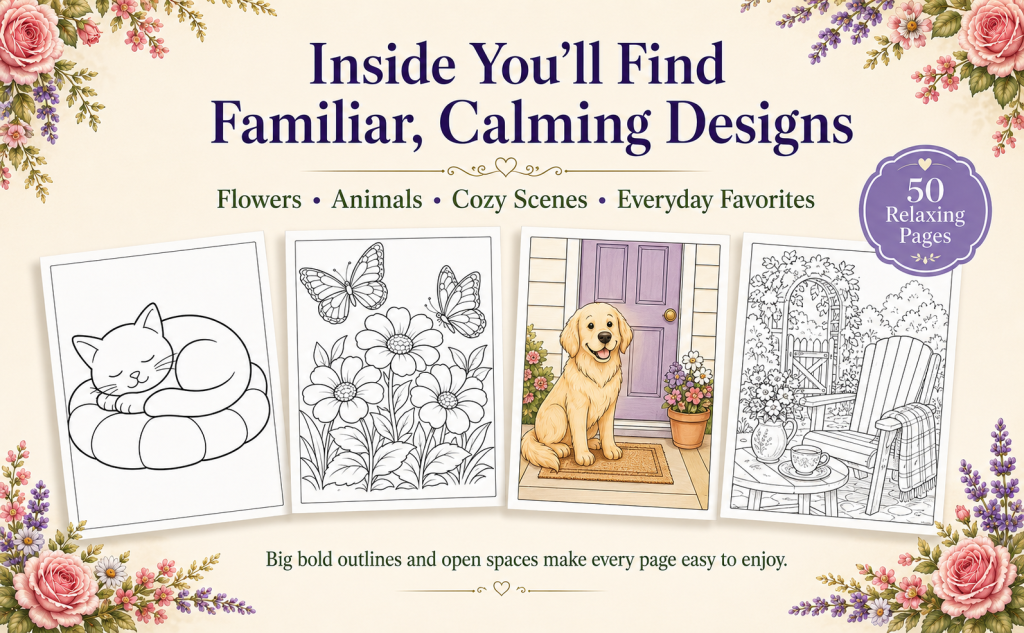
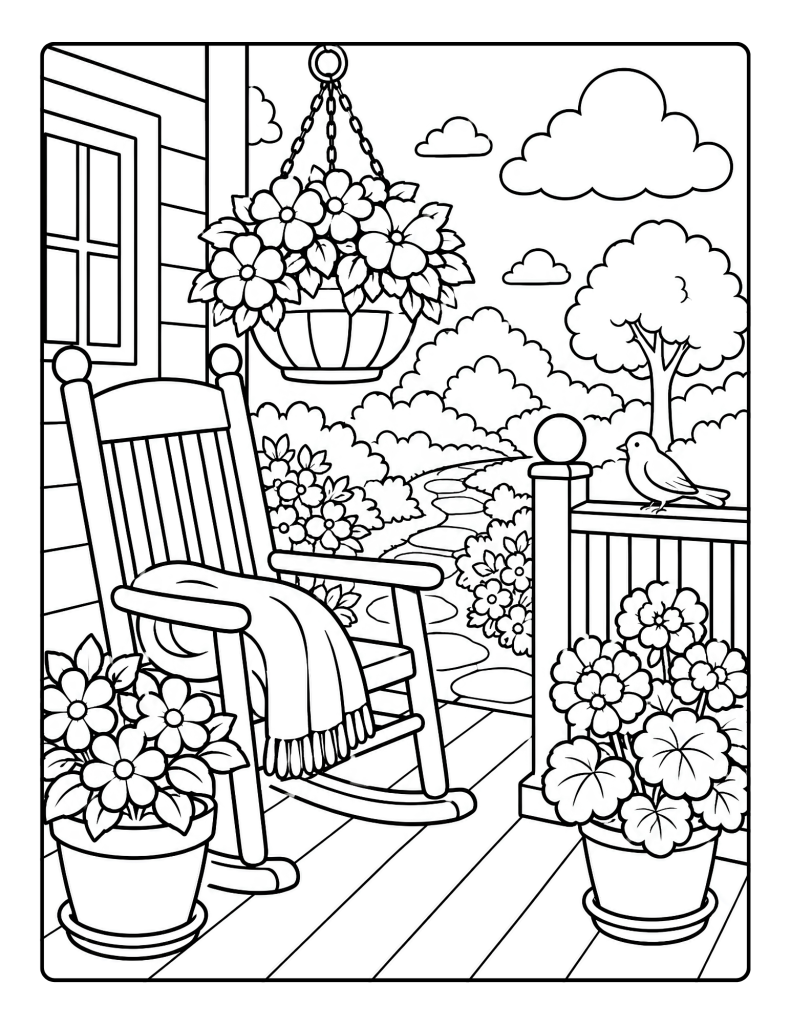
The coloring pages shown in this article come from the HoneySketch Large Print Coloring Book for Seniors, which contains 50 single-sided designs with flowers, friendly animals, cozy porches, gardens, and familiar everyday scenes.
Start with comfort, not completion
The purpose of a shared coloring session should not be to finish an entire page.
The activity may simply provide:
- a peaceful moment together
- an opportunity to choose colors
- something comfortable to focus on
- a gentle reason to sit at the same table
- a creative break from the usual routine
Some pages may be completed in one sitting. Others may be colored over several days.
A page can also remain partly colored. There is no requirement to fill every space.
Prepare a simple coloring area
A comfortable setup can make the activity feel easier to begin.
Choose a place with:
- good lighting
- a stable table
- comfortable seating
- minimal background clutter
- enough room for the page and coloring tools
- supplies placed within easy reach
Remove unrelated objects from the table when possible. A clear surface keeps attention on the page and colors.
There is no need to create a complicated craft station.
One page and a small container of supplies can be enough.
Begin with two or three page choices
Showing all 50 pages at once may make the first choice harder.
Instead, select two or three different designs.
A helpful group might include:
- one very simple animal
- one flower
- one familiar outdoor scene
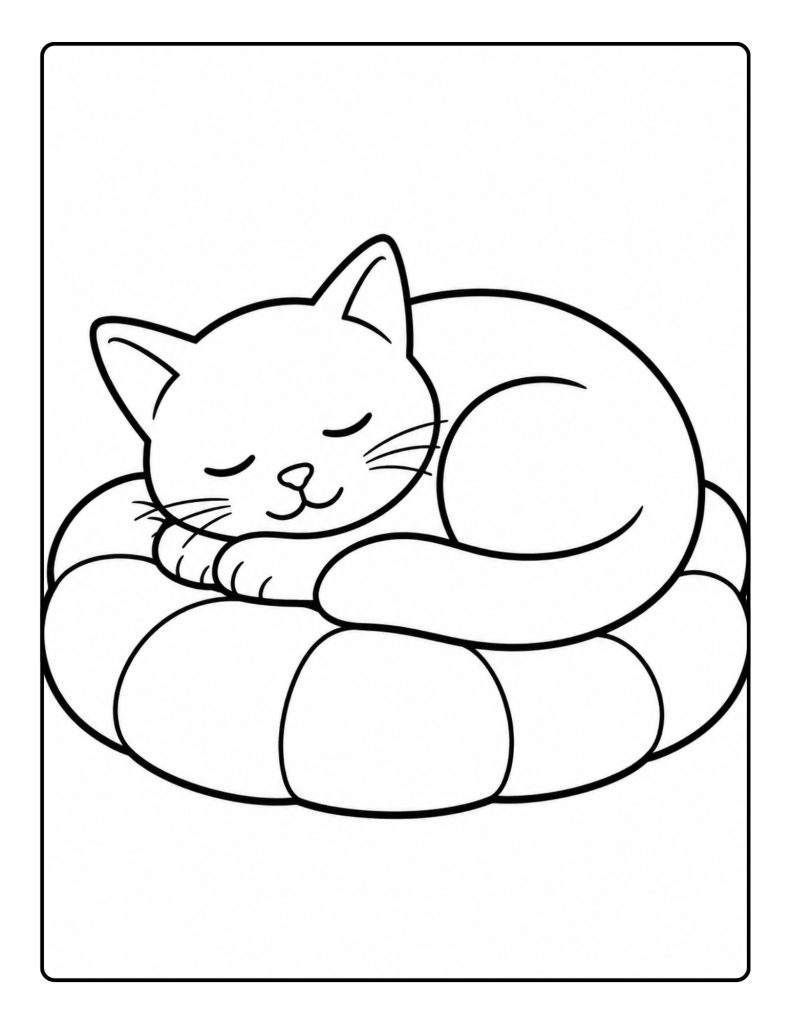
For example, offer a sleeping cat, a large rose, and a porch.
Ask a simple question such as:
“Which picture looks nicest today?”
The person may also decide that none of the choices feel appealing. Another set of pages can be offered, or the activity can be saved for later.
Offer a manageable selection of colors
A large box containing dozens of colors may be exciting for some people. For others, it may create too many decisions.
Begin with six to twelve colors.
A simple selection could include:
- red
- yellow
- blue
- green
- pink
- purple
- orange
- brown
Add more colors when they are requested.
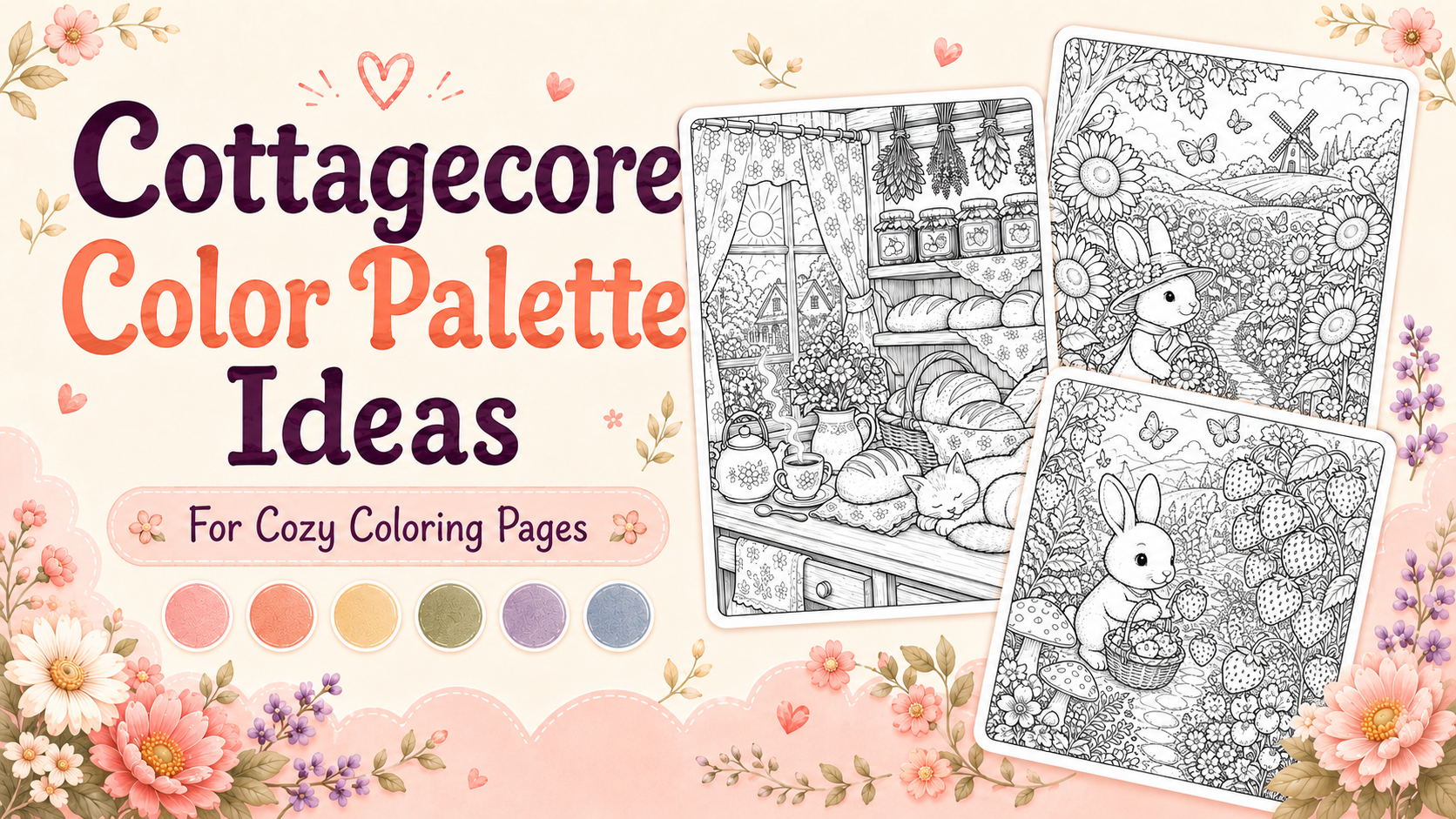
Another option is to offer a small coordinated palette, such as pink, lavender, green, blue, and cream.
You may also like: “Dark Academia Self-Care Ideas“
Use familiar pictures as natural conversation starters
A familiar scene may inspire conversation, but conversation should never be forced.
A picnic page might lead to comments about favorite foods. A dog page might bring up pets. A porch may inspire thoughts about flowers, chairs, or pleasant weather.

Like these gentle, familiar designs? The complete HoneySketch paperback includes 50 single-sided pages with flowers, pets, birds, gardens, porches, and peaceful everyday scenes.
Try simple present-focused questions:
- “Which color should we use for the basket?”
- “Would you like the flower to be pink or yellow?”
- “Should the blanket use two colors?”
- “Which part would you like to color first?”
- “Would you like me to color the background?”
Avoid asking questions that make the activity feel like a test.
The person does not need to remember a specific picnic, pet, home, or event.
Color beside the person rather than watching
Sitting nearby and coloring your own page can make the activity feel more natural.
It changes the experience from “I am supervising you” to “we are doing something together.”
You can:
- color separate pages
- share one page
- take turns choosing colors
- color the main subject while the other person colors the background
- quietly work without talking
There is no need to give continuous instructions.
A caregiver might say, “I think I’ll make these flowers purple,” and allow the conversation to develop naturally.
Let unusual color choices remain
A flower does not have to be a realistic color.
A dog can be blue. A tree can be pink. A porch can be bright yellow.
Correcting color choices may interrupt the creative experience.
Instead of saying, “That is not the right color,” try:
- “That is a bright choice.”
- “Those colors look cheerful together.”
- “Would you like another shade?”
- “I like how you used that color.”
The finished page belongs to the colorist.
Divide a fuller picture into small sections
Some people enjoy detailed pages but do not want to complete an entire scene at once.
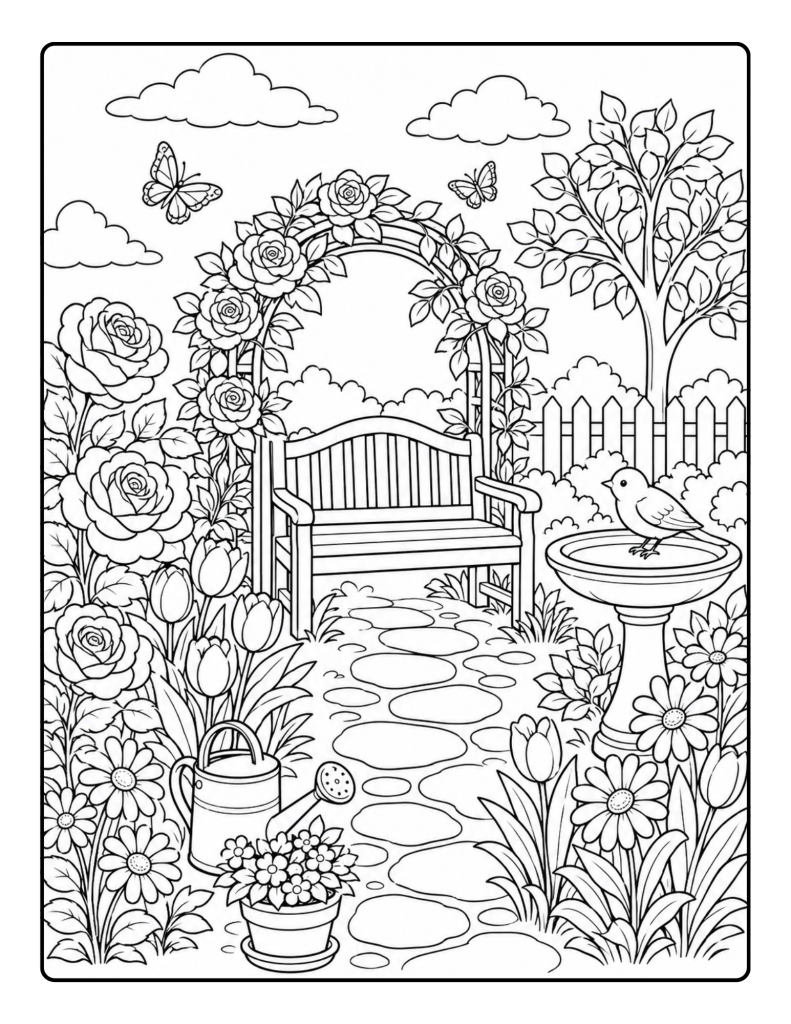
A birdbath garden page can be divided into:
- The two birds
- The birdbath
- The large flowers
- The smaller flowers
- The leaves
- The stones
Only one section needs to be completed during a session.
A blank sheet of paper can also be placed over part of the design so that only one area remains visible.
Use page difficulty flexibly
Do not assume that a senior will always prefer the simplest page.
Someone who loves gardening may choose a detailed flower scene. Someone who feels tired may choose one large bird.
Offer a variety and allow the person to decide.
A good selection might include:
- very easy: sleeping cat
- relaxed: dog beside a door
- more detailed: garden bench beneath roses
The preferred level may change from one day to another.
Take breaks without calling attention to them
A coloring session does not need a scheduled length.
Pause when the person:
- appears tired
- puts the coloring tool down
- looks away repeatedly
- becomes uncomfortable
- says they are finished
- wants to do something else
Simply say, “We can save this for later.”
Avoid encouraging someone to finish “just one more section” when they are ready to stop.
Let the activity end naturally
A partly colored garden can be placed inside the book and continued another day.
A finished page might be:
- displayed on the refrigerator
- placed in a simple frame
- given to a family member
- photographed
- added to a personal folder
- left in the book
Ask before displaying the artwork. Some people may enjoy seeing it on the wall, while others may prefer to keep it private.
A simple 20-minute coloring routine
The following routine can be shortened or extended.
First five minutes
Choose a page and several colors.
Next ten minutes
Color quietly or talk naturally while working.
Final five minutes
Finish the current section, place the page aside, and put the supplies away.
The session can end earlier whenever needed.
Coloring activity ideas for two people
Color separate copies
Choose similar pages and use completely different palettes.
Divide one scene
One person colors the main subject while the other colors the background.
Choose colors for each other
Each person selects two or three colors for the other to use.
Create a seasonal version
Turn the scene into spring, summer, autumn, or winter using seasonal colors.
Use a limited palette
Choose only five colors and repeat them throughout the page.
Who might enjoy this shared activity?
Choose only five colors and repeat them throughout the page.
Who might enjoy this shared activity?
Choose only five colors and repeat them throughout the page.
Who might enjoy this shared activity?
This coloring activity may suit:
- seniors who already enjoy art or coloring
- older adults who prefer simple creative activities
- grandparents and grandchildren
- elderly parents and adult children
- caregivers and care recipients
- assisted living activity groups
- memory care settings
- family visits
- beginners who prefer bold outlines
- anyone looking for a quiet activity to share
Coloring should remain optional.
Some people may prefer listening to music, looking through photographs, gardening, puzzles, or another activity instead.
Important reminder
A coloring book is a recreational activity. It is not a medical treatment, diagnostic tool, or replacement for professional care.
Choose pages and supplies based on the individual’s interests, comfort, and current abilities.
Final thoughts
A shared coloring activity does not need perfect artwork, long conversations, or a completed page.
It can be as simple as choosing a color together, filling in one flower, and enjoying a quiet moment at the same table.
The best sessions are flexible. Offer choices, follow the person’s interest, and stop whenever the activity no longer feels enjoyable.
Disclosure:
This post may feature HoneySketch books or products. If you purchase one of our books through a link on this page, HoneySketch may earn royalties or income from that sale at no extra cost to you.