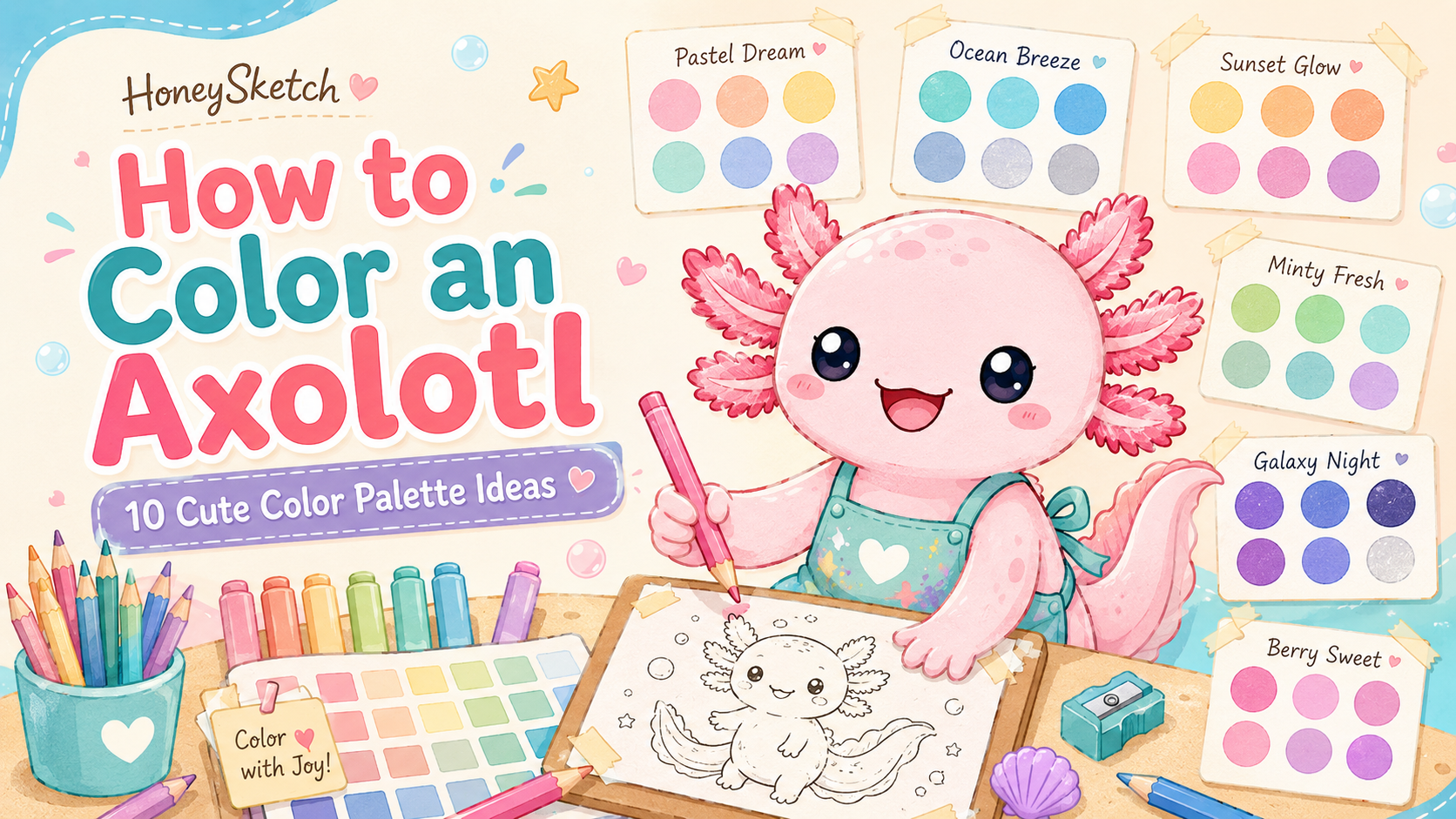
One of the best things about coloring an axolotl is that there is no need to use only one “correct” color.
Real axolotls can inspire soft pinks, pale creams, browns, grays, and darker shades, but coloring pages also make room for mint green, royal purple, galaxy blue, rainbow stripes, and anything else a young artist imagines.
A color palette is simply a small group of colors chosen before beginning.
A color palette is simply a small group of colors chosen before beginning.
It can make a page feel coordinated, reduce the pressure of choosing a new color for every object, and help the main character stand out from the background.
The pages below are previews from The Big Axolotl Adventure Coloring Book by Sally Morris.
Use these 10 ideas exactly as written, mix two palettes together, or create something completely new.
Palette 1: Classic Pink Axolotl
A soft pink body with brighter coral gills creates the familiar, cheerful look many children associate with axolotls.
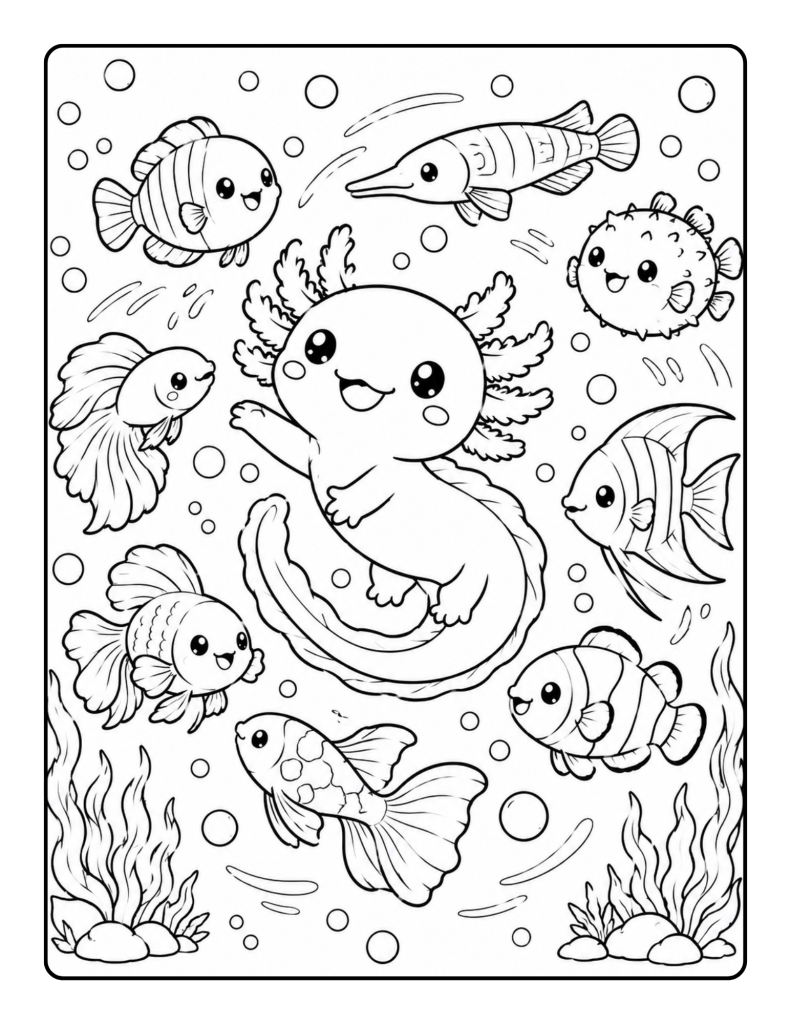
Colors to use
- Pale pink
- Coral
- Cream
- Aqua
- Ocean blue
- Yellow
Use pale pink for the body and a stronger coral or raspberry shade for the feathery gills.
Leave the belly slightly lighter than the back and tail. Use aqua and blue in the surrounding water, then add yellow details for warmth.
This palette works especially well for coral reefs, fish, bubbles, shells, and other underwater scenes.
Explore More Axolotl Coloring Ideas
Find 50 ocean, food, fantasy, camping, school, friendship, and adventure designs in the full coloring book.
See The Big Axolotl Adventure Coloring Book on Amazon
Palette 2: Strawberry Ice Cream
This sweet palette uses warm pinks and creamy pastels.
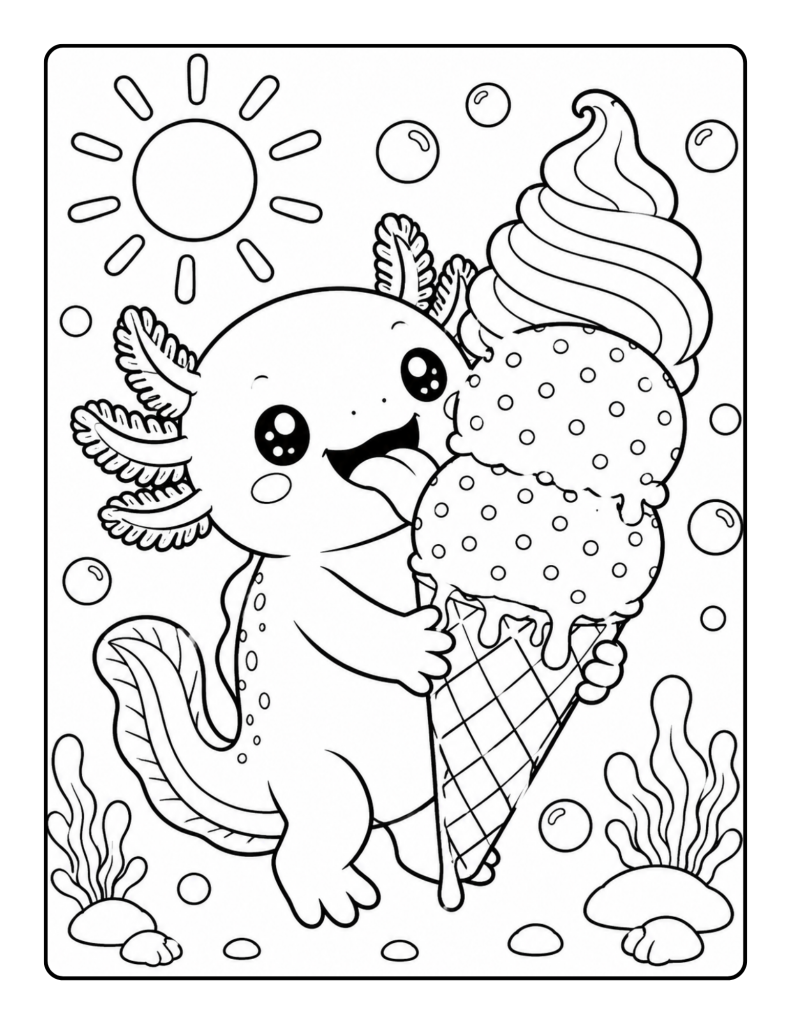
Colors to use
- Strawberry pink
- Cream
- Red
- Mint green
- Pale yellow
- Light brown
Use strawberry pink for the axolotl, cream on the belly, and red for small accents or sprinkles.
The ice cream can include mint, vanilla, lemon, or strawberry shades.
Light brown works well on the cone, while pale yellow adds warmth to bubbles and highlights.
These palettes work especially well with our easy axolotl coloring pages with big bold lines
Palette 3: Jellyfish Glow
A glowing underwater page looks especially magical with cool colors and small areas of warm light.
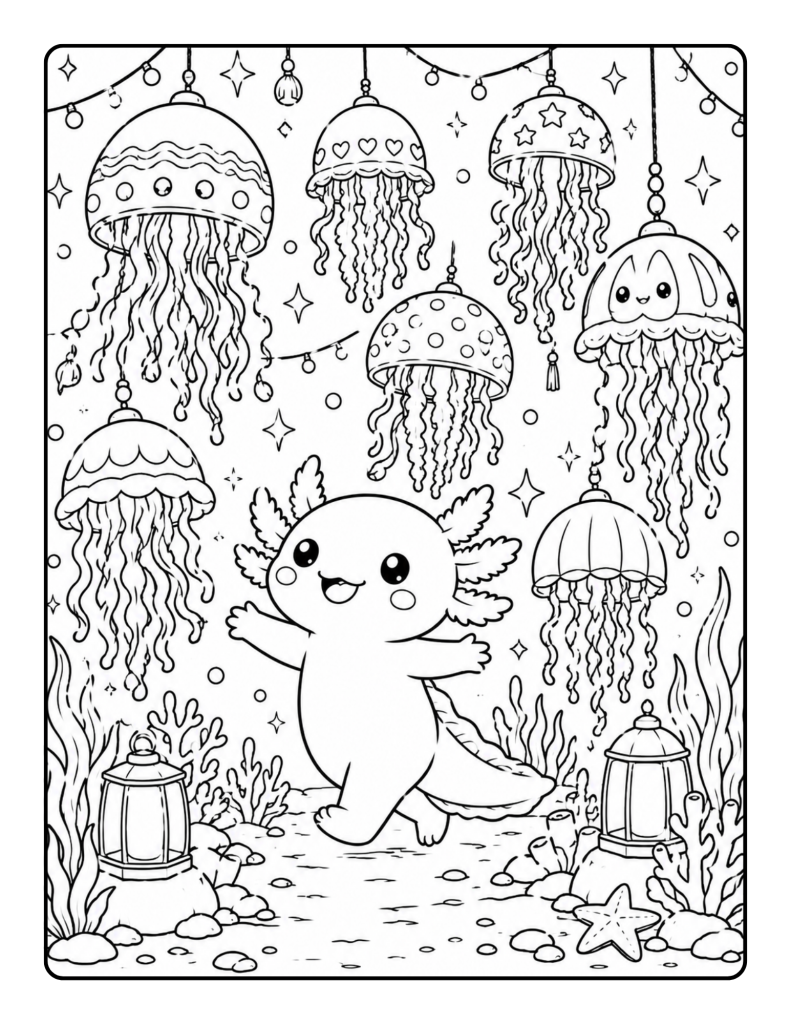
Colors to use
- Deep blue
- Violet
- Lavender
- Bright pink
- Teal
- Soft yellow
Use blue, violet, and teal across the jellyfish and background.
Keep the axolotl lighter—perhaps lavender or pale pink—so the character remains easy to see.
Add soft yellow near the lanterns or jellyfish edges to create the appearance of light.
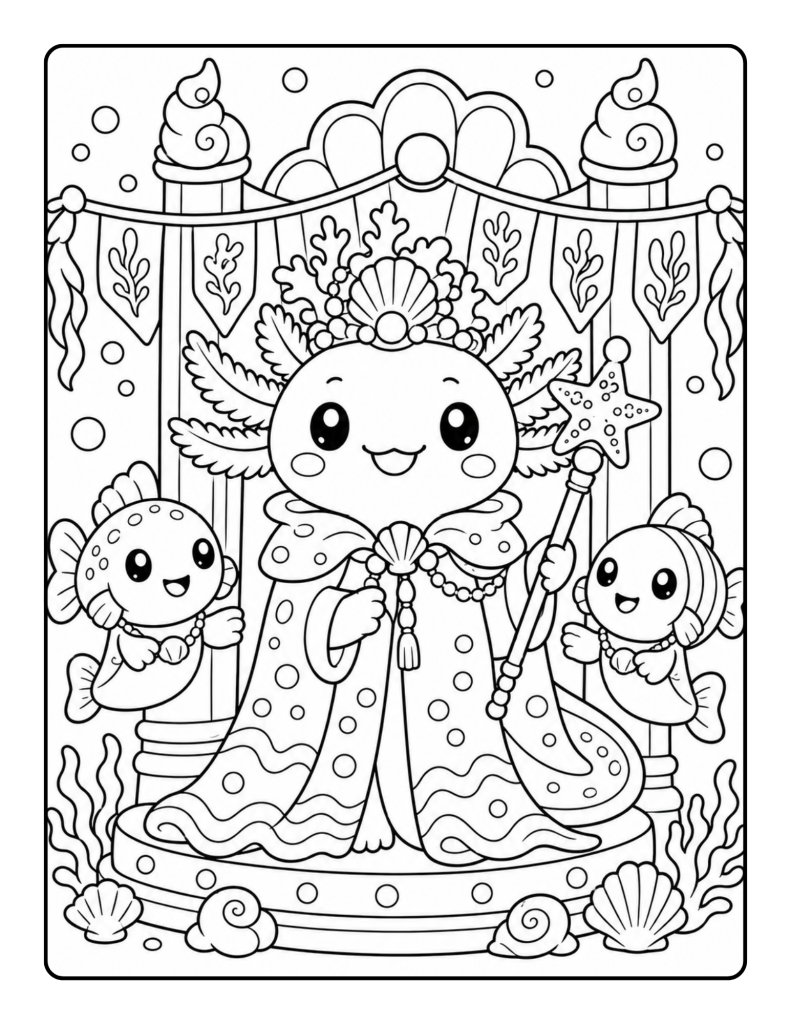
Palette 4: Royal Pearl Kingdom
Purple, aqua, and gold create a colorful underwater royal scene.
Colors to use
- Royal purple
- Lavender
- Aqua
- Gold
- Pearl white
- Coral pink
Use royal purple on the cape and lighter lavender on secondary areas.
Blue, coral, turquoise, and seafoam shades work beautifully on the underwater axolotl coloring pages
Aqua works well on banners, fish, and underwater plants. Gold can highlight the crown, wand, necklace, and important decorations.
Leave pearls mostly white with tiny touches of pale blue, pink, or gray.
Palette 5: Cozy Campfire Night
Nighttime pages look balanced when the background uses cool, dark shades and the light source uses warm colors.

Colors to use
- Navy
- Forest green
- Warm brown
- Golden yellow
- Orange
- Red
Use navy in the sky, dark green on trees, and brown on logs, rocks, or camping equipment.
Begin the campfire with pale yellow in the center, orange around it, and red along the outer flames.
The axolotl can remain pale pink or cream so it does not disappear into the darker background.
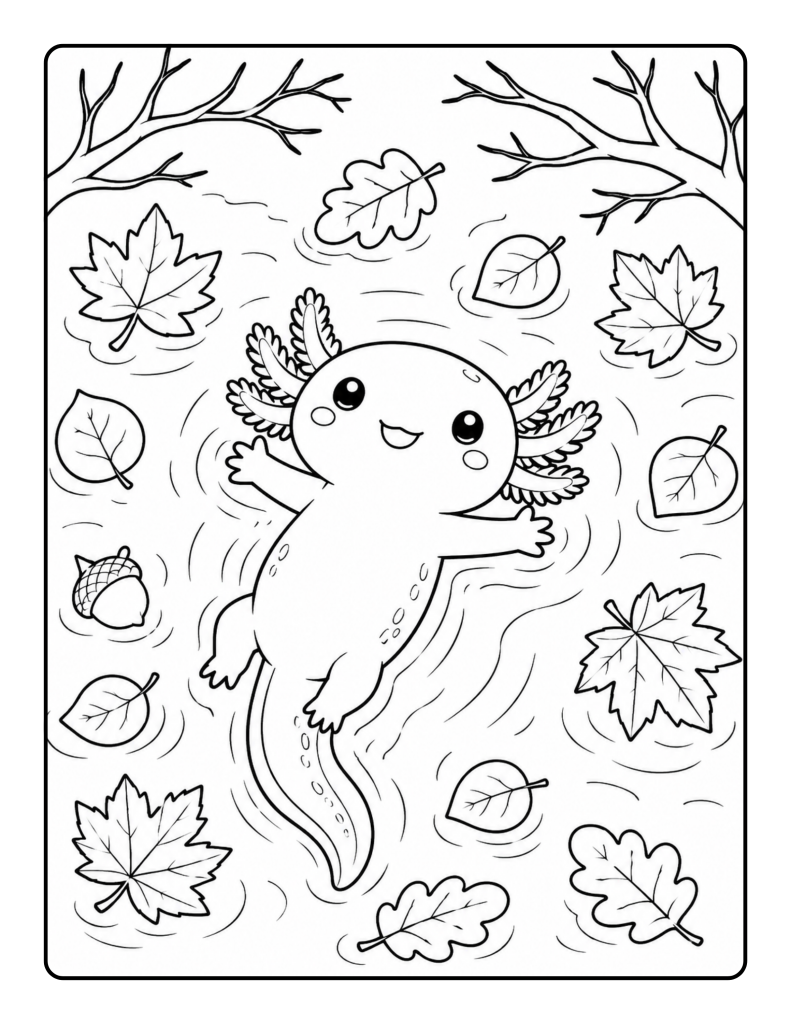
Palette 6: Autumn Leaves
A warm seasonal palette can make an axolotl page feel cozy and peaceful.
Colors to use
- Rust red
- Burnt orange
- Golden yellow
- Brown
- Cream
- Blue-gray
Color each leaf differently or blend several warm shades together.
Use cream or pale peach for the axolotl, allowing the red and orange leaves to stand out.
Blue-gray water provides a cooler contrast to the warm autumn colors.
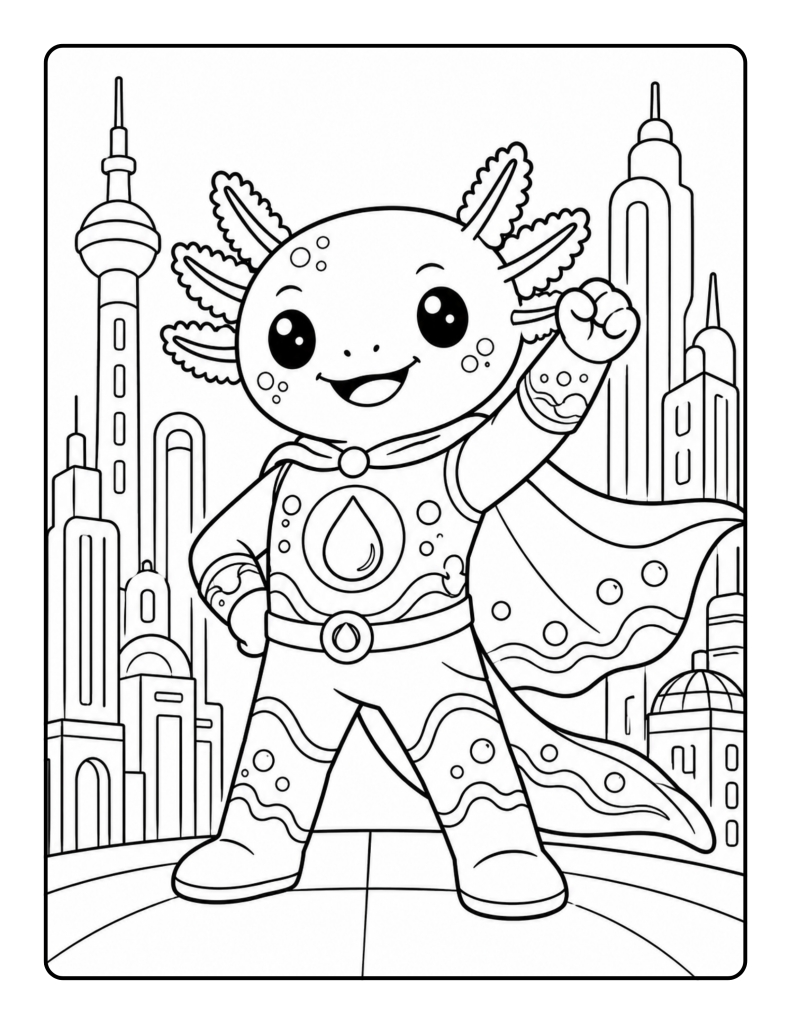
Palette 7: Bold Superhero
Superhero pages work best with two strong costume colors and one smaller accent.
Option A
- Red
- Blue
- Yellow
Option B
- Purple
- Gold
- White
Option C
- Teal
- Orange
- Silver
Option D
- Pink
- Navy
- Aqua
Use the first color across most of the costume, the second on the cape and boots, and the accent on the symbol, belt, or small details.
Repeating the accent color in the city background can connect the entire scene.
Palette 8: Mint Lagoon
A mint-green axolotl feels fresh, soft, and slightly magical.
Colors to use
- Mint green
- Seafoam
- Coral pink
- Pale blue
- Cream
- Turquoise
Use mint on the body and coral on the gills.
Seafoam, pale blue, and turquoise work well in the surrounding water, while cream helps separate lighter areas.
This combination suits shells, coral reefs, starfish, fish, and underwater friendship scenes.
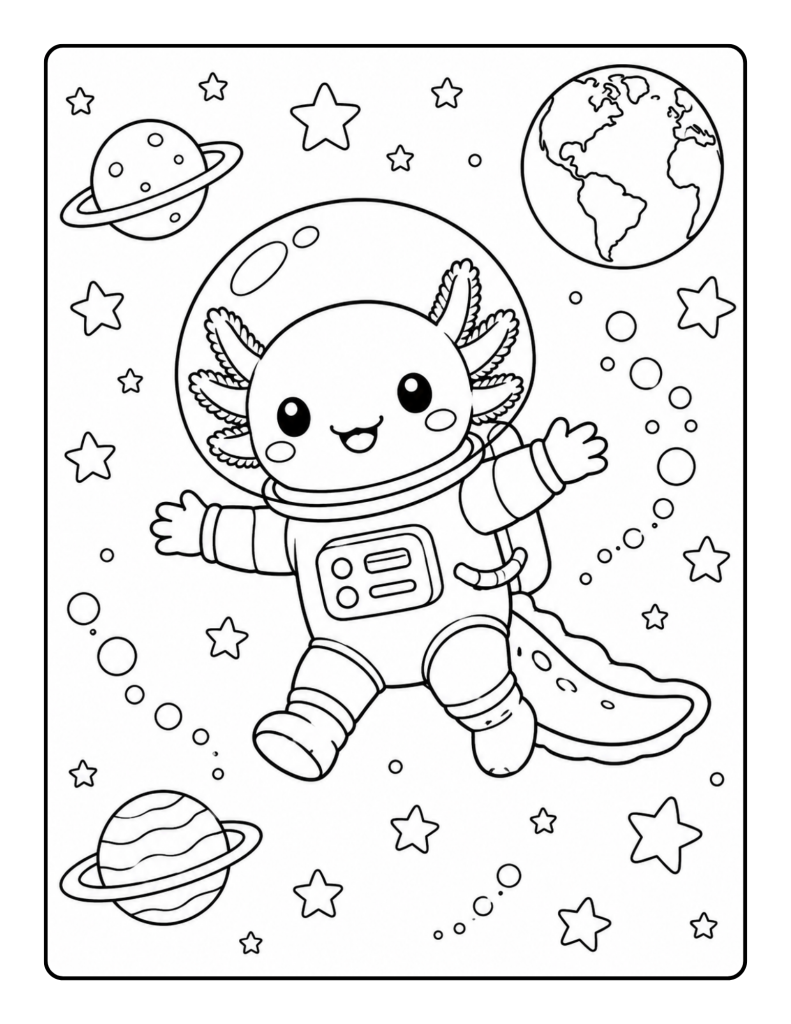
Palette 9: Galaxy Axolotl
A galaxy palette transforms the axolotl into a character from outer space.
Colors to use
- Navy
- Purple
- Magenta
- Turquoise
- Silver
- White
Blend navy, purple, and magenta across the body or costume.
Add turquoise highlights and small white or silver dots to resemble stars.
The gills can alternate between purple and pink. Keep nearby planets in slightly different colors so they do not blend into the character.
Palette 10: Rainbow Axolotl
A rainbow palette allows every body section, gill, spot, or accessory to become different.
Colors to use
- Red
- Orange
- Yellow
- Green
- Blue
- Purple
Children can follow the usual rainbow order or place the colors anywhere they want.
Possible approaches include:
- One color on each pair of gills
- Rainbow stripes across the tail
- Multicolored spots
- A pale body with rainbow accessories
- A different color in each costume section
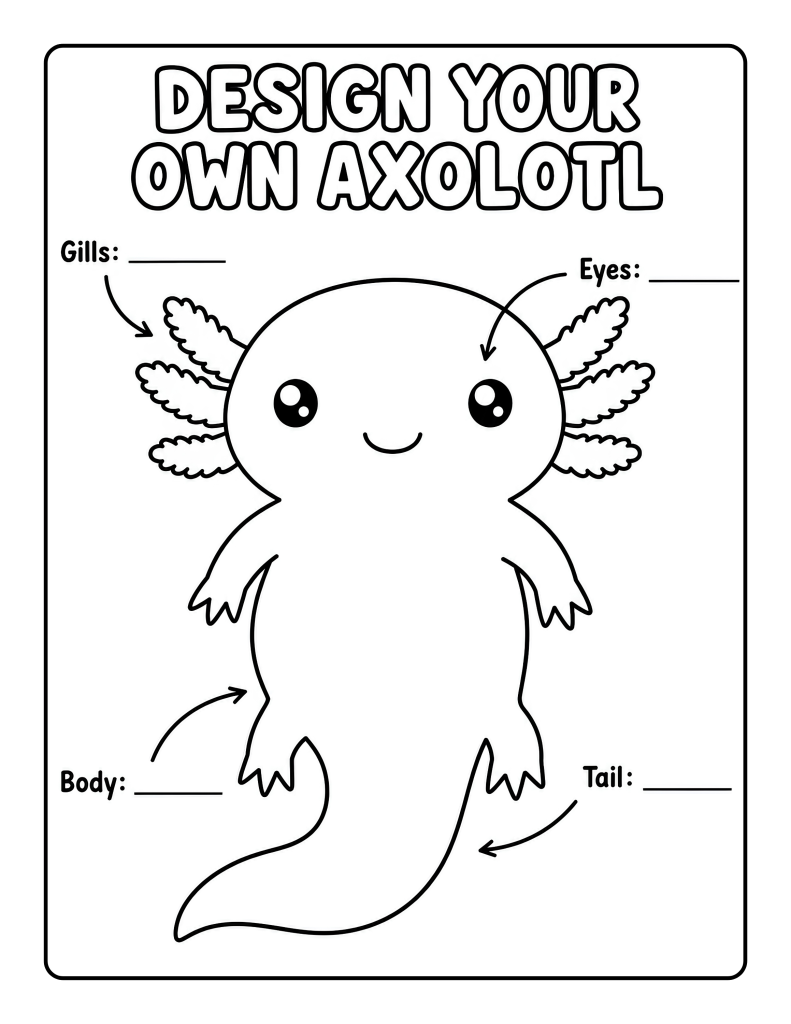
Rainbow coloring works especially well on the blank design-your-own-axolotl activity because there is no surrounding scene competing for attention.
Choose Your Favorite Axolotl Palette
Discover 50 cute scenes ready for pink, mint, purple, galaxy, rainbow, and completely original color combinations.
View The Big Axolotl Adventure Coloring Book on Amazon
How to Choose the Body and Gill Colors
The gills are one of the most recognizable parts of an axolotl.
They can match the body, use a darker version of the body color, or provide strong contrast.
Examples include:
- Pink body with coral gills
- Mint body with purple gills
- Blue body with yellow gills
- Cream body with orange gills
- Lavender body with turquoise gills
Using a slightly darker shade at the base of each gill can add simple depth.
How to Keep a Palette Looking Balanced
A few choices can help the finished page feel connected.
- Repeat one accent color in three places
- Use the brightest color on the most important object
- Keep either the character or background lighter than the other
- Choose one neutral such as cream, gray, tan, or white
- Limit very dark colors to smaller areas unless creating a nighttime scene
- Test colors on scrap paper before filling a large section
These ideas are optional. A page can still look wonderful when a child chooses every color spontaneously.
Add Simple Shading Without Making It Difficult
Shading can be very light.
Use a slightly darker version of the body color:
- Under the chin
- Beneath the arms
- Along one side of the body
- Near the base of the gills
- Under the tail
Leave a small lighter area on the opposite side.
The goal is not perfect realism. It is simply to add a little depth.
Final Thoughts
The best axolotl color palette is the one that makes the child excited to begin.
Classic pink, strawberry cream, glowing purple, royal aqua, campfire orange, autumn gold, superhero colors, mint lagoon, galaxy blue, and rainbow shades can all belong in the same coloring book.
Every scene creates a new reason to try something different.
Explore all 50 designs and create your own axolotl color combinations in The Big Axolotl Adventure Coloring Book by Sally Morris.
Disclosure
This post may feature HoneySketch books or products. If you purchase one of our books through a link on this page, HoneySketch may earn royalties or income from that sale at no extra cost to you.