
The coloring page is only one part of the experience.
The size, shape, brightness, and feel of the coloring tool can make a noticeable difference in how comfortable the activity feels.
Some people enjoy the familiarity of crayons. Others prefer the control of colored pencils or the bright, easy coverage of markers.
There is no single best supply for every senior.
The right choice depends on personal preference, grip, vision, page detail, and how much pressure the person wants to use.
This guide compares several common coloring supplies for seniors, older adults, caregivers, and beginners.
This guide compares several common coloring supplies for seniors, older adults, caregivers, and beginners.
Begin with supplies the person already recognizes
A familiar tool may be easier to begin using than a specialized art product.
Start with:
- crayons
- colored pencils
- washable markers
Allow the colorist to try each one.
Someone who used crayons for many years may enjoy them immediately. Another person may strongly prefer pencils because they feel more precise.
Personal preference matters more than buying the largest or most expensive set.
Crayons for large open spaces
Crayons are familiar, widely available, and useful for broad coloring areas.
They work especially well for:
- large animals
- flower petals
- cushions
- doors
- sky
- simple backgrounds
- broad leaves
Thicker crayons may feel more comfortable for someone who dislikes holding narrow tools.
Advantages of crayons
- easy to replace
- available in many colors
- suitable for large spaces
- usually do not bleed through paper
- can be used lightly or firmly
- do not require sharpening
Possible limitations
- narrow crayons can break
- some colors may appear lighter than markers
- detailed areas may be harder to fill
- paper wrappers can loosen
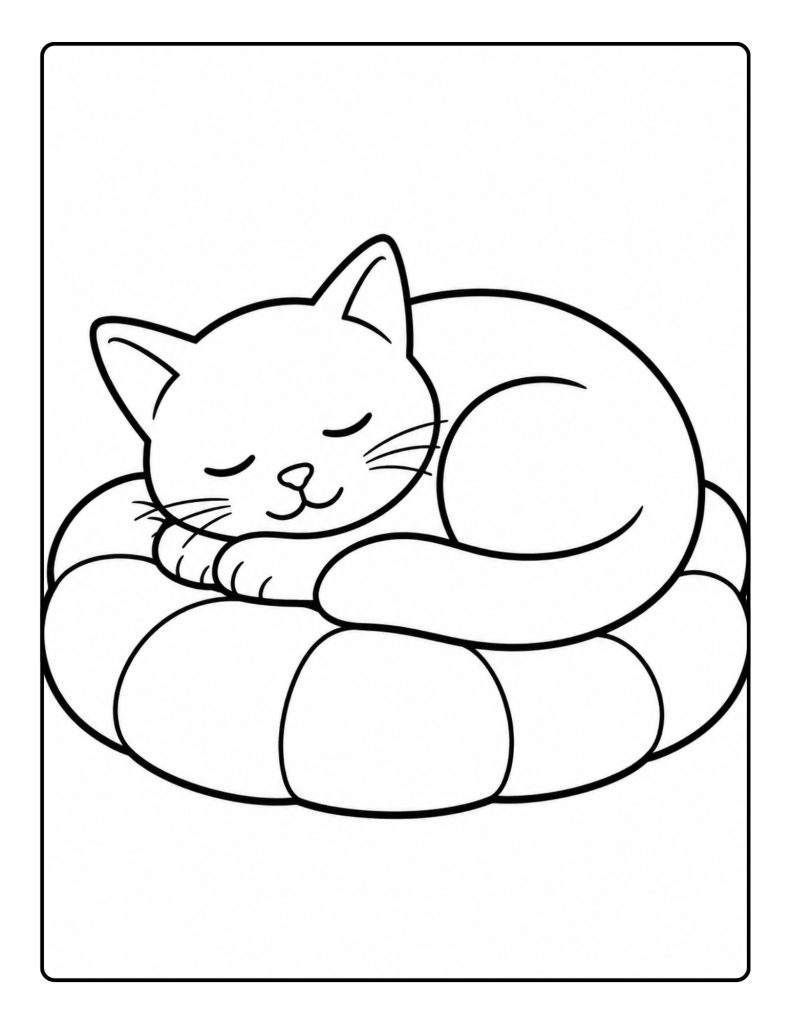
For the sleeping cat page, crayons can quickly fill the cat’s body and large cushion sections.
Colored pencils for control and small details
Colored pencils are useful when the page contains flower petals, leaves, bicycle parts, feathers, or other moderately sized areas.

They allow the colorist to work close to the outline and control how light or dark the color appears.
Advantages of colored pencils
- good control
- suitable for both large and smaller spaces
- easy to layer
- less likely to bleed through
- available in soft and bright shades
- useful for gentle shading
Possible limitations
- narrow barrels may not suit everyone
- pencils need sharpening
- dark coverage may require more pressure
- tips can break
A pencil grip can be placed around a narrow colored pencil when the original barrel feels uncomfortable.
For the rose page, pencils can follow the curved petals while still filling the broad leaves and vase.
Markers for bright, even color
Markers can fill an area quickly and produce strong, clear colors.
They may suit someone who prefers bold results without repeatedly moving over the same area.
Advantages of markers
- bright color
- smooth coverage
- less pressure may be needed
- easy to see on the page
- useful for large shapes
- available with thick or fine tips
Possible limitations
- some markers may bleed through paper
- strong ink may cover the black outline when used carelessly
- caps need to be replaced
- certain marker scents may be unpleasant
- ink can stain tables or clothing
Always place a blank protective sheet behind the current coloring page when using markers.
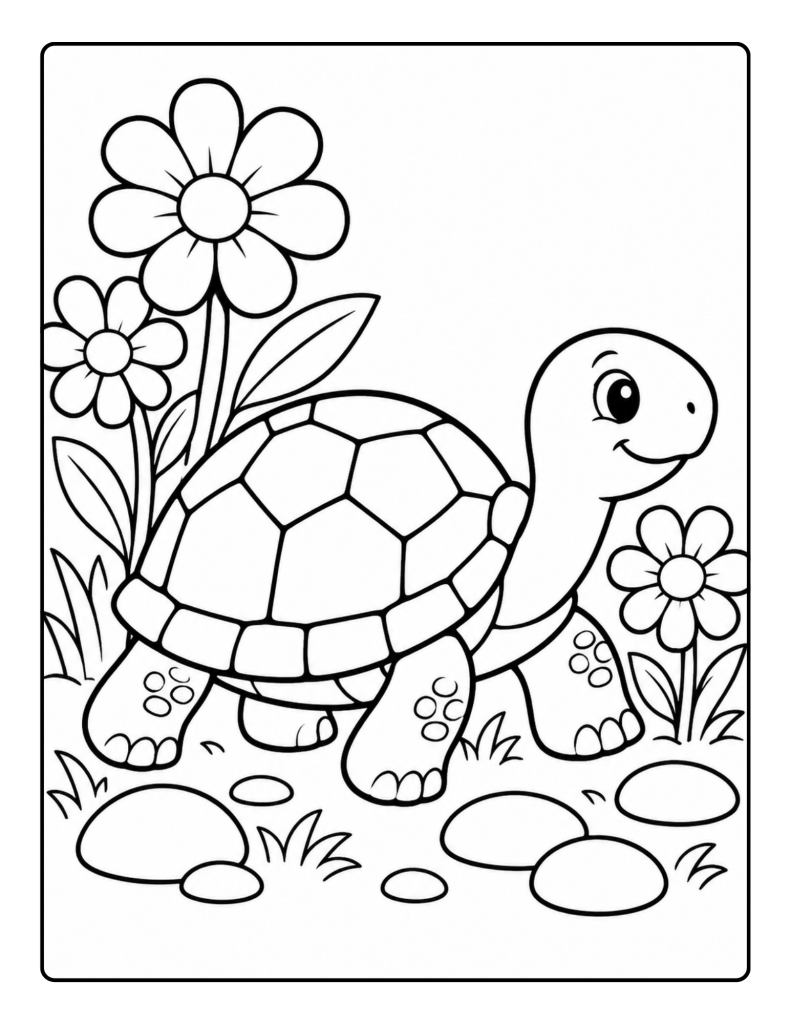
The turtle’s large shell sections are suitable for alternating several bright marker colors.
Washable markers
Washable markers may be useful for shared activity settings where accidental marks on hands or surfaces are a concern.
Still protect:
- tables
- clothing
- upholstered chairs
- the page underneath
“Washable” does not guarantee that every mark will disappear from every material.
Test supplies before using them in a new setting.
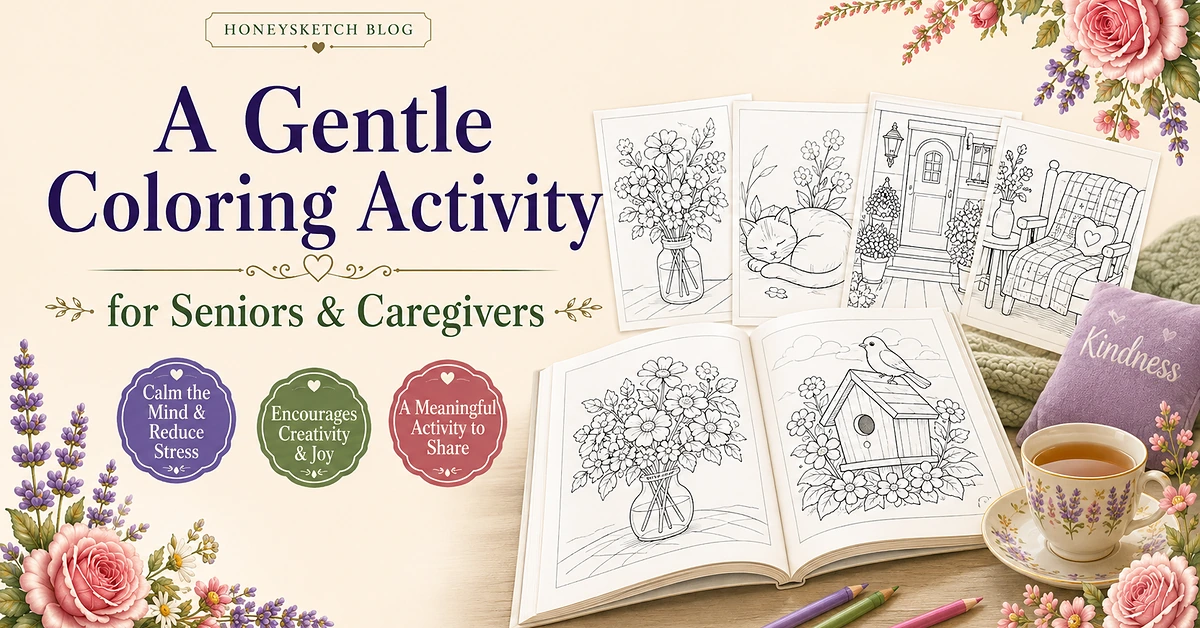
The complete HoneySketch paperback includes 50 large print, single-sided designs with bold outlines, open spaces, animals, flowers, gardens, porches, and familiar scenes.
The complete HoneySketch paperback includes 50 large print, single-sided designs with bold outlines, open spaces, animals, flowers, gardens, porches, and familiar scenes.
Thick markers versus fine markers
Thick markers
Use thick tips for:
- animal bodies
- flower petals
- sky
- doors
- cushions
- large leaves
Fine markers
Use finer tips for:
- flower centers
- butterfly wings
- bicycle details
- feathers
- small plants
- decorative objects
A page can use both types.
The large spaces can be completed with thick markers, while the smaller areas receive a finer tip.
Twistable crayons
Twistable crayons are stored inside plastic barrels and are extended by twisting the base.
Some colorists prefer them because:
- they do not need sharpening
- the barrel may be easier to hold
- the crayon is protected from breaking
- there is no loose paper wrapper
Others may prefer traditional crayons.
Offer both when possible and allow the person to choose.
Large-barrel colored pencils
Large-barrel or triangular pencils may feel different from standard narrow pencils.
Potential advantages include:
- a broader surface to hold
- less rolling on the table
- easier identification among supplies
- more stability for some colorists
The shape should feel comfortable rather than unfamiliar.
A short trial is more useful than assuming one design will work for everyone.
Pencil grips
Foam, silicone, or triangular grips can be placed around narrow pencils and some crayons.
They can make the tool feel wider and change the position of the fingers.
Keep several grip shapes available when possible.
A grip that feels comfortable to one person may feel awkward to another.
Match the tool to the amount of detail
The picture itself can help determine which supply to offer.
Very easy pages
For a sleeping cat, bird, or large flower, try:
- crayons
- thick markers
- broad colored pencils
Moderately detailed pages
For a dog by the door, horse, turtle, or picnic basket, try:
- colored pencils
- medium-tip markers
- crayons for the background
Detailed pages
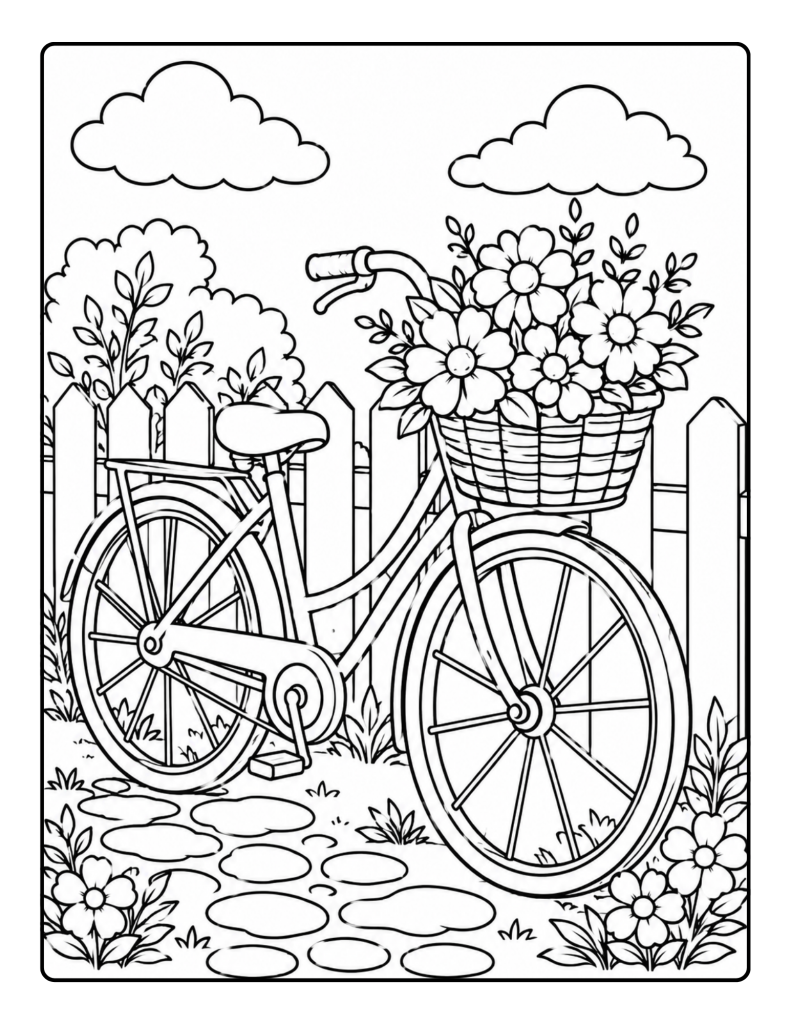
For a bicycle, flower cart, pond, or garden scene, try:
- colored pencils
- fine markers
- a combination of pencils and broader tools
The colorist can still use any preferred supply. These are only practical starting points.
Try more than one supply on the same page
One coloring page does not need to be completed with a single tool.
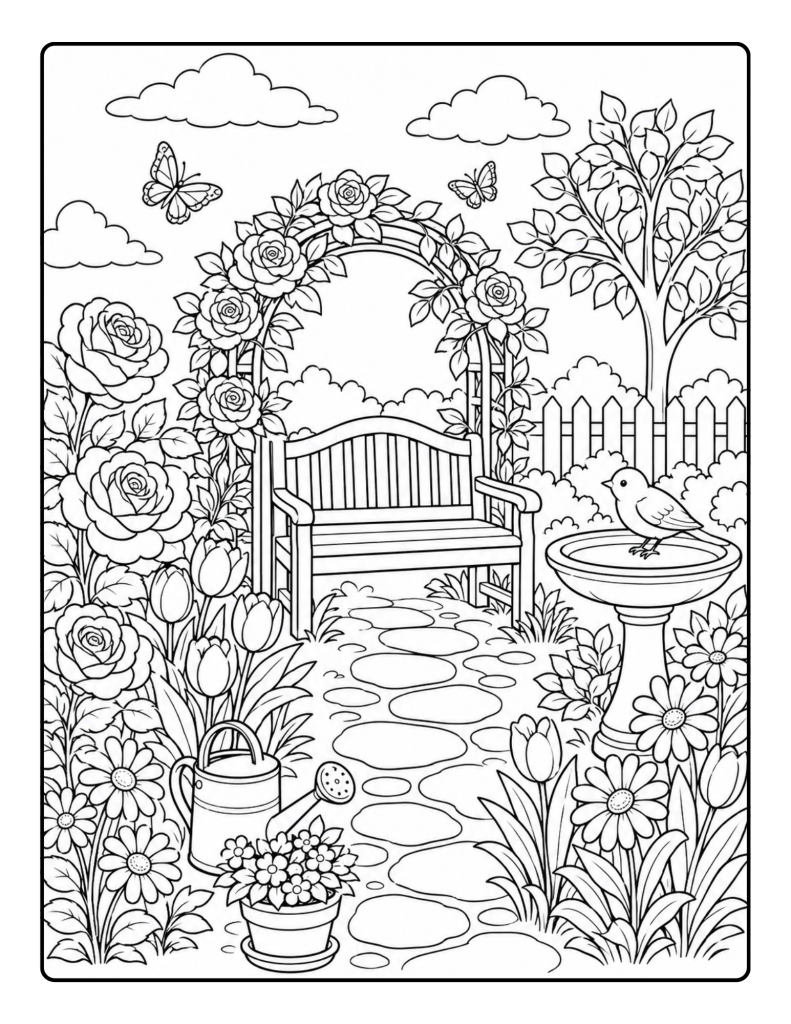
For a garden scene:
- use markers for the bench and large path stones
- use colored pencils for flowers and leaves
- use crayons for sky and open background areas
Mixed supplies can make a detailed page easier to complete.
Test markers on a spare sheet first, especially when combining several products.
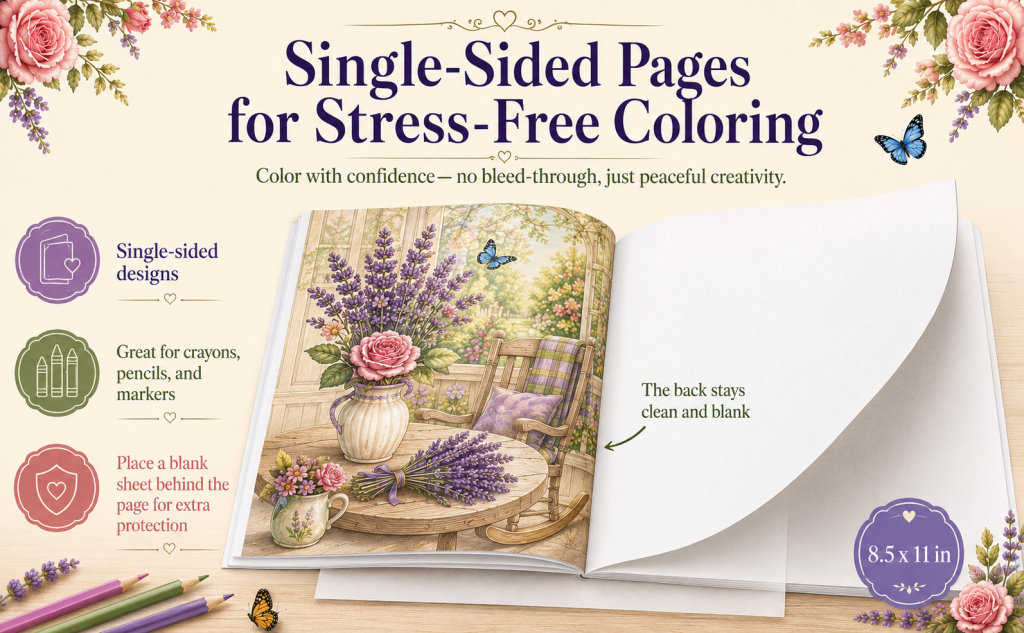
Use a blank protective sheet
Place one clean sheet of paper behind the page being colored.
This helps:
- protect the next design
- catch marker ink
- reduce pressure marks
- keep the work surface cleaner
The HoneySketch book contains single-sided illustrations, but the protective sheet provides an extra barrier.
Replace it when it becomes heavily marked.
Explore the Large Print Coloring Book
Choose a manageable number of colors
A set of 100 colors is not necessary for an enjoyable session.
Begin with:
- six colors for a very simple page
- twelve colors for a moderate page
- a coordinated five-color palette for detailed scenes
More colors can be added when requested.
Keeping the selection smaller may also make it easier to find the desired shade.
Organize supplies so they are easy to see
Instead of storing every pencil inside a deep container, lay several colors beside the page.
Arrange them:
- in a shallow tray
- in a small cup
- in a row
- by color family
- with the most frequently used colors closest
Remove broken crayons and dried markers before the activity begins.
Check marker caps and pencil points in advance
A coloring session can become frustrating when:
- the marker is dry
- the pencil tip breaks
- the crayon wrapper is loose
- the sharpener does not work
- the preferred color is missing
Prepare the supplies beforehand.
Sharpen pencils, test markers, and replace damaged tools.
Protect the table
Use:
- a washable placemat
- several sheets of scrap paper
- a craft mat
- an old tablecloth
- a smooth tray
Avoid placing paper directly on a rough or uneven surface because the texture may appear through the coloring page.
Consider lighting
Place the page where the outlines and colors can be seen clearly.
Helpful options may include:
- natural daylight
- an overhead light
- a table lamp
- light directed from the opposite side of the coloring hand
Avoid strong glare directly across glossy markers or laminated surfaces.
Supplies to keep in a simple coloring kit
A basic kit could include:
- 8 to 12 crayons
- 8 to 12 colored pencils
- 6 washable markers
- pencil sharpener
- several pencil grips
- blank protective sheets
- simple storage pouch
- washable table covering
- large print coloring book
The kit does not need to contain every item. Include only the supplies the person enjoys using.
Final thoughts
The best coloring supplies are the ones that feel comfortable, create visible color, and make the person want to continue.
Crayons offer familiarity and broad coverage. Colored pencils provide control. Markers create bright, even color with less repeated movement.
Begin with a small variety and notice which tool the person chooses naturally.
Frequently asked questions
Are crayons or colored pencils better for seniors?
Neither is universally better. Crayons work well for broad spaces, while pencils offer more control around smaller areas.
Can markers be used in the book?
Yes, but marker results vary. Place a blank protective sheet behind the page.
How many colors should be offered
Start with six to twelve colors. Add more when the colorist wants additional choices.
Are expensive professional pencils necessary?
No. A comfortable, reliable set that produces visible color is enough for casual coloring.
Should every supply be labeled?
Labels can be added when they are helpful, but color names are not required. The person can choose shades visually.
Can crayons, pencils and markers be combined?
Yes. Different supplies can be used for separate sections of the same page.
Disclosure:
This post may feature HoneySketch books or products. If you purchase one of our books through a link on this page, HoneySketch may earn royalties or income from that sale at no extra cost to you.